2026 U.S. Mobile Data Plans for Travelers: Save 25%

Travelers to the U.S. in 2026 can save up to 25% on mobile data by comparing eSIMs, prepaid SIMs, and flexible roaming plans, ensuring seamless connectivity without excessive costs.
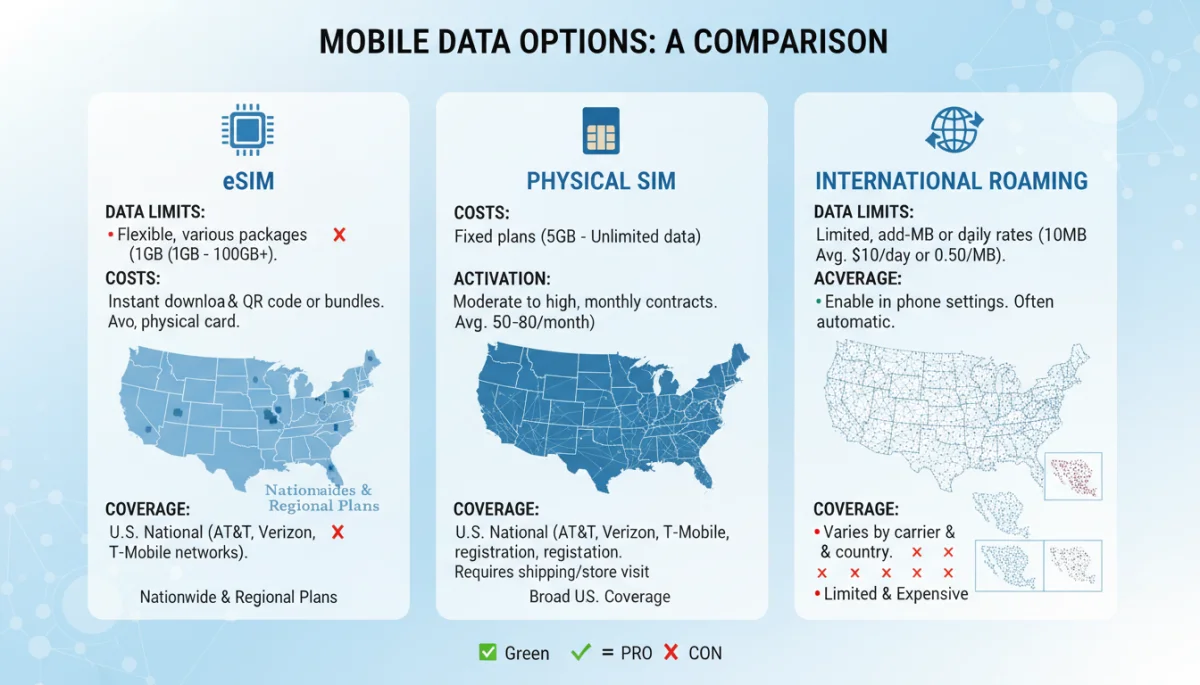
Planning a trip to the United States in 2026? Understanding the various options for mobile data is crucial for staying connected without breaking the bank. This comprehensive comparison of 2026 U.S. mobile data plans for travelers: save up to 25% on connectivity will guide you through the best choices, helping you navigate the complexities of staying online while exploring the vast landscapes of the U.S.
Understanding the 2026 U.S. Mobile Landscape
The U.S. mobile market is dynamic, with major carriers and virtual network operators constantly evolving their offerings. For travelers, this means a wide array of choices, from traditional physical SIM cards to advanced eSIM technology. Staying informed about these changes is key to making an economical and efficient decision for your travel connectivity needs.
In 2026, the emphasis continues to be on flexibility and high-speed access, driven by the expansion of 5G networks. Travelers now have more power to customize their data plans, moving away from rigid, expensive roaming options.
The Rise of eSIM Technology
- Convenience: eSIMs eliminate the need for physical SIM cards, allowing for instant activation and switching between plans digitally.
- Multi-network access: Many eSIM providers offer access to multiple U.S. networks, optimizing coverage and signal strength.
- Environmental benefit: Reduces plastic waste associated with traditional SIM cards.
The ubiquity of eSIM-compatible devices has made it a preferred choice for tech-savvy travelers seeking seamless integration and easy management of their mobile services. This technology is particularly beneficial for those who frequently travel or need temporary data solutions.
Understanding the current state of the U.S. mobile landscape is the first step in making an informed decision. With 5G becoming more widespread, travelers can expect faster speeds and more reliable connections across major cities and popular tourist destinations. However, coverage can still vary significantly in rural areas, making carrier selection a critical factor.
Evaluating Major U.S. Carriers: AT&T, T-Mobile, and Verizon
When considering U.S. mobile data plans, the three major carriers—AT&T, T-Mobile, and Verizon—dominate the market. Each offers distinct advantages and disadvantages for travelers, particularly concerning coverage, speed, and pricing. Your choice largely depends on your travel itinerary and data consumption habits.
These carriers provide robust network infrastructures, but their offerings for short-term visitors can differ significantly from their long-term customer plans. It is essential to look specifically at prepaid or traveler-focused options.
AT&T for Travelers
AT&T boasts extensive 5G coverage, especially in urban areas and along major highways. For travelers, their prepaid plans offer competitive data allowances with varying validity periods. These plans often include unlimited talk and text within the U.S.
- Strong Coverage: Excellent in many parts of the country, though some rural areas may have limited service.
- Flexible Prepaid Options: Various data tiers available, from limited GB to unlimited data for a set period.
- International Roaming Add-ons: Options to extend coverage to Canada and Mexico for an additional fee.
AT&T’s network is often praised for its reliability, making it a solid choice for those who prioritize consistent service. However, their pricing can sometimes be slightly higher than competitors, so comparing specific plans is crucial.
T-Mobile’s Traveler-Friendly Approach
T-Mobile is known for its strong 5G network and often offers more traveler-friendly features, including generous international roaming benefits for customers on their postpaid plans. For prepaid users, T-Mobile provides competitive data plans with good value.
Their network is particularly strong in metropolitan areas and offers good performance for streaming and high-bandwidth activities.
- Extensive 5G: Often leads in 5G availability and speed across the U.S.
- Competitive Pricing: Frequently offers promotional deals and lower entry points for prepaid plans.
- International Benefits: Some plans include basic data and texting in over 210 countries, which can be beneficial for those traveling from abroad.
T-Mobile’s focus on customer value makes it an attractive option for many travelers, particularly those seeking a balance between cost and performance. Their network has significantly improved over the years, challenging traditional perceptions of coverage.
Verizon’s Premium Network
Verizon is often considered to have the most extensive and reliable network, particularly in rural and less populated areas where other carriers might struggle. This premium coverage comes at a higher price point, but for travelers prioritizing connectivity above all else, it can be worth the investment.
Their prepaid options are robust, offering various data allowances and features. Verizon’s network is a go-to for many business travelers or those exploring remote national parks.
- Best Coverage: Widely recognized for superior coverage, especially outside major cities.
- Reliable Speeds: Consistent performance, even in congested areas.
- Higher Price Point: Generally more expensive than AT&T or T-Mobile, but offers unparalleled reliability.
Choosing between these major carriers requires careful consideration of your travel route and budget. While Verizon offers unmatched reliability, AT&T and T-Mobile provide excellent alternatives with competitive pricing and strong urban coverage. Evaluating your specific needs will help you determine the best fit.
Exploring Alternative Data Solutions: eSIMs and Local Prepaid SIMs
Beyond the major carriers, a growing number of alternative solutions cater specifically to travelers seeking flexibility and cost-effectiveness. eSIMs and local prepaid SIM cards from Mobile Virtual Network Operators (MVNOs) are becoming increasingly popular choices, offering significant savings compared to traditional roaming.
These options often leverage the networks of major carriers but at a reduced cost, making them an attractive proposition for budget-conscious travelers.
The Power of eSIMs for U.S. Travel
eSIMs have revolutionized how travelers access mobile data. Instead of swapping physical cards, you can download a data plan directly to your compatible device. This convenience is unmatched, allowing you to activate a plan before you even land in the U.S.
- Instant Activation: Purchase and activate a plan online in minutes.
- Multiple Plans: Store several eSIM profiles on one device, switching between them as needed.
- Cost-Effective: Often cheaper than traditional roaming or even some local prepaid options, especially for shorter trips.
Providers like Airalo, Holafly, and Nomad offer various U.S. data plans tailored for travelers. These plans typically come with a set amount of data for a specific duration, ideal for vacationers who know their data needs in advance. The ability to manage your data plan entirely from your phone adds a layer of convenience that physical SIMs cannot match.
Local Prepaid SIM Cards from MVNOs
MVNOs operate on the networks of major carriers but offer their own pricing and plans. Companies like Mint Mobile (T-Mobile network), Visible (Verizon network), and Cricket Wireless (AT&T network) provide excellent value for travelers willing to purchase a physical SIM card upon arrival or have it shipped beforehand.
These plans are often more affordable than direct offerings from the major carriers and can be a great way to save money while still getting reliable service.
- Affordable Rates: Generally lower monthly costs compared to major carriers.
- Utilize Major Networks: Benefit from the same network coverage as AT&T, T-Mobile, or Verizon.
- Variety of Plans: From basic data to unlimited options, catering to different usage patterns.
Purchasing a local prepaid SIM requires a bit more effort, as you’ll need to find a store or order online. However, the potential savings can be substantial, making it a worthwhile option for longer stays or for travelers who prefer a physical SIM. Many MVNOs also offer eSIM options, blending the best of both worlds.
Both eSIMs and local prepaid SIMs present compelling alternatives to expensive international roaming. By choosing one of these options, travelers can significantly reduce their mobile data costs while ensuring they remain connected throughout their U.S. journey.
Strategies to Save Up to 25% on Connectivity
Saving money on mobile data while traveling in the U.S. is entirely achievable with a strategic approach. By implementing a few key strategies, travelers can significantly reduce their connectivity expenses, potentially saving up to 25% or more compared to standard roaming charges.
The key lies in proactive planning and understanding the nuances of available plans.
Pre-purchase an eSIM or Prepaid SIM
One of the most effective ways to save is to secure your data plan before you even arrive. Purchasing an eSIM online or ordering a prepaid SIM to be delivered to your accommodation in advance can significantly cut costs.
This avoids reliance on expensive airport kiosks or last-minute roaming decisions.
Leverage Wi-Fi Whenever Possible
While mobile data is convenient, utilizing free Wi-Fi networks in hotels, cafes, and public spaces can dramatically reduce your data consumption. Many establishments in the U.S. offer complimentary Wi-Fi, allowing you to save your mobile data for when you truly need it.
Always use a VPN when connecting to public Wi-Fi for enhanced security.
Monitor Data Usage
Keeping a close eye on your data consumption is crucial. Most smartphones have built-in data usage trackers, and many carrier apps provide real-time updates. By monitoring your usage, you can adjust your habits or purchase additional data before exceeding your allowance and incurring unexpected charges.
Be mindful of background app refreshes and streaming high-definition video, which can quickly consume data.
Consider Data-Only Plans
If your primary need is internet access for navigation, social media, and communication apps (like WhatsApp or FaceTime), a data-only eSIM or prepaid plan might be the most cost-effective solution. These plans typically offer more data for the price compared to bundles that include unlimited talk and text, which you might not fully utilize.
Many travelers find that data-only plans meet all their connectivity needs, as most communication can be done over IP-based services.
Compare Plans Rigorously
Do not settle for the first plan you find. The market for U.S. mobile data plans is competitive, and prices and features can vary widely. Use online comparison tools and reviews to find the plan that best matches your trip duration, data needs, and budget. Looking at different providers and their offerings can reveal hidden gems and significant savings.
By combining these strategies, travelers can approach their U.S. trip with confidence, knowing they have secured reliable and affordable mobile data. Proactive research and smart usage habits are your best allies in saving money on connectivity.
Key Factors for Choosing Your 2026 U.S. Data Plan
Selecting the ideal mobile data plan for your U.S. travels in 2026 involves more than just looking at the price tag. Several key factors should influence your decision to ensure you get the best value and connectivity for your specific needs.
A thorough evaluation of these elements will lead to a more satisfactory and cost-effective experience.
Coverage and Network Reliability
The most crucial factor is ensuring the plan offers reliable coverage in the areas you plan to visit. While major cities generally have excellent service, coverage can vary significantly in national parks, rural regions, and less populated states. Check coverage maps for AT&T, T-Mobile, and Verizon, as most MVNOs and eSIM providers will utilize one of these networks.
Prioritize consistent service over marginal cost savings if you plan to travel extensively outside urban centers.
Data Allowance and Speed
Assess your typical data usage. Are you a heavy streamer, or do you primarily use data for navigation and messaging? Plans range from a few gigabytes to unlimited data. Be realistic about your needs to avoid overpaying for data you won’t use or running out prematurely.
Also, consider the advertised speeds. While 5G is becoming standard, some budget plans might throttle speeds after a certain data threshold.
Validity Period
Match the plan’s validity period to your trip duration. Most traveler-focused plans offer options for 7, 15, or 30 days. Purchasing a plan that extends beyond your stay is wasteful, while a plan that expires too soon will leave you scrambling for a new one.
Some eSIM providers offer flexible top-ups, allowing you to extend your plan if your travel dates change.
Cost and Budget
Naturally, your budget plays a significant role. Compare the total cost of the plan, including any activation fees or taxes. Remember that while some plans might seem cheaper upfront, they could have hidden costs or fewer features. Aim for a balance between cost, data allowance, and network quality.
Look for plans that offer a clear breakdown of costs and avoid those with ambiguous pricing structures.
Compatibility with Your Device
If considering an eSIM, ensure your smartphone is eSIM compatible. Most newer flagship devices support eSIM technology, but it’s always wise to double-check your device’s specifications before purchasing. For physical SIMs, ensure your phone is unlocked to accept SIM cards from any carrier.
An unlocked phone is essential for using local prepaid SIMs or most international roaming options.
By carefully evaluating these factors, travelers can confidently choose a 2026 U.S. mobile data plan that perfectly aligns with their travel style, connectivity needs, and financial constraints, ensuring a smooth and connected journey.
The Future of U.S. Mobile Data for International Visitors
The landscape of U.S. mobile data for international visitors is continuously evolving, with advancements in technology and shifting consumer demands shaping future offerings. Looking ahead to 2026 and beyond, several trends are poised to further enhance connectivity options and potentially drive down costs for travelers.
These developments promise even greater convenience and flexibility for those visiting the United States.
Enhanced eSIM Integration
eSIM technology is expected to become even more pervasive, with virtually all new smartphones supporting it. This widespread adoption will likely lead to more competitive pricing and a broader range of eSIM-only data plans from both major carriers and specialized providers. The ease of switching between networks and purchasing data on demand will make eSIMs the default choice for many travelers.
Expect more innovative features, such as dynamic pricing based on location or real-time data needs.
Expansion of 5G and 6G Research
The rollout of 5G networks will continue to expand across the U.S., reaching more rural areas and offering even faster speeds and lower latency. While 6G is still in its nascent research phases, initial developments could begin to influence connectivity standards by the late 2020s, promising unprecedented speeds and capabilities for future travelers. This means even more reliable and efficient data access.
Travelers will benefit from seamless high-definition streaming, instant downloads, and robust connections for all their digital needs.
AI-Powered Plan Recommendations
Artificial intelligence is likely to play a greater role in helping travelers choose the best data plans. AI-powered platforms could analyze your travel itinerary, predicted data usage, and budget to recommend the most optimal and cost-effective plan, removing much of the guesswork from the selection process. This personalized approach will simplify decision-making.
Such tools would provide tailored advice, ensuring travelers always get the best deal for their specific journey.
Increased Focus on Sustainable Connectivity
As environmental concerns grow, there will be an increased focus on sustainable connectivity solutions. This could manifest in more providers offering carbon-neutral data plans, promoting the use of eSIMs to reduce plastic waste, and investing in energy-efficient network infrastructure. Travelers may increasingly favor providers demonstrating a commitment to environmental responsibility.
This trend aligns with a broader movement towards eco-conscious travel, influencing purchasing decisions.
The future of U.S. mobile data for international visitors looks promising, with technological advancements and a competitive market driving innovation and value. Travelers can anticipate an even smoother, more connected, and cost-effective experience in the years to come.
| Key Point | Brief Description |
|---|---|
| eSIM Technology | Offers instant digital activation and plan switching, ideal for convenience and multi-network access. |
| Major Carriers (AT&T, T-Mobile, Verizon) | Provide extensive 5G coverage with varying strengths in urban vs. rural areas and different pricing models. |
| Saving Strategies | Pre-purchasing, Wi-Fi usage, data monitoring, and plan comparison can save up to 25%. |
| Future Trends | Expect broader eSIM adoption, 5G expansion, and AI-powered plan recommendations for travelers. |
Frequently Asked Questions About U.S. Mobile Data for Travelers
For short trips, purchasing an eSIM from a dedicated provider like Airalo or Holafly is often the most convenient and cost-effective option. You can activate it before arriving, avoiding roaming charges and the hassle of physical SIM cards.
Yes, you can, but international roaming charges are typically very expensive. It’s almost always more economical to purchase a local U.S. prepaid SIM or an eSIM. Check with your home provider for their specific roaming rates before you travel.
Many ‘unlimited’ plans for travelers come with a high-speed data cap, after which speeds are throttled. Always read the fine print to understand the actual high-speed data allowance and any limitations before purchasing an unlimited plan.
MVNOs (Mobile Virtual Network Operators) like Mint Mobile or Visible use the networks of major carriers (AT&T, T-Mobile, Verizon) but offer their own, often cheaper, plans. They can be excellent for travelers seeking more affordable options, especially for longer stays.
For rural coverage, Verizon often has the most extensive network. If you plan to visit national parks or remote regions, consider a Verizon-based plan or an MVNO that operates on Verizon’s network. Always check specific coverage maps for your intended destinations.
Conclusion
Navigating the options for mobile data in the U.S. as a traveler in 2026 doesn’t have to be a daunting task. By understanding the offerings from major carriers, embracing the convenience of eSIM technology, and exploring cost-effective prepaid alternatives, you can ensure seamless connectivity throughout your journey. Proactive planning, leveraging Wi-Fi, and diligently comparing plans are key strategies to save significantly, potentially cutting your connectivity costs by up to 25%. With these insights, you are well-equipped to make an informed decision and enjoy uninterrupted access to the digital world while exploring the diverse landscapes of the United States.
