American Music: A 2026 Journey Through 7 Defining Genres
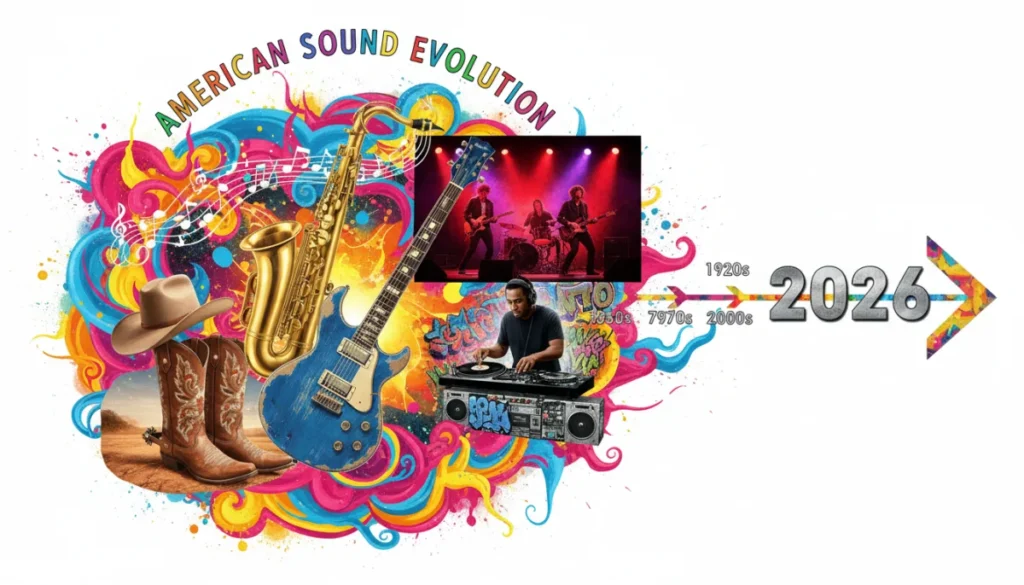
American music genres are a dynamic reflection of the nation’s diverse cultural heritage, continuously evolving and influencing global sounds through innovation, social commentary, and artistic expression across generations.
Embark on an extraordinary journey through the heart of America’s soundscape as we explore American music genres, delving into the seven foundational styles that have not only defined generations but continue to resonate and evolve into 2026. This exploration isn’t just about melodies and rhythms; it’s about understanding the cultural narratives, struggles, triumphs, and innovations that each genre encapsulates, offering a profound insight into the nation’s soul.
The roots of American music: blues and jazz
American music, a vibrant tapestry of sounds, finds its deepest roots in the soulful expressions of blues and the intricate improvisations of jazz. These two genres, born from the crucible of African American experience, laid much of the groundwork for virtually all popular music that followed in the United States.
The blues emerged from the spirituals, work songs, and field hollers of the late 19th century, primarily in the Southern United States. It was a raw, emotional outpouring, often reflecting hardship, resilience, and hope. Its characteristic call-and-response patterns and distinctive harmonies became a universal language of human emotion.
The enduring legacy of the blues
The blues, with its profound emotional depth, continues to influence countless artists and genres. Its simple yet powerful structure allows for endless interpretation, making it a timeless form of musical expression.
- Emotional storytelling: Blues lyrics often recount personal struggles and societal observations.
- Guitar innovation: The blues pioneered many electric guitar techniques now common in rock.
- Foundation of rock and roll: Early rock artists heavily borrowed from blues structures and themes.
- Global appeal: Its universal themes of hardship and hope resonate worldwide.
Jazz, often described as America’s classical music, sprang from the same fertile ground in the early 20th century, particularly in New Orleans. It fused African rhythms with European harmonies and forms, creating a new, highly improvisational, and syncopated sound. Its complex arrangements and spontaneous solos captivated audiences and pushed musical boundaries.
The interplay between blues and jazz is undeniable, with blues scales forming a core component of jazz improvisation and jazz musicians often reinterpreting blues standards. Together, they represent the foundational pillars upon which much of American musical identity is built, offering a rich historical and cultural narrative that transcends mere entertainment.
The rise of rock and roll: a cultural revolution
Rock and roll burst onto the scene in the mid-20th century, not just as a new musical genre but as a seismic cultural shift that challenged norms and redefined youth culture. Emerging from a blend of blues, gospel, jazz, and country, it quickly became the soundtrack to a generation eager for change.
This energetic new sound, characterized by its driving rhythms, electric guitars, and rebellious spirit, captivated teenagers across America. Artists like Elvis Presley, Chuck Berry, and Little Richard became icons, their music providing a voice for youthful exuberance and a rejection of traditional values.
The multifaceted evolution of rock
Rock and roll was never static; it continuously evolved, spawning countless subgenres that reflected changing societal landscapes and artistic experimentations. From surf rock to psychedelic rock, punk to heavy metal, each iteration pushed boundaries further.
- Social commentary: Rock often served as a platform for protest and social critique.
- Fashion and lifestyle: The genre heavily influenced youth fashion, attitudes, and rebellion.
- Technological advancements: Innovations in recording and amplification shaped its sound.
- Global spread: Rock music became a worldwide phenomenon, influencing cultures everywhere.
The genre’s raw energy and accessible structure allowed for widespread participation, giving rise to garage bands and local music scenes that further fueled its growth. Its impact extended beyond music, influencing film, art, and politics, making rock and roll an undeniable force in shaping modern American identity. Even today, its echoes are heard in contemporary music, proving its enduring power.
Country music: storytelling through sound
Country music, often referred to as America’s folk music, offers a rich narrative tradition steeped in the experiences of everyday life, rural landscapes, and heartfelt emotions. Originating in the American South, it draws from a diverse palette of folk songs, ballads, and blues, creating a distinctive sound that resonates with millions.
Initially known as “hillbilly music,” country evolved significantly, incorporating elements of gospel, bluegrass, and rockabilly. Its core appeal lies in its storytelling, with lyrics that often explore themes of love, loss, family, faith, and the simple pleasures and hardships of life.
The genre’s instrumentation is often characterized by acoustic guitars, banjos, fiddles, and steel guitars, which contribute to its warm, authentic sound. Artists like Hank Williams, Johnny Cash, and Loretta Lynn became legendary for their ability to connect with audiences through honest, relatable narratives.
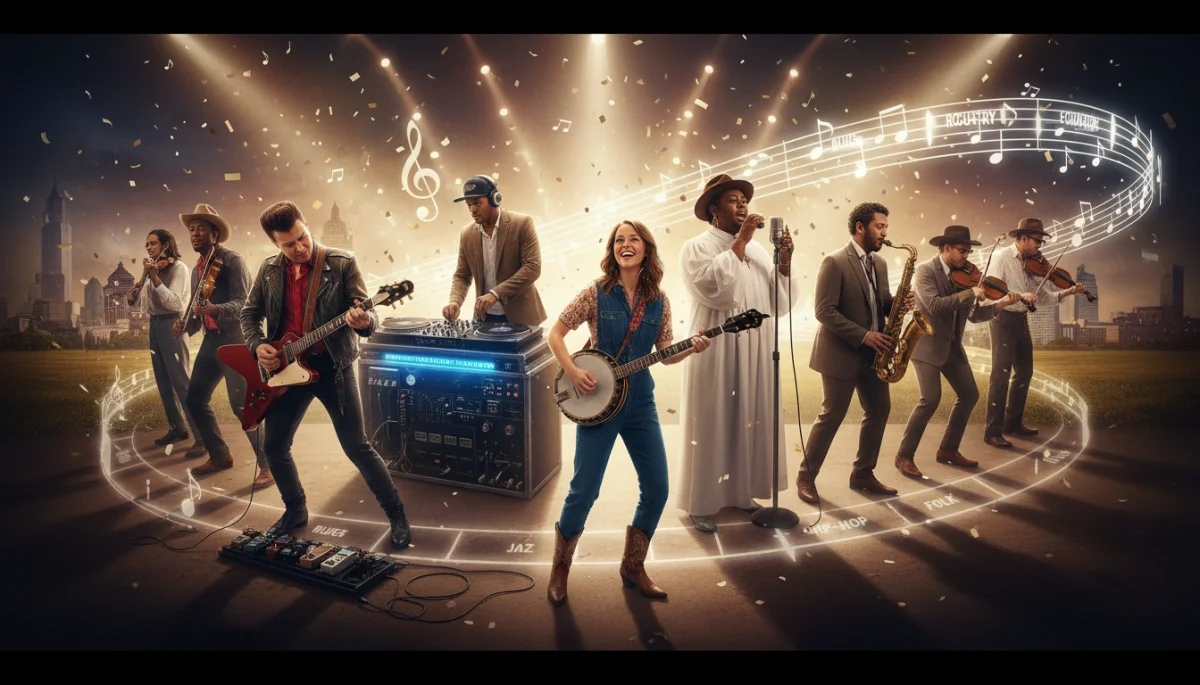
Country music’s ability to adapt while retaining its core identity has allowed it to remain relevant through decades. From traditional sounds to modern country-pop fusions, it continues to tell the American story, reflecting regional diversity and national sentiments. Its enduring popularity speaks to the universal appeal of its themes and its direct, unpretentious approach to music making.
The rhythmic revolution: R&B and soul
Rhythm and Blues (R&B) and Soul music represent a profound rhythmic revolution in American music, deeply rooted in the African American experience and profoundly influential across the globe. R&B emerged in the 1940s, blending blues, jazz, and gospel, characterized by its strong beat, expressive vocals, and often sexually suggestive lyrics.
As the 1950s progressed, R&B’s popularity soared, laying crucial groundwork for rock and roll. Artists like Ray Charles and Ruth Brown pushed boundaries, creating a sound that was both danceable and emotionally resonant. The genre was a powerful voice for black artists, often crossing over into mainstream charts and breaking down racial barriers.
The soulful expression of a generation
Soul music, which evolved from R&B and gospel in the late 1950s and 1960s, added an even deeper layer of emotional intensity and spiritual fervor. It was characterized by powerful vocalists, intricate horn arrangements, and lyrics that often spoke of love, social justice, and personal redemption.
- Vocal prowess: Soul music is known for its strong, often gospel-influenced vocalists.
- Emotional depth: Lyrics and melodies often convey profound feelings and experiences.
- Social impact: Soul artists were often at the forefront of the Civil Rights Movement.
- Musical innovation: It blended diverse musical traditions into a cohesive new sound.
Motown Records in Detroit and Stax Records in Memphis became epicenters for soul music, producing legendary artists such as Marvin Gaye, Aretha Franklin, James Brown, and Otis Redding. Their music not only topped charts but also served as a soundtrack to the Civil Rights Movement, carrying messages of hope, unity, and empowerment.
Even today, the influence of R&B and soul is pervasive, shaping contemporary pop, hip-hop, and even electronic music. Their legacy is a testament to the power of music to express deep human emotion, inspire social change, and transcend cultural divides, cementing their place as cornerstones of American music genres.
Pop music: the ever-evolving sound of the mainstream
Pop music, short for popular music, is arguably the most dynamic and commercially successful of all American music genres, constantly reinventing itself to reflect contemporary tastes and trends. Its primary characteristic is its broad appeal, aiming to captivate the largest possible audience through catchy melodies, relatable lyrics, and polished production.
While pop music has roots in various genres, its modern form began to solidify in the mid-20th century, drawing heavily from rock and roll, R&B, and country. Artists like Frank Sinatra and The Beatles (though British, their influence was immense in the US) laid foundational stones, demonstrating the power of widely accessible, well-crafted songs.
Key elements driving pop’s enduring appeal
The genre’s strength lies in its adaptability and willingness to absorb elements from other styles, making it a true cultural chameleon. Pop music often acts as a mirror to society, reflecting current fads, social issues, and technological advancements in music production.
- Catchy hooks: Memorable melodies and choruses are central to pop’s success.
- Mass appeal: Designed to be accessible and enjoyable for diverse audiences.
- Production value: Often features high-quality, state-of-the-art recording techniques.
- Trend responsiveness: Quickly incorporates new sounds and styles from other genres.
From the disco era of the 70s to the synth-pop of the 80s, the teen pop boom of the 90s, and the genre-blending sounds of today, pop music has consistently dominated the airwaves and charts. Artists like Michael Jackson, Madonna, and Beyoncé became global superstars, their music transcending borders and generations. The constant evolution of pop ensures its continued relevance, making it a perpetual force in shaping the sound of mainstream America and beyond.
Hip-hop: voice of a generation and global phenomenon
Hip-hop, born in the Bronx, New York, in the 1970s, rapidly evolved from an underground subculture into one of the most dominant and influential American music genres globally. More than just music, hip-hop is a cultural movement encompassing DJing, breakdancing, graffiti art, and emceeing (rapping), all intertwined with social commentary and artistic expression.
Initially a response to urban decay and economic hardship, hip-hop provided a creative outlet and a voice for marginalized communities. Early pioneers like DJ Kool Herc, Grandmaster Flash, and Afrika Bambaataa forged the groundwork, using turntables as instruments and spoken word to tell stories of their experiences.
The profound cultural impact of hip-hop
The genre’s lyrical prowess, often characterized by intricate rhymes, wordplay, and storytelling, allowed artists to address complex social issues, inequality, and everyday life with raw honesty. This authenticity resonated deeply, first within its community, then across the nation, and eventually worldwide.
- Social commentary: Hip-hop often addresses issues of race, poverty, and justice.
- Poetic lyricism: Known for complex rhyme schemes and narrative depth.
- Entrepreneurial spirit: Many hip-hop artists built vast business empires.
- Fashion and slang: Deeply influenced popular culture, language, and style.
Over the decades, hip-hop diversified into numerous subgenres, from conscious rap to gangsta rap, trap, and alternative hip-hop, continually pushing artistic boundaries. Its influence is evident in fashion, language, and political discourse, demonstrating its immense power as a cultural force. As it continues to evolve and innovate, hip-hop remains a critical reflection of American society and a powerful global ambassador for its unique sound.
Electronic dance music (EDM): pulse of the modern era
Electronic Dance Music (EDM), while having global roots, has cemented its place as a significant and continually growing force among American music genres, particularly since the late 20th century. Characterized by its synthesized sounds, repetitive beats, and often instrumental focus, EDM is designed primarily for dancing in clubs, festivals, and large gatherings.
Originating from disco, funk, and early electronic experiments, genres like house and techno emerged from American cities such as Chicago and Detroit in the 1980s. These pioneering sounds laid the foundation for the massive explosion of EDM we see today, evolving from underground scenes to mainstream popularity.
The genre’s appeal lies in its immersive sonic landscapes, its ability to create communal experiences on dance floors, and its constant innovation through technology. DJs and producers are the architects of this sound, often performing live sets that blend tracks seamlessly, creating an uninterrupted flow of energy.
EDM’s influence is pervasive, not only within its own sphere but also bleeding into pop, hip-hop, and R&B, where electronic elements and production techniques are increasingly common. Festivals dedicated solely to EDM now draw hundreds of thousands of attendees, showcasing its immense cultural and economic impact. As technology advances, EDM continues to push the boundaries of sound, offering a futuristic and often communal musical experience that defines the pulse of the modern era.
| Genre | Defining Characteristic |
|---|---|
| Blues & Jazz | Emotional depth, improvisation, and foundational rhythms. |
| Rock and Roll | Rebellious energy, electric guitars, and youth culture anthem. |
| Hip-Hop | Lyrical storytelling, rhythmic beats, and profound cultural impact. |
| Pop Music | Catchy melodies, mass appeal, and constant evolution. |
Frequently asked questions about American music genres
The earliest influential American music genres are undoubtedly the blues and jazz. Originating in the late 19th and early 20th centuries, these forms emerged from African American communities, blending spirituals, work songs, and folk traditions. They provided the foundational elements for much of the popular music that followed, shaping rhythms, melodies, and improvisational techniques.
Rock and roll had a revolutionary impact on American society, particularly on youth culture. It challenged traditional norms with its energetic sound and rebellious themes, fostering a sense of identity and freedom among teenagers. It also played a significant role in breaking down racial barriers, as artists and audiences of different backgrounds embraced the genre together, promoting cultural integration.
Country music’s uniqueness lies in its strong emphasis on storytelling and relatable narratives, often reflecting themes of everyday life, rural experiences, love, and loss. Its traditional instrumentation, including acoustic guitars, banjos, and fiddles, gives it an authentic, heartfelt sound. This genre maintains a deep connection to its folk roots while continuously evolving to appeal to new generations.
Hip-hop has evolved dramatically since its inception in the Bronx in the 1970s. It began as a localized cultural movement encompassing DJing, rapping, breakdancing, and graffiti. Over the decades, it has diversified into numerous subgenres, embraced complex lyrical styles, and become a global phenomenon, influencing fashion, language, and social commentary while maintaining its core identity as a voice for the voiceless.
Pop music plays a central role in the American music landscape as the mainstream’s ever-evolving sound. Its primary function is to appeal to a broad audience through catchy melodies, accessible lyrics, and polished production. Pop acts as a cultural mirror, quickly incorporating elements from other genres and reflecting contemporary trends, ensuring its consistent commercial success and widespread appeal across diverse demographics.
Conclusion
The journey through American music genres reveals a dynamic and interconnected history, where each style contributes a unique thread to the nation’s rich cultural fabric. From the raw emotion of blues and jazz to the rebellious energy of rock and roll, the heartfelt narratives of country, the soulful expressions of R&B, the widespread appeal of pop, the cultural force of hip-hop, and the modern pulse of EDM, these genres collectively tell the story of America. They reflect its struggles, triumphs, diversity, and relentless spirit of innovation. Understanding these musical evolutions offers not just an appreciation for their artistic merit, but a deeper insight into the societal shifts and human experiences that have shaped the United States into 2026 and beyond.
Related Posts: