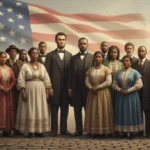
American Art Movements: 250 Years of Cultural Reflection
This article explores the rich tapestry of American artistic movements from 1776 to 2026, revealing how art has consistently mirrored and influenced the nation's evolving cultural landscape and historical narratives.
Por: Marcelle em 23 de setembro de 2026
Tracing 250 years of American artistic movements reveals a dynamic interplay between creative expression and the nation’s societal evolution, reflecting profound cultural shifts and historical narratives.
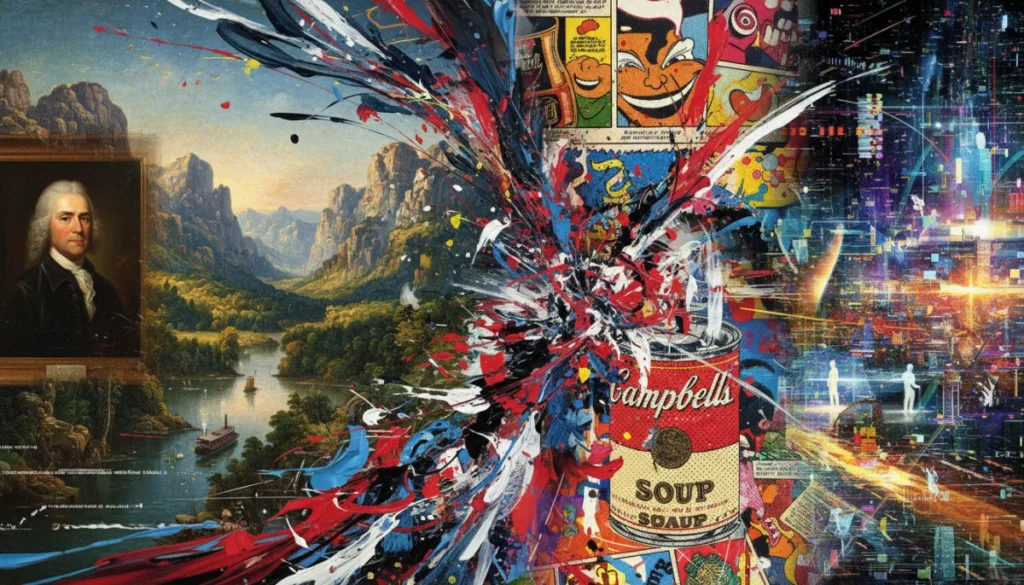
From 1776 to 2026: Tracing 250 Years of American Artistic Movements and Their Cultural Reflections delves into the profound ways art has mirrored and shaped the United States. This journey through time explores how American artists, across various movements, captured the spirit, struggles, and aspirations of their eras, offering invaluable insights into the nation’s evolving identity.
Founding Visions: Art in Early America (1776-1860)
The nascent years of the United States saw art primarily serving to establish a national identity and commemorate its heroes. Portraiture dominated, reflecting a desire to immortalize the figures who forged the new republic and to project an image of dignity and purpose. Artists like John Singleton Copley and Gilbert Stuart became instrumental in defining the visual narrative of this foundational period.
As the nation expanded westward, a new artistic sensibility emerged: landscape painting. The vast, untamed American wilderness became a powerful symbol of national promise and divine providence. The Hudson River School, with artists such as Thomas Cole and Frederic Edwin Church, celebrated the sublime beauty of the American landscape, often imbuing it with moral and spiritual significance.
The rise of national identity
Early American art was deeply intertwined with the quest for a distinct national identity, separate from European influences. While European academic traditions were certainly present, American artists began to infuse their work with themes unique to the new world.
Commemorative portraiture: Depicting founding fathers and key historical figures.
Historical painting: Narrating pivotal moments in the nation’s formation.
Genre scenes: Capturing everyday life and the emerging American character.
The art of this period laid the groundwork for future movements, establishing a tradition of representing American ideals and experiences. It was a time of artistic exploration, as artists sought to define what American art truly meant.
In conclusion, the art from 1776 to 1860 was a crucial period for the development of American art, focusing on national identity, heroic figures, and the awe-inspiring landscape. These early movements set the stage for the diverse artistic expressions that would follow.
Realism, Impressionism, and the Gilded Age (1860-1920)
The period following the Civil War brought significant social and economic changes, which were vividly reflected in the art of the time. The rise of industrialization, urbanization, and a growing middle class shifted artistic focus from grand historical narratives to more intimate, everyday scenes. Realism gained prominence, portraying life with an unvarnished truthfulness.
American artists, many of whom studied in Europe, brought back influences from movements like Impressionism. While adopting the loose brushwork and focus on light and atmosphere, American Impressionists often maintained a stronger sense of form and a more narrative approach than their European counterparts. Artists like Mary Cassatt and Childe Hassam captured moments of leisure and domesticity, often with a distinctly American sensibility.
Capturing the changing American scene
The Gilded Age, characterized by immense wealth and stark social inequalities, also found its way into artistic expression. Portraiture of the wealthy elite continued, often with a lavishness that reflected the era’s opulence. However, artists also began to depict the grittier realities of urban life and the struggles of the working class.
Ashcan school: Focused on urban realism, depicting city life’s raw energy.
American impressionism: Adapted European techniques to American landscapes and subjects.
Tonalism: Emphasized atmosphere and mood through soft, muted colors.
This era saw a diversification of artistic styles and subjects, moving beyond the purely nationalistic themes of earlier periods. Artists became more attuned to social commentary and the nuances of modern life.
In summary, the late 19th and early 20th centuries witnessed American art grappling with modernity, incorporating European influences while maintaining a unique American perspective. Realism and Impressionism offered new ways to interpret a rapidly changing society.
Modernism, Regionalism, and the Great Depression (1920-1945)
The early 20th century marked a dramatic shift towards Modernism in American art, fueled by increasing global exchange and a desire to break from traditional conventions. The Armory Show of 1913 introduced European avant-garde movements like Cubism and Fauvism to American audiences, sparking both controversy and innovation. Artists like Georgia O’Keeffe and Charles Demuth explored abstraction, industrial themes, and the American landscape with fresh eyes.
The economic hardships of the Great Depression, however, fostered a counter-movement: Regionalism. Artists like Grant Wood, Thomas Hart Benton, and John Steuart Curry turned away from European abstraction, choosing instead to depict scenes of rural American life, celebrating its resilience and traditional values. This movement resonated deeply with a nation seeking comfort and identity during a time of crisis.
Art and social commentary
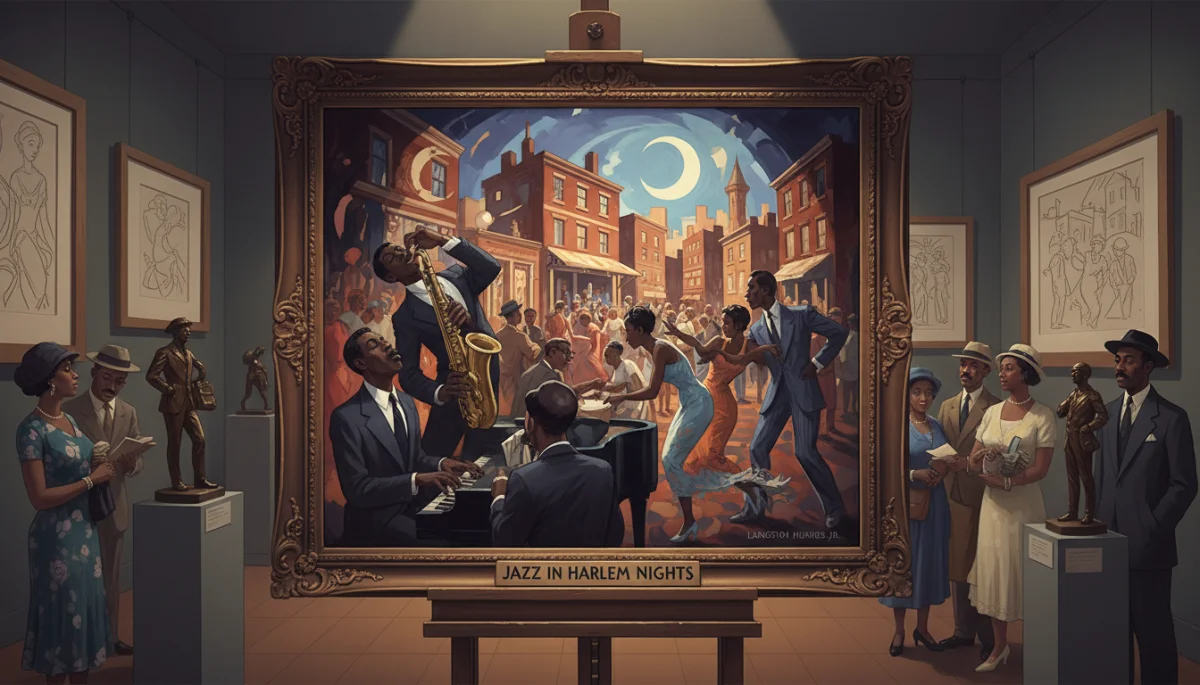
Beyond Regionalism, other forms of social commentary emerged. The Harlem Renaissance, a vibrant cultural movement centered in New York City, saw African American artists, writers, and musicians celebrating Black identity and experience. Artists like Aaron Douglas and Jacob Lawrence created powerful works that addressed themes of racial pride, struggle, and cultural heritage, contributing significantly to American modernism.
Precisionism: Combined Cubist elements with American industrial landscapes.
Harlem renaissance: Celebrated African American culture and identity.
Social realism: Addressed social and economic issues of the time.
The period also saw the rise of government-sponsored art programs, such as the Works Progress Administration (WPA), which employed artists to create public murals and artworks, making art more accessible and reflecting a collective national spirit.
In essence, the art from 1920 to 1945 was a complex tapestry of modern experimentation, regional pride, and profound social commentary, reflecting a nation grappling with profound change and seeking its artistic voice.
Abstract Expressionism and Pop Art (1945-1980)
Following World War II, New York City emerged as the new center of the art world, giving rise to Abstract Expressionism. This movement, characterized by large-scale, non-representational works, emphasized spontaneous expression and emotional intensity. Artists like Jackson Pollock, Mark Rothko, and Willem de Kooning became international figures, challenging traditional notions of painting and reflecting the existential anxieties and freedoms of the post-war era.
By the late 1950s and early 1960s, a reaction against the seriousness and introspection of Abstract Expressionism emerged in the form of Pop Art. Drawing inspiration from popular culture, advertising, and everyday objects, Pop artists like Andy Warhol, Roy Lichtenstein, and Claes Oldenburg created vibrant, often ironic works that blurred the lines between high art and mass culture. This movement reflected a consumer-driven society and a growing fascination with celebrity and commercial imagery.
Challenging artistic conventions
Both Abstract Expressionism and Pop Art were revolutionary in their own ways, pushing the boundaries of what art could be and challenging the established art world. Abstract Expressionism focused on the internal world of the artist, while Pop Art turned its gaze outwards, embracing the external world of commercialism.
Action painting: Emphasized the physical act of painting, as seen in Pollock’s drip technique.
Color field painting: Focused on large areas of solid color to evoke emotional responses.
Benday dots: Lichtenstein’s signature use of comic book printing techniques.
These movements not only redefined American art but also had a profound global impact, cementing America’s position as a dominant force in contemporary art. They reflected a society grappling with new freedoms, anxieties, and the pervasive influence of mass media.
To conclude, the mid-20th century was a period of radical artistic innovation, with Abstract Expressionism and Pop Art leading the charge. These movements profoundly reshaped the art world and offered unique perspectives on the changing American psyche.
Postmodernism, Identity, and Digital Art (1980-2000)
The late 20th century saw the rise of Postmodernism, a complex and diverse set of artistic approaches that questioned grand narratives and embraced eclecticism, irony, and appropriation. Artists explored themes of identity, globalization, and the impact of mass media, often blurring the lines between different art forms and disciplines. Photography, performance art, and video art gained significant prominence.
Identity politics became a central theme, with artists from diverse backgrounds using their work to explore issues of race, gender, sexuality, and class. Artists like Cindy Sherman, Jean-Michel Basquiat, and Keith Haring challenged societal norms and brought marginalized voices to the forefront. Their work often engaged directly with social issues, reflecting a more fragmented and multicultural America.
The dawn of the digital age
As technology advanced, digital art began to emerge, laying the groundwork for future artistic explorations. Early digital artists experimented with computer graphics, video installations, and interactive media, pushing the boundaries of traditional artistic mediums. This period also saw a growing emphasis on conceptual art, where the idea behind the artwork was often more important than its aesthetic form.
Appropriation art: Recontextualizing existing images or objects.
Performance art: Emphasizing live actions and audience engagement.
The art of this era reflected a society grappling with rapid technological change, increasing global interconnectedness, and a growing awareness of diverse identities. It was a time of questioning, experimentation, and artistic pluralism.
In conclusion, the late 20th century was characterized by Postmodernism’s questioning spirit, a strong focus on identity, and the nascent stages of digital art. This period set the stage for the highly diverse and interconnected art world of the 21st century.
Contemporary Art and the Future (2000-2026)
The turn of the millennium ushered in an era of unprecedented artistic diversity and global interconnectedness. Contemporary American art is characterized by a lack of a single dominant style, embracing a multitude of mediums, concepts, and influences. Artists continue to explore themes of identity, technology, environmental concerns, and social justice, often engaging in interdisciplinary practices.
Digital art and new media have become increasingly central, with artists utilizing virtual reality, augmented reality, artificial intelligence, and interactive installations to create immersive and thought-provoking experiences. The internet and social media have also transformed how art is created, disseminated, and consumed, fostering global dialogues and new artistic communities.
Art in a globalized world
Contemporary American art is deeply influenced by global events and diverse cultural perspectives. Artists are increasingly addressing issues of climate change, political polarization, migration, and the impact of digital life. There’s a growing emphasis on socially engaged art, where artists collaborate with communities and use their work to foster dialogue and inspire change.
Bio art: Incorporating living organisms and biological processes.
Net art: Art created specifically for the internet.
Social practice art: Engaging with social issues and communities.
The art world has also become more inclusive, with greater representation for artists from historically underrepresented groups. Museums and galleries are increasingly showcasing a broader range of voices and perspectives, reflecting the evolving demographics and values of the nation.
Looking ahead to 2026 and beyond, American art will undoubtedly continue to evolve, responding to new technologies, societal challenges, and global narratives. It remains a vital reflection of the nation’s ongoing journey.
In summary, contemporary American art is a dynamic and multifaceted field, characterized by technological innovation, social engagement, and a global outlook. It reflects a society that is constantly evolving and grappling with complex issues.
Art Movement
Key Characteristics
Early American Art
Focus on national identity, portraiture, and landscape (Hudson River School).
Modernism & Regionalism
Abstraction meets American rural life and social commentary (Harlem Renaissance).
Abstract Expressionism & Pop Art
Post-war emotional intensity and embrace of consumer culture.
Contemporary & Digital Art
Interdisciplinary, technology-driven, and socially engaged art reflecting globalization.
Frequently asked questions about American art history
What were the earliest significant American artistic movements?▼
The earliest significant movements included portraiture, vital for establishing national identity, and the Hudson River School, which celebrated the vast American landscape. These laid the groundwork for future artistic developments by focusing on uniquely American themes and subjects.
How did the Great Depression influence American art?▼
The Great Depression led to the rise of Regionalism, a movement that depicted realistic scenes of rural American life, emphasizing resilience. Government programs like the WPA also commissioned public art, making art more accessible and reflecting a collective national spirit during hard times.
What distinguished Abstract Expressionism from Pop Art?▼
Abstract Expressionism, emerging post-WWII, focused on emotional intensity and non-representational forms. Pop Art, a reaction to it, embraced popular culture, advertising, and everyday objects, often with irony, blurring the lines between high art and mass consumerism.
How has technology impacted contemporary American art?▼
Technology has profoundly impacted contemporary American art, leading to the rise of digital art, virtual reality, and AI-driven installations. The internet and social media have also transformed art’s creation, dissemination, and consumption, fostering global artistic dialogues and new communities.
Why is understanding American art history important for cultural reflection?▼
Understanding American art history provides a unique lens through which to view the nation’s cultural evolution. Each movement reflects societal shifts, historical events, and changing identities, offering invaluable insights into the American experience across 250 years, from 1776 to 2026.
Conclusion
The journey through 250 years of American artistic movements underscores the profound connection between art and national identity. From the foundational portraits of early America to the complex digital expressions of today, art has consistently served as a mirror, reflecting the nation’s triumphs, struggles, and evolving cultural landscape. As we look towards 2026, the ongoing dynamism and diversity within American art promise continued insights into the American spirit, ensuring its role as a vital interpreter of our shared human experience and societal progress.