Great Migration’s Cultural Impact: A 2026 Centennial View
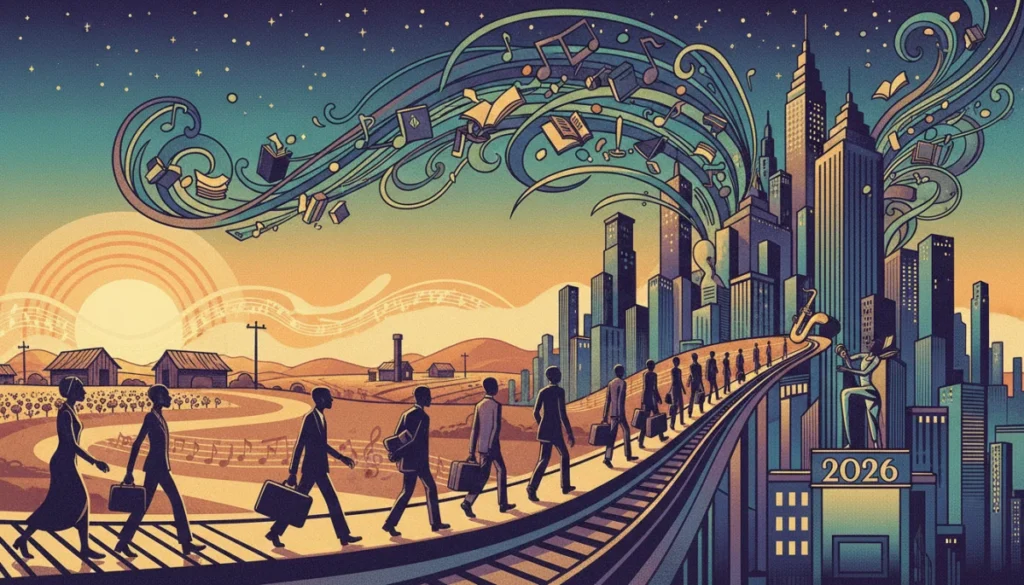
The Great Migration, a monumental demographic shift, profoundly reshaped American culture, arts, and social structures, with its 100-year legacy continuing to resonate in 2026.
Por: Marcelle em 23 de setembro de 2026
The Great Migration, a monumental demographic shift, profoundly reshaped American culture, arts, and social structures, with its 100-year legacy continuing to resonate in 2026.
As we stand in 2026, a century after the peak of this transformative movement, it’s crucial to reflect on The Cultural Impact of the Great Migration: A 2026 Perspective on its 100-Year Legacy. This profound demographic shift irrevocably altered the social, economic, and cultural fabric of the United States. How do its echoes continue to shape our contemporary society?
Understanding the Great Migration’s Historical Context
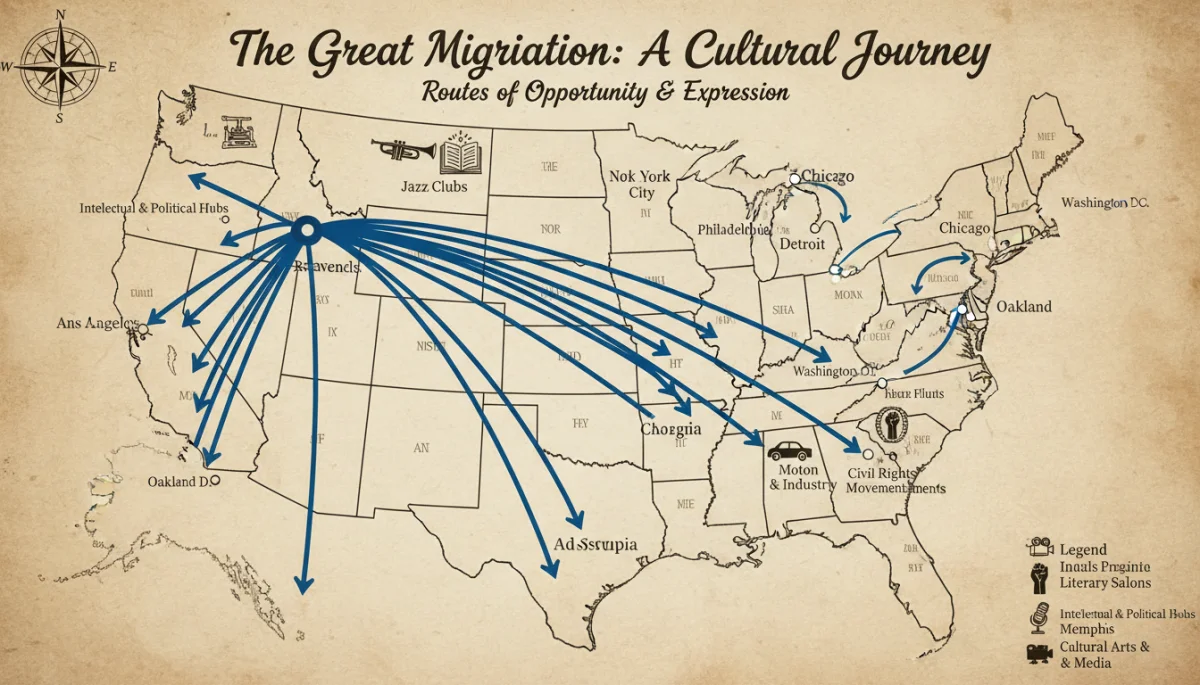
The Great Migration, primarily spanning from the 1910s to the 1970s, saw over six million African Americans move from the rural Southern United States to the urban Northeast, Midwest, and West. This mass exodus was driven by a complex interplay of factors, including the oppressive Jim Crow laws, racial violence, and limited economic opportunities in the South, contrasted with the promise of industrial jobs and perceived greater freedoms in Northern cities.
This movement was not merely a physical relocation; it was a quest for dignity, economic advancement, and a better life. The decision to leave ancestral lands and communities was fraught with challenges, yet the hope for a new beginning fueled an unparalleled human migration within the nation’s borders. The subsequent arrival in urban centers created new dynamics, both opportunities and tensions, laying the groundwork for many of the cultural transformations we now analyze.
The historical context of the Great Migration is essential for understanding its enduring cultural impact. It was a period of immense social upheaval and personal sacrifice, shaping generations and fundamentally altering the racial and cultural landscape of American cities. The legacy of this initial displacement and subsequent integration continues to be a cornerstone of American identity.
The Harlem Renaissance: A Cultural Explosion
One of the most immediate and vibrant cultural manifestations of the Great Migration was the Harlem Renaissance. This period, primarily in the 1920s and 1930s, saw an unprecedented flourishing of African American art, literature, music, and intellectual thought centered in Harlem, New York City.
The influx of African Americans from the South brought diverse experiences and traditions to urban centers, creating a rich cultural melting pot. Writers, artists, musicians, and thinkers converged, challenging existing racial stereotypes and celebrating Black identity through their creative works.
Literary Giants and New Narratives
The literary output of the Harlem Renaissance introduced new voices and perspectives, fundamentally changing American literature.
Langston Hughes’ poetry captured the rhythms of Black life and aspirations.
Zora Neale Hurston explored Southern Black folklore and female agency.
Claude McKay’s works articulated the struggles against racial injustice.
Richard Wright’s novels later depicted the harsh realities of urban racism.
These authors, among many others, created a body of work that was both intensely personal and universally resonant, giving voice to a previously marginalized community.
The Birth of Jazz and Blues
Music was another powerful medium through which the Great Migration’s cultural impact was felt. The blues, born in the Mississippi Delta, traveled north with migrants, evolving into new forms like jazz.
Louis Armstrong’s innovative trumpet playing redefined musical improvisation.
Duke Ellington’s orchestral compositions captivated audiences worldwide.
Bessie Smith’s powerful blues vocals spoke to the joys and sorrows of Black life.
The vibrant club scene in Harlem and Chicago became epicenters of musical innovation.
This musical revolution not only entertained but also served as a vital form of expression and resistance, influencing virtually every subsequent genre of American popular music. The sounds of the South transformed into the soundtrack of the nation’s burgeoning urban centers.
Shaping Urban Landscapes and Social Structures
The arrival of millions of African Americans in Northern and Western cities dramatically reshaped urban demographics and social structures. Neighborhoods transformed, new communities formed, and existing racial dynamics were challenged. This period saw both the blossoming of Black cultural enclaves and the intensification of racial segregation.
The concentration of African Americans in specific urban areas, often due to discriminatory housing practices, led to the creation of vibrant, self-sufficient communities. These neighborhoods, while often facing systemic disadvantages, fostered a strong sense of identity, mutual support, and cultural innovation. They became crucibles for political activism and social change.
The demographic shift also led to significant social restructuring. The rise of Black churches, community organizations, and businesses provided essential services and fostered leadership within these growing urban populations. This infrastructure was critical in advocating for civil rights and addressing the systemic inequalities faced by migrants.
The impact extended beyond the Black community, influencing the broader urban landscape. Cities became more diverse, albeit often segregated, and the cultural contributions of African Americans began to permeate mainstream society, albeit slowly and often through appropriation. The challenges of integration and the fight against racial discrimination became central to the urban experience.
Political Activism and the Civil Rights Movement
The Great Migration laid crucial groundwork for the Civil Rights Movement. By moving north, African Americans gained a new, albeit imperfect, form of political agency. While still facing discrimination, they could vote in greater numbers and organize more freely than in the Jim Crow South.
The concentration of Black populations in urban centers created powerful voting blocs and fostered the growth of civil rights organizations. Leaders like W.E.B. Du Bois and Marcus Garvey found larger platforms, and organizations like the NAACP gained significant traction, advocating for legal and social equality.
New Avenues for Advocacy
The urban environment provided fertile ground for political mobilization and the development of new strategies for combating racial injustice.
The formation of community-based political groups.
Increased participation in national elections.
The growth of Black-owned media outlets to disseminate information.
Legal challenges to segregation and discrimination in housing and employment.
These efforts coalesced into a powerful force that would eventually challenge the foundations of segregation and inequality across the nation. The Great Migration transformed a largely disenfranchised rural population into an urban political force.
The Role of Labor and Unions
The pursuit of industrial jobs also brought African Americans into new relationships with labor unions. While often facing discrimination within unions themselves, their presence in the industrial workforce made them an undeniable force, influencing labor politics and pushing for more inclusive practices.
The political consciousness fostered during this period was instrumental in the mid-20th century, providing the organizational strength and moral imperative for the victories of the Civil Rights Movement. The fight for equality, ignited by the migration, continued for decades, reshaping American law and society.
Enduring Legacy in Contemporary American Culture (2026 Perspective)
Looking at 2026, the cultural impact of the Great Migration remains profoundly visible and continues to evolve. Its legacy is woven into the fabric of contemporary American identity, influencing everything from popular music to culinary traditions, and from urban planning to social justice movements.
The diversity and vibrancy of American cities today can be directly traced to the Great Migration. The cultural fusion that began a century ago has only deepened, creating a rich tapestry of experiences and expressions. This historical movement continues to inform discussions on race, class, and urban development.
Music and Arts Today
The descendants of the blues and jazz, born from the migration, are evident in hip-hop, R&B, and countless other contemporary genres. Artists continually draw inspiration from this rich heritage, exploring themes of identity, struggle, and resilience that echo the migrant experience.
Hip-hop’s storytelling tradition often reflects urban narratives shaped by migration.
Contemporary R&B frequently incorporates soulful melodies rooted in earlier Black music.
Visual artists continue to interpret the themes of displacement and belonging.
Literary works explore multi-generational impacts of the journey north.
The cultural narratives established during and after the Great Migration continue to provide a framework for understanding and expressing the African American experience in the 21st century.
Social Justice and Identity
The struggles for equality that began with the Great Migration are still being fought today. Modern social justice movements, such as Black Lives Matter, draw upon a long history of activism and resistance that has its roots in the organizational power built during and after the migration. The fight for equitable housing, education, and economic opportunity continues to be a central theme.
Moreover, the concept of African American identity itself was profoundly shaped by the migration. The blending of Southern traditions with urban experiences forged a new, multifaceted identity that continues to evolve. In 2026, understanding this historical journey is vital for comprehending the complexities of American society.
Challenges and Triumphs: A Balanced View
The Great Migration, while a source of immense cultural enrichment and social progress, was also marked by significant challenges. Migrants often faced harsh discrimination, economic exploitation, and social alienation in their new homes. The promise of the North was often met with new forms of prejudice, including redlining, job discrimination, and racial violence.
Despite these obstacles, the resilience and determination of the migrants led to numerous triumphs. They built new communities, established vibrant cultural institutions, and laid the groundwork for future generations to achieve greater social and economic mobility. Their contributions to the arts, sciences, politics, and economy are immeasurable.
Overcoming Systemic Barriers
Establishing self-help organizations and mutual aid societies.
Creating Black-owned businesses to serve their communities.
Fighting for better housing and educational opportunities.
Challenging discriminatory practices through legal and political means.
These acts of resistance and community-building were crucial in transforming adversity into opportunity, slowly chipping away at the structures of racial inequality. The triumphs were hard-won, but they paved the way for future generations.
A Continuing Dialogue
In 2026, we recognize that the challenges faced by migrants continue to resonate in contemporary issues such as urban inequality, access to resources, and systemic racism. The conversation about the Great Migration is not just about history; it’s about understanding the roots of present-day disparities and working towards a more equitable future.
The triumphs, however, serve as powerful reminders of human resilience and the capacity for change. The cultural richness and social progress born from this era stand as a testament to the enduring spirit of those who sought a better life. This balanced perspective is essential for a comprehensive understanding of the Great Migration’s long-term impact.
Key Impact Area
Brief Description
Cultural Flourishing
Sparked movements like the Harlem Renaissance, enriching American arts, literature, and music.
Urban Transformation
Reshaped city demographics, leading to new communities and social structures.
Political Empowerment
Fueled the Civil Rights Movement by creating new avenues for activism and voting power.
Enduring Legacy
Continues to influence contemporary American identity, music, and social justice dialogues.
Frequently Asked Questions
What was the primary driver of the Great Migration?▼
The primary drivers were a combination of oppressive Jim Crow laws, racial violence, and limited economic opportunities in the Southern United States, coupled with the allure of industrial jobs and greater social freedoms in Northern and Western cities.
How did the Great Migration impact American music?▼
It profoundly influenced American music by bringing Southern blues traditions northward, which then evolved into jazz, gospel, and eventually laid foundational elements for R&B and hip-hop, reshaping the national soundscape.
What was the Harlem Renaissance’s significance?▼
The Harlem Renaissance was a pivotal cultural movement that celebrated African American art, literature, and intellectual thought, challenging racial stereotypes and fostering a strong sense of Black identity and pride during the 1920s and 30s.
How did the Migration contribute to the Civil Rights Movement?▼
It concentrated African American populations in urban centers, creating powerful voting blocs and fostering community organizations that became crucial for political mobilization and advocacy against racial injustice, setting the stage for the Civil Rights Movement.
Is the Great Migration’s legacy still relevant in 2026?▼
Absolutely. Its legacy is deeply embedded in contemporary American culture, influencing urban development, social justice dialogues, popular music, and the ongoing discussions surrounding race and identity in the United States.
Conclusion
The Great Migration Cultural Impact, viewed from a 2026 perspective, is an undeniable force that continues to shape the United States. Its century-long legacy is not merely a historical footnote but a living, breathing influence on American society, politics, and culture. From the vibrant artistic explosions of the Harlem Renaissance to the foundational groundwork laid for the Civil Rights Movement, the movement of millions of African Americans from the South to urban centers across the nation created a profound and irreversible transformation. Understanding this monumental period allows us to better grasp the complexities of our present and to appreciate the resilience, creativity, and enduring spirit of those who sought a better future. The echoes of the Great Migration are heard in every genre of American music, seen in the diverse tapestry of our cities, and felt in the ongoing pursuit of justice and equality.