Generative AI in Historical Research: A New Era for American Studies?

Generative AI will profoundly reshape historical research in American Studies by 2026, offering innovative methods for source analysis and narrative synthesis.
Imagine a future where uncovering forgotten narratives and analyzing vast historical archives is accelerated by intelligent machines. By 2026, the Generative AI History will profoundly transform how scholars approach historical research in American Studies, ushering in an era of unprecedented analytical capability and ethical considerations. How will these advanced tools redefine our understanding of the past?
The Dawn of AI-Powered Historical Inquiry
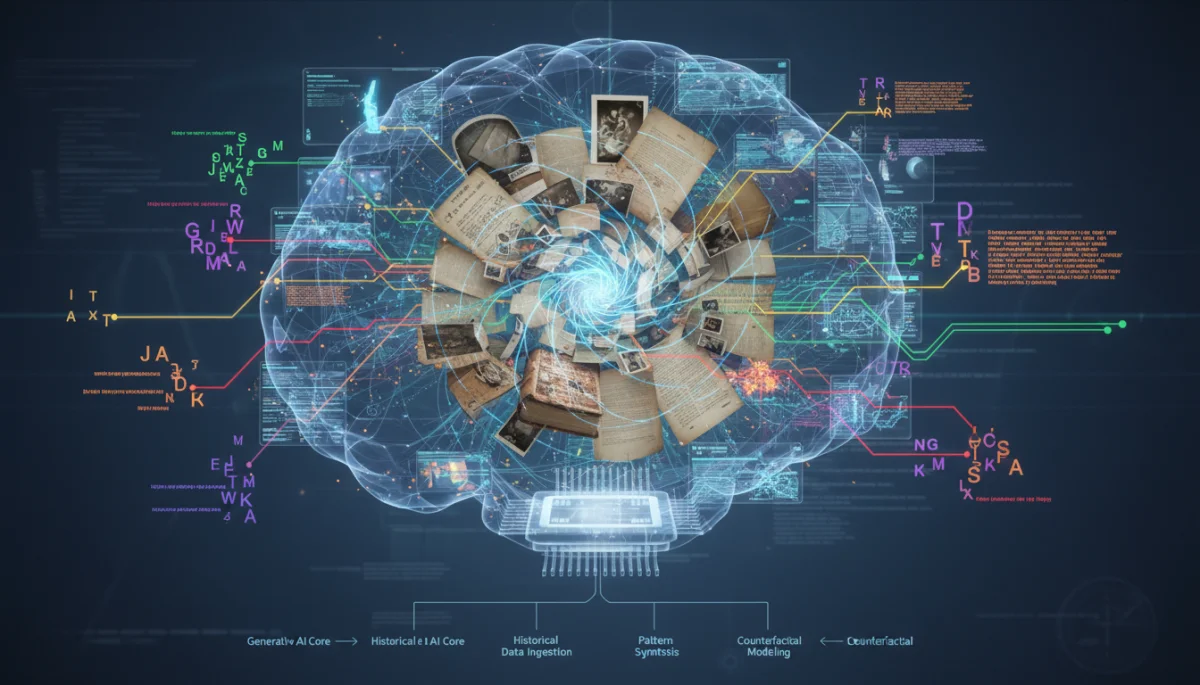
The integration of generative AI into historical research marks a pivotal moment, moving beyond traditional digital humanities tools. This new wave of AI can not only process vast quantities of data but also generate hypotheses, synthesize information, and even draft preliminary narratives. This capability promises to democratize access to historical data and accelerate the pace of discovery.
Historians are increasingly faced with an explosion of digital sources, from digitized newspapers and government records to personal letters and oral histories. Manually sifting through these immense archives is a monumental task. Generative AI offers a sophisticated solution, allowing researchers to explore connections and patterns that might otherwise remain hidden.
Revolutionizing Source Discovery and Analysis
One of the most immediate impacts of generative AI is its ability to enhance source discovery and analysis. AI algorithms can scan millions of documents, identifying relevant texts based on complex queries and even inferring connections between seemingly disparate sources. This moves beyond simple keyword searches, allowing for more nuanced contextual understanding.
- Automated Document Classification: AI can categorize vast collections of unstructured text, images, and audio, making them more searchable and organized for specific research questions.
- Pattern Recognition: Advanced algorithms can detect subtle linguistic patterns, thematic shifts, and social networks within historical texts, revealing trends that human researchers might miss.
- Cross-Referencing: Generative AI can cross-reference information across diverse datasets, linking events, individuals, and ideas from different archives to build a more comprehensive picture.
The ability of generative AI to rapidly synthesize and present information from diverse sources means that historians can spend less time on tedious data collection and more time on critical interpretation and analysis. This shift promises to deepen scholarly engagement with complex historical questions, fostering new avenues of inquiry.
Reshaping Narrative Construction and Interpretation
Beyond data processing, generative AI holds the potential to fundamentally alter how historical narratives are constructed and interpreted. While AI cannot replace human judgment or the nuanced understanding of historical context, it can serve as a powerful co-pilot in the storytelling process. This involves assisting with outlining, drafting, and even identifying gaps in existing historical accounts.
The traditional process of historical writing often involves a painstaking effort to piece together fragments of evidence into a coherent story. Generative AI can streamline this by suggesting narrative structures, identifying compelling evidence for arguments, and even generating initial drafts of sections based on provided data and research questions. This doesn’t mean AI writes history independently, but rather that it provides a robust framework for human scholars to refine and imbue with critical insight.
AI as a Collaborative Tool for Historians
Historians can leverage generative AI to explore alternative interpretations of events by prompting the AI to construct narratives from different perspectives or with varying emphasis on certain sources. This can help scholars test hypotheses and challenge established understandings, fostering a more dynamic and iterative research process.
- Hypothesis Generation: AI can analyze data to suggest new hypotheses or research questions that might not be immediately apparent to human researchers.
- Drafting Assistance: Generative models can produce initial outlines, summaries of sources, or even first drafts of narrative sections, allowing historians to focus on refining arguments and stylistic choices.
- Identifying Gaps: By comparing existing narratives with comprehensive data, AI can highlight areas where evidence is scarce or where further research is needed.
The collaborative potential of AI extends to public history as well. AI-generated summaries or interactive historical narratives can make complex research more accessible to a broader audience, fostering greater engagement with American history. However, careful oversight is crucial to ensure accuracy and prevent the propagation of misinformation.
Ethical Considerations and Bias in AI-Powered History
While the promise of generative AI in historical research is immense, it also brings significant ethical considerations and the pervasive issue of algorithmic bias. Historical data itself often reflects societal biases, power imbalances, and omissions, and if not carefully managed, AI models trained on such data can perpetuate and even amplify these biases. Addressing these challenges is paramount to ensuring responsible and equitable historical scholarship.
The datasets used to train generative AI models are not neutral; they are products of human creation and selection, inherently carrying the biases of their time and creators. If an AI is trained predominantly on sources from a dominant perspective, it may inadvertently marginalize or misrepresent the experiences of underrepresented groups. Historians must actively work to diversify training data and critically examine the outputs of AI tools for potential biases.
Mitigating Bias and Ensuring Accuracy
Developing robust methodologies for identifying and mitigating bias in AI-generated historical insights is a critical task for the American Studies community. This involves transparency in AI model development, careful curation of training datasets, and rigorous human oversight of AI outputs. The goal is not to eliminate AI, but to make it a more reliable and ethical partner in research.
- Data Curation: Actively seeking out and incorporating diverse and marginalized voices into training datasets to ensure a more representative historical record.
- Algorithmic Audits: Regularly auditing AI models for biases in their outputs and adjusting their parameters to promote fairness and accuracy.
- Human Oversight: Maintaining human historians as the ultimate arbiters of historical truth, critically evaluating AI-generated content for accuracy, nuance, and ethical implications.
The ethical use of generative AI also extends to issues of intellectual property, data privacy, and the potential for deepfakes or fabricated historical sources. Scholars must establish clear guidelines and best practices to navigate these complex terrains, ensuring that AI enhances, rather than compromises, the integrity of historical inquiry.
Transforming Pedagogy in American Studies
The advent of generative AI will not only change how historians conduct research but also how American Studies is taught and learned. Educators must adapt curricula to equip students with the skills to effectively utilize AI tools while critically evaluating their outputs. This includes understanding AI’s capabilities, limitations, and ethical implications, preparing a new generation of scholars for an AI-integrated academic landscape.
Traditional historical methods courses will need to evolve to include modules on digital humanities, data science, and AI literacy. Students will need to learn how to formulate effective prompts for AI models, interpret complex AI-generated analyses, and discern credible information from potential AI hallucinations or biased outputs. The focus will shift from rote memorization to critical thinking and analytical problem-solving with AI assistance.
Developing AI Literacy for Future Historians
Preparing students for an AI-driven future means fostering a deep understanding of both the technical aspects and the philosophical questions surrounding AI in historical research. This includes engaging with debates about historical truth, the nature of evidence, and the role of human interpretation in an age of machine intelligence. American Studies programs have a unique opportunity to lead in this interdisciplinary endeavor.
- Critical AI Engagement: Teaching students to critically assess AI-generated content, recognizing its strengths and weaknesses, and understanding the potential for bias.
- Prompt Engineering: Equipping students with the skills to craft effective prompts that yield relevant and nuanced historical insights from generative AI models.
- Interdisciplinary Skills: Integrating data science and computational thinking into historical methodology, preparing students for careers that increasingly demand these skills.
By embracing these pedagogical shifts, American Studies departments can ensure that their graduates are not only knowledgeable about the past but also adept at navigating the cutting-edge tools that will shape future historical inquiry. This proactive approach will solidify the discipline’s relevance in a rapidly changing technological landscape.
The Future Landscape: Collaboration and Innovation
Looking ahead to 2026 and beyond, the future of historical research in American Studies will likely be characterized by increased collaboration between historians, computer scientists, and data ethicists. This interdisciplinary approach will be essential for developing more sophisticated, reliable, and ethically sound AI tools tailored to the unique challenges of historical inquiry. Innovation will thrive at the intersection of these fields.
The development of specialized AI models for historical research, perhaps even models trained specifically on American historical archives, could lead to breakthroughs in understanding complex societal dynamics, cultural shifts, and individual experiences. These tools will not replace the historian’s nuanced understanding but will augment their capabilities, allowing for deeper and broader explorations of the past.
Emerging AI Applications in American Studies
New applications of generative AI are constantly emerging, promising to expand the horizons of historical research. From creating interactive historical simulations to generating alternative timelines based on counterfactual scenarios, the creative potential is vast. These tools can help bring history to life in new ways, engaging both scholars and the public.
- Interactive Historical Simulations: Developing AI-powered simulations that allow users to explore historical events from different perspectives, understanding the complexities of decision-making.
- Counterfactual History Exploration: Using AI to model potential outcomes of alternative historical choices, offering new insights into causality and contingency.
- Digital Storytelling Platforms: Creating platforms where AI assists in constructing multimedia historical narratives, integrating text, images, audio, and video for immersive experiences.
The landscape of historical research is evolving rapidly, and generative AI is a key driver of this change. By fostering an environment of collaboration, ethical consideration, and continuous innovation, American Studies can harness the power of AI to unlock new understandings of its rich and complex past, ensuring the discipline remains vibrant and relevant for generations to come.
Challenges and Opportunities for American Studies Scholars
The integration of generative AI presents both significant challenges and unparalleled opportunities for scholars in American Studies. On one hand, there’s the challenge of adapting to new technologies, understanding their technical intricacies, and critically assessing their outputs. On the other, these tools offer the chance to tackle research questions previously deemed unfeasible due to the sheer volume of data or the complexity of analysis required. Navigating this new terrain demands a blend of technological literacy and traditional historical acumen.
One of the primary challenges lies in the ‘black box’ nature of some AI models, where the exact reasoning behind an AI’s output can be opaque. Historians, who rely heavily on transparent methodologies and verifiable evidence, must develop strategies to interrogate AI’s conclusions and ensure their scholarly integrity. This might involve developing explainable AI (XAI) approaches specifically for historical data, where the AI provides not just an answer but also the evidential pathways that led to it.
Seizing New Research Frontiers
Despite these challenges, the opportunities are transformative. Generative AI can democratize access to research, enabling scholars from institutions with fewer resources to conduct large-scale analyses previously limited to well-funded projects. It can also foster interdisciplinary dialogue, bringing together historians with experts in computer science, linguistics, and sociology to tackle complex societal issues through a historical lens.
- Enhanced Interdisciplinary Research: AI facilitates collaboration across disciplines, allowing historians to integrate insights from fields like sociology, economics, and political science more effectively.
- Access to Underutilized Archives: AI can make previously inaccessible or overwhelming archives, such as vast collections of handwritten documents or obscure oral histories, more tractable for research.
- Personalized Learning Experiences: For students, AI can offer personalized learning pathways, tailoring historical content and research tasks to individual learning styles and interests.
Ultimately, the successful integration of generative AI into American Studies will depend on the willingness of scholars to embrace new tools while upholding the core tenets of historical scholarship: rigorous evidence, critical interpretation, and ethical responsibility. This balance will define the new era of historical research.
| Key Impact Area | Brief Description |
|---|---|
| Source Discovery | AI accelerates finding and analyzing vast digital historical archives. |
| Narrative Construction | AI assists in drafting, outlining, and identifying narrative gaps. |
| Ethical Considerations | Addressing bias and ensuring accuracy in AI-generated historical insights. |
| Pedagogical Shifts | Curricula adapt to teach AI literacy and critical evaluation of AI tools. |
Frequently Asked Questions about AI in Historical Research
Generative AI will augment, not replace, the historian’s role by automating data sifting and initial analysis. Historians will focus more on critical interpretation, contextualization, and ethical oversight, using AI as a powerful research assistant to explore deeper historical questions.
Yes, AI models trained on biased historical data can perpetuate and amplify existing biases. Scholars must actively curate diverse datasets, audit AI outputs for fairness, and maintain human oversight to mitigate these risks and ensure accurate representation.
Historians will need AI literacy, including prompt engineering, critical evaluation of AI outputs, and an understanding of algorithmic bias. Interdisciplinary skills in data science and computational thinking will also become increasingly valuable for effective research.
By analyzing vast, previously unsearchable archives, AI can identify patterns and connections in documents that shed light on underrepresented groups. It can help bring forgotten narratives to the forefront, offering a more inclusive understanding of the past.
No, AI is expected to free historians from mundane tasks, allowing them to dedicate more time to nuanced interpretation and critical analysis. The human element of understanding context, empathy, and ethical reasoning remains irreplaceable in historical scholarship.
Conclusion
The year 2026 marks a significant inflection point for historical research in American Studies, with generative AI emerging not as a threat, but as a transformative partner. While navigating the ethical complexities and inherent biases of AI requires vigilance, the opportunities for enhanced source discovery, refined narrative construction, and innovative pedagogical approaches are immense. By embracing these advancements thoughtfully and critically, scholars can unlock new dimensions of the past, enriching our understanding of American history for generations to come. The future of historical inquiry is collaborative, interdisciplinary, and profoundly exciting.
