Industrial Revolution in America: 3 Breakthroughs by 1900
The Industrial Revolution in America, driven by three pivotal technological breakthroughs by 1900, dramatically altered labor practices, spurred unprecedented economic growth, and reshaped the social fabric of the United States.
Por: Marcelle em 23 de setembro de 2026
The Industrial Revolution in America, propelled by key technological advancements like interchangeable parts, the Bessemer process, and widespread electrification by 1900, fundamentally transformed labor, society, and the national economy.
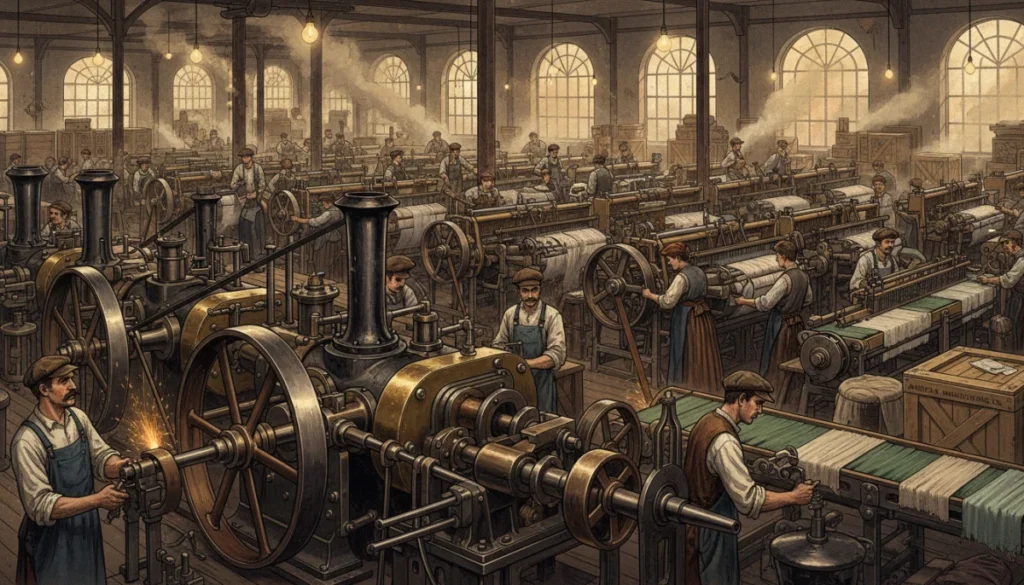
The Industrial Revolution in America, a period of profound transformation spanning the late 18th to early 20th centuries, irrevocably reshaped the nation’s economic and social landscape. By 1900, the cumulative impact of several technological breakthroughs had fundamentally altered the nature of labor, moving from artisanal craftsmanship to mass production. This era wasn’t just about new machines; it was about a paradigm shift in how work was organized, how goods were produced, and ultimately, how American society functioned.
The rise of interchangeable parts and mass production
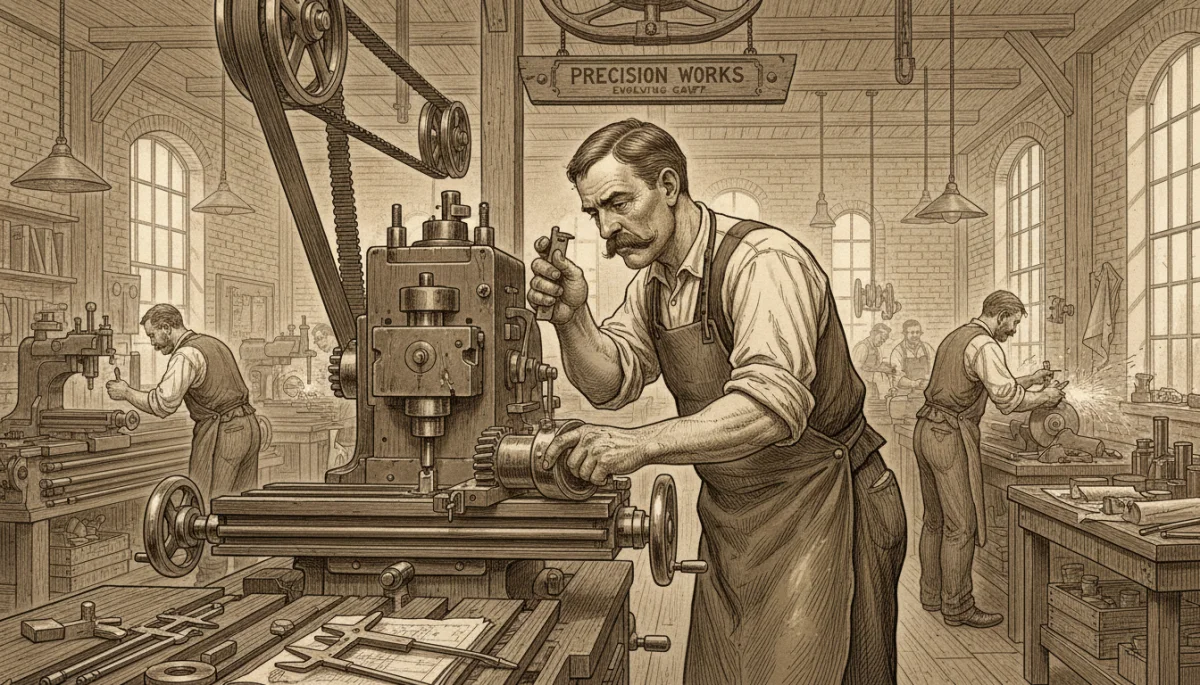
The concept of interchangeable parts, though initially slow to gain traction, became a cornerstone of American industrialization. This innovation allowed for the standardized production of components, meaning that if one part of a machine broke, it could be easily replaced without having to craft a custom-made piece. This seemingly simple idea had monumental implications for manufacturing efficiency and the division of labor.
Eli Whitney is often credited with popularizing interchangeable parts in the United States, particularly in the production of muskets for the government. While his actual implementation was more complex than often portrayed, the principle he championed laid the groundwork for future industrial giants. The ability to produce components uniformly paved the way for assembly lines and, consequently, mass production, transforming factories into highly efficient, albeit often monotonous, workplaces.
Impact on skilled craftsmanship
Decline of artisanal trades: The demand for highly skilled artisans who could craft entire products from start to finish diminished significantly.
Rise of specialized tasks: Labor was broken down into simpler, repetitive tasks, requiring less overall skill but greater speed and endurance.
Increased production volume: Factories could churn out goods at an unprecedented rate, making products more accessible and affordable to the average consumer.
The system of interchangeable parts fostered a new industrial ecosystem where precision engineering and standardized processes became paramount. This shift not only made manufacturing more cost-effective but also democratized access to goods that were once considered luxuries. The implications for the workforce were profound, creating new categories of labor while rendering others obsolete, setting the stage for organized labor movements.
The Bessemer process and the age of steel
Before the mid-19th century, steel was an expensive and labor-intensive material to produce, primarily used for specialized tools and luxury items. The introduction of the Bessemer process in the 1850s, however, revolutionized steelmaking, making it possible to produce high-quality steel quickly and economically. This breakthrough was critical for the rapid industrial expansion that characterized late 19th-century America.
Henry Bessemer’s invention involved blowing air through molten pig iron to remove impurities, drastically reducing the time and cost associated with steel production. This new, stronger, and more versatile material rapidly replaced iron in countless applications, from railway tracks and bridges to skyscrapers and machinery. The availability of cheap steel fueled unprecedented construction booms and technological advancements across various sectors.
Steel’s transformative applications
The widespread adoption of Bessemer steel had a cascading effect on American industry. It enabled the construction of taller, more robust buildings, transforming urban skylines. The expansion of railway networks became economically viable, connecting distant markets and facilitating the movement of raw materials and finished goods. Furthermore, machinery itself became stronger and more durable, leading to greater efficiency in factories.
Infrastructure development: Steel became the backbone of modern infrastructure, supporting the construction of iconic bridges like the Brooklyn Bridge and vast railway systems.
Urbanization: The ability to build skyscrapers allowed cities to grow upward, accommodating the influx of people seeking industrial employment.
Industrial machinery: Stronger steel meant more powerful and reliable industrial equipment, further boosting factory output and efficiency.
The Bessemer process not only provided the material foundation for America’s industrial might but also created new industries and countless jobs in steel mills, mining operations, and construction. It was a technological leap that literally built the framework of modern America, demanding a new kind of industrial laborer and shaping the nation’s economic destiny.
Electrification: powering a new era of work
Perhaps no other innovation had as pervasive and long-lasting an impact on American labor and industry as electrification. While electricity had been a scientific curiosity for centuries, its practical application for industrial and domestic use began to take hold in the late 19th century, spearheaded by figures like Thomas Edison and Nikola Tesla. By 1900, the widespread adoption of electric power was transforming factories, homes, and urban life.
The introduction of central power stations and distribution grids allowed factories to move away from reliance on steam engines and water wheels. Electric motors offered unparalleled flexibility, allowing machines to be placed anywhere on the factory floor and operated independently. This revolutionized factory layout and workflow, leading to more efficient production lines and better working conditions in some respects, such as reduced heat and noise compared to steam-powered facilities.
Electricity’s multifaceted influence
Electrification didn’t just power machines; it illuminated entire cities, extending working hours and contributing to the development of a vibrant nightlife and consumer culture. It also drove innovation in new industries, from household appliances to communication technologies. The demand for skilled electricians, engineers, and maintenance workers grew exponentially, creating new career paths.
Enhanced productivity: Electric motors allowed for more precise control and higher speeds, significantly increasing factory output.
Improved working conditions: Cleaner, quieter factories, and better lighting contributed to a safer and more comfortable work environment for many.
New industries and jobs: The electrical industry itself became a major employer, from power generation to appliance manufacturing to urban infrastructure development.
The transition to electric power was a gradual but ultimately transformative process. It not only boosted industrial capacity but also fundamentally changed daily life for millions of Americans, making work more efficient and opening up new possibilities for both production and consumption. The dawn of the electric age set the stage for the technological marvels of the 20th century.
Labor’s evolving landscape: from artisan to factory worker
The cumulative effect of these technological breakthroughs fundamentally reshaped the American labor force. The artisanal model, where a single skilled worker crafted an entire product, gave way to a system of specialized, often repetitive tasks performed by a larger, less skilled workforce. This division of labor, while increasing efficiency, also introduced new challenges for workers.
Factory work, characterized by long hours, low wages, and often dangerous conditions, became the norm for millions. The shift from rural agricultural life to urban industrial centers was rapid and often disorienting. Entire families, including women and children, often worked in factories to make ends meet. This period saw the rise of powerful industrialists, often at the expense of worker welfare, leading to significant social unrest and the formation of labor unions.
Challenges and responses
Workers faced numerous hardships, including unpredictable employment, lack of safety regulations, and the constant threat of wage cuts. In response, labor movements gained momentum, advocating for better pay, shorter hours, and improved working conditions. Strikes and protests became common, highlighting the growing tension between capital and labor.
Deskilling of labor: Many traditional skills became less valuable as machines took over complex tasks.
Rise of the factory system: Work moved from homes and small workshops to large, centralized factories.
Emergence of labor unions: Workers organized to fight for their rights and improve their collective bargaining power.
The transformation of labor was not without its human cost, but it also laid the groundwork for modern employment practices and worker protections. The struggles of this era shaped public policy and labor law for decades to come, forging a new relationship between employees, employers, and the government in an increasingly industrialized nation.
Social and economic ramifications
Beyond the factory floor, the Industrial Revolution’s technological advancements had far-reaching social and economic consequences for America. The rapid growth of industry led to massive urbanization, as people migrated from rural areas to cities in search of work. This demographic shift strained urban infrastructure but also fostered cultural diversity and new social dynamics.
The concentration of wealth in the hands of a few industrialists created vast disparities, leading to social stratification and fueling debates about economic justice. However, the increased availability of mass-produced goods also led to a rise in the overall standard of living for many, as products like clothing, tools, and household items became more affordable. The American economy transitioned from an agrarian base to an industrial powerhouse on the global stage.
Impact on daily life
Daily life for Americans underwent a dramatic transformation. New technologies brought conveniences that were unimaginable just a few decades prior. Electric lights extended the day, allowing for more leisure and work. Improved transportation, fueled by steel and steam, made travel and communication easier, connecting a vast and diverse nation.
Urbanization and city growth: Cities became centers of economic activity and population growth, leading to new challenges and opportunities.
Consumer culture: Mass production made a wider variety of goods accessible, fostering a growing consumer society.
Shifting social structures: The rise of a new industrial working class and a powerful capitalist elite reshaped traditional social hierarchies.
The social fabric of America was rewoven during this period, creating a dynamic and often turbulent society grappling with the implications of rapid technological change. The economic landscape was forever altered, setting the stage for America’s emergence as a dominant global economic force in the 20th century.
Legacies of industrial transformation by 1900
By 1900, the United States stood as a testament to the transformative power of industrial innovation. The breakthroughs in interchangeable parts, steel production via the Bessemer process, and widespread electrification had not only reshaped labor but had also fundamentally altered the very fabric of American society and its economy. These technologies laid the groundwork for the modern industrial age, defining how goods would be made, how people would work, and how cities would grow for decades to come.
The lessons learned from this era, both positive and negative, continue to influence contemporary discussions about technological progress, labor rights, and economic development. The challenges of worker exploitation, environmental impact, and economic inequality that emerged during the Industrial Revolution remain relevant today, highlighting the enduring importance of understanding this pivotal period in American history.
Enduring impacts on modern society
The industrial practices and societal changes forged before 1900 created a lasting legacy. The concept of mass production continues to dominate manufacturing. The need for robust infrastructure, built with steel, remains. And the pervasive influence of electricity underpins virtually every aspect of modern life. These foundational changes define much of our contemporary world.
Foundations of modern manufacturing: Principles of standardization and assembly lines are still central to global production.
Urban planning and infrastructure: The patterns of city development and major infrastructure projects echo decisions made during the industrial boom.
Labor laws and worker protections: Many current labor standards are a direct result of the struggles and reforms initiated during this period.
The Industrial Revolution in America, propelled by these three technological pillars, was more than just a chapter in history; it was a foundational epoch that continues to resonate, shaping our economy, our cities, and our understanding of labor and progress.
Key Breakthrough
Brief Description of Impact on Labor
Interchangeable Parts
Enabled mass production and specialized, repetitive factory tasks, reducing reliance on skilled artisans.
Bessemer Process (Steel)
Provided cheap, strong steel for infrastructure and machinery, creating jobs in new heavy industries.
Electrification
Revolutionized factory layout and productivity, creating new roles for electricians and engineers.
Mass Production
Led to the factory system, urban migration, and the rise of organized labor to address worker conditions.
Frequently asked questions about industrial transformation
What were the primary impacts of interchangeable parts on American labor?▼
Interchangeable parts led to the specialization of labor, where workers performed repetitive tasks rather than crafting entire products. This increased efficiency and production volume but also diminished the demand for highly skilled artisans and created a more deskilled factory workforce.
How did the Bessemer process change American industry by 1900?▼
The Bessemer process made steel production cheap and efficient, enabling its widespread use in infrastructure like railways and skyscrapers. This fueled massive construction and industrial expansion, creating numerous jobs in mining, steel mills, and related manufacturing sectors, fundamentally transforming urban and national landscapes.
What role did electrification play in altering factory work in America?▼
Electrification allowed factories to replace steam power with flexible electric motors, optimizing layouts and increasing productivity. It led to cleaner, quieter, and better-lit workplaces, extended operating hours, and created new demand for electricians and engineers, significantly modernizing industrial operations and labor conditions.
How did these technological shifts contribute to the rise of labor unions?▼
The new factory system, driven by these technologies, often resulted in harsh working conditions, long hours, and low wages. These challenges spurred workers to organize into unions to collectively bargain for better pay, safer environments, and reasonable hours, responding directly to the changing nature of industrial labor.
What were the major social consequences of the Industrial Revolution in America?▼
The Industrial Revolution led to rapid urbanization, significant wealth disparities, and the emergence of a distinct industrial working class. While it brought new conveniences and a higher standard of living for many, it also created social tensions and challenges related to housing, sanitation, and economic justice in rapidly growing cities.
Conclusion
The Industrial Revolution in America, particularly by 1900, was a period defined by monumental technological advancements that irrevocably reshaped the nation. The adoption of interchangeable parts, the efficiency of the Bessemer process in steel production, and the pervasive power of electrification were not isolated inventions but interconnected forces that collectively transformed the very essence of labor. These breakthroughs moved America from an agrarian past to an industrial future, creating new industries, new forms of employment, and new societal structures. The legacy of this era continues to influence our modern world, reminding us of technology’s profound capacity to both uplift and challenge the human experience.
Key Breakthrough
Brief Description of Impact on Labor
Interchangeable Parts
Enabled mass production and specialized, repetitive factory tasks, reducing reliance on skilled artisans.
Bessemer Process (Steel)
Provided cheap, strong steel for infrastructure and machinery, creating jobs in new heavy industries.
Electrification
Revolutionized factory layout and productivity, creating new roles for electricians and engineers.
Mass Production
Led to the factory system, urban migration, and the rise of organized labor to address worker conditions.
Frequently asked questions about industrial transformation
What were the primary impacts of interchangeable parts on American labor?▼
Interchangeable parts led to the specialization of labor, where workers performed repetitive tasks rather than crafting entire products. This increased efficiency and production volume but also diminished the demand for highly skilled artisans and created a more deskilled factory workforce.
How did the Bessemer process change American industry by 1900?▼
The Bessemer process made steel production cheap and efficient, enabling its widespread use in infrastructure like railways and skyscrapers. This fueled massive construction and industrial expansion, creating numerous jobs in mining, steel mills, and related manufacturing sectors, fundamentally transforming urban and national landscapes.
What role did electrification play in altering factory work in America?▼
Electrification allowed factories to replace steam power with flexible electric motors, optimizing layouts and increasing productivity. It led to cleaner, quieter, and better-lit workplaces, extended operating hours, and created new demand for electricians and engineers, significantly modernizing industrial operations and labor conditions.
How did these technological shifts contribute to the rise of labor unions?▼
The new factory system, driven by these technologies, often resulted in harsh working conditions, long hours, and low wages. These challenges spurred workers to organize into unions to collectively bargain for better pay, safer environments, and reasonable hours, responding directly to the changing nature of industrial labor.
What were the major social consequences of the Industrial Revolution in America?▼
The Industrial Revolution led to rapid urbanization, significant wealth disparities, and the emergence of a distinct industrial working class. While it brought new conveniences and a higher standard of living for many, it also created social tensions and challenges related to housing, sanitation, and economic justice in rapidly growing cities.
Conclusion
The Industrial Revolution in America, particularly by 1900, was a period defined by monumental technological advancements that irrevocably reshaped the nation. The adoption of interchangeable parts, the efficiency of the Bessemer process in steel production, and the pervasive power of electrification were not isolated inventions but interconnected forces that collectively transformed the very essence of labor. These breakthroughs moved America from an agrarian past to an industrial future, creating new industries, new forms of employment, and new societal structures. The legacy of this era continues to influence our modern world, reminding us of technology’s profound capacity to both uplift and challenge the human experience.