American Cuisine Evolution: 6 Dishes with Surprising Roots
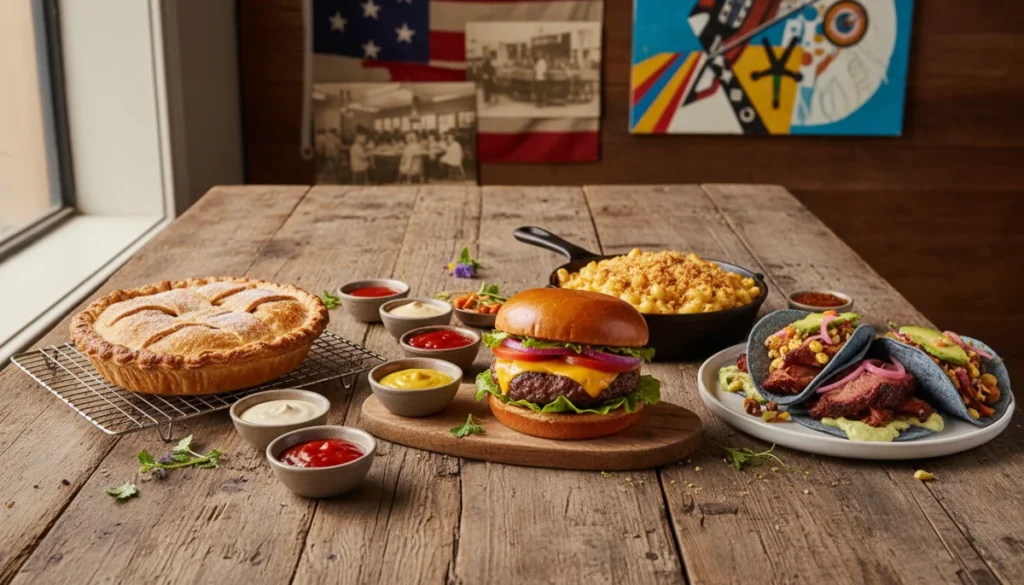
The American cuisine evolution is a dynamic narrative of immigration, innovation, and adaptation, transforming simple ingredients into iconic dishes with complex and often unexpected historical origins that continue to shape culinary trends in 2026.
Delving into the past of our favorite comfort foods reveals a much richer story than just recipes. The American cuisine evolution is a fascinating journey, showcasing how diverse cultures, historical events, and ingenious adaptations have molded what we eat today. Prepare to uncover the surprising origins of six dishes that might make you see your plate in a whole new light.
The Humble Origins of the All-American Hamburger
The hamburger stands as an undeniable icon of American fast food, yet its true birthplace and evolution are far more complex than many realize. While often associated with Fourth of July barbecues and roadside diners, the concept of ground meat patties cooked and served between bread has roots stretching across continents and centuries. Understanding its journey reveals a significant chapter in the American cuisine evolution.
The idea of chopped or minced meat dates back to ancient times, with various cultures preparing similar dishes. However, the direct lineage of the hamburger often traces back to Hamburg, Germany, where a dish known as ‘Hamburg steak’ gained popularity in the 19th century. This was typically a seasoned, minced beef patty, often served raw or lightly cooked, a staple for German immigrants making their way to America.
From Hamburg Steak to American Sandwich
When German immigrants arrived in the United States, they brought their culinary traditions with them. The Hamburg steak found its way onto menus in port cities like New York, catering to German sailors and workers. The transition from a plated steak to a convenient sandwich is where the American innovation truly began.
- Late 19th Century Adaptations: Various claims exist for who first put a cooked ground beef patty on bread. Charlie Nagreen of Seymour, Wisconsin, in 1885, and Fletcher Davis of Athens, Texas, around the same time, are often cited.
- World’s Fair Popularity: The 1904 St. Louis World’s Fair played a crucial role in popularizing the hamburger. Many vendors served the convenient and delicious sandwich, exposing it to a national audience.
- Industrialization and Fast Food: The early 20th century saw the rise of industrial meat processing and the burgeoning fast-food industry. White Castle, founded in 1921, was instrumental in standardizing and commercializing the hamburger, making it affordable and accessible to the masses.
The hamburger’s journey from a German delicacy to an American staple is a testament to cultural exchange and culinary adaptation. Its evolution reflects the nation’s changing eating habits, from formal dining to quick, portable meals, cementing its place in the fabric of American society. The modifications, from adding cheese to various toppings, continue to drive its enduring popularity.
Macaroni and Cheese: A Presidential Favorite with European Roots
Macaroni and cheese, a quintessential American comfort food, conjures images of childhood dinners and hearty family meals. Yet, its sophisticated origins trace back to Europe, eventually making a grand entrance into American kitchens through an unexpected presidential connection. This journey highlights how global influences profoundly shaped the American cuisine evolution.
While the dish we know today feels distinctly American, cheese and pasta combinations have been enjoyed in Italy and France for centuries. Early recipes for pasta baked with cheese can can be found in medieval cookbooks. The French dish, gratin de macaronis, is particularly similar, featuring pasta, béchamel sauce, and cheese baked until bubbly and golden.
Thomas Jefferson’s Culinary Diplomacy
The introduction of macaroni and cheese to American high society is famously attributed to Thomas Jefferson. During his time as minister to France in the late 18th century, Jefferson developed a keen appreciation for French cuisine, including pasta dishes. He brought back a pasta-making machine and several recipes, eager to introduce these novelties to his home country.
- Monticello Experiments: Jefferson experimented with pasta and cheese at Monticello, his Virginia estate. He served a dish of macaroni and cheese at a state dinner in 1802, much to the delight and curiosity of his guests.
- First American Recipe: While Jefferson popularized it, the first printed recipe for macaroni and cheese in an American cookbook appeared in Mary Randolph’s 1824 work, ‘The Virginia House-Wife,’ reflecting its growing acceptance.
- Post-Civil War Popularity: The dish gained wider popularity, especially in the South, after the Civil War. It was an economical and satisfying meal, easy to prepare with readily available ingredients.
From a European aristocratic indulgence to a beloved American casserole, macaroni and cheese exemplifies how foreign culinary traditions can be adopted, adapted, and eventually ingrained into a nation’s gastronomic identity. Its enduring appeal lies in its simplicity, versatility, and the comforting combination of pasta and rich, melted cheese, continuing its legacy in American homes.
The Surprising Story of Apple Pie: Not So American After All
When someone mentions ‘as American as apple pie,’ they evoke an image of quintessential American culture and tradition. However, the truth about this beloved dessert’s origins is far more complex and global than its patriotic adage suggests. The story of apple pie is a perfect illustration of the diverse strands contributing to the American cuisine evolution.
Apples themselves are not native to North America; they originated in Central Asia and were brought to the continent by European colonists. Similarly, the concept of fruit baked in a pastry crust has a long and rich history in Europe, particularly in England and the Netherlands, centuries before America was even founded.
European Roots and Colonial Adaptation
Early European pies were often savory, filled with meat, and served as a means of preserving food. Sweet fruit pies began to emerge in the Middle Ages, with recipes for apple pies appearing in English cookbooks as early as the 14th century. These early versions often contained spices like saffron and ginger, and sometimes even meat.
- Dutch Influence: The Dutch were particularly fond of apple pies, often adding raisins and spices, and sometimes serving them for breakfast. This tradition likely traveled with Dutch settlers to New Netherland (now New York).
- Colonial Necessity: In colonial America, apples were plentiful, especially after Johnny Appleseed’s widespread planting efforts. Pie became a practical way to use abundant fruit, and it was a common breakfast, lunch, and dinner item due to its filling nature and ease of preparation.
- Post-Industrialization: The phrase ‘as American as apple pie’ only gained widespread popularity in the early 20th century, particularly after World War I, when it became a symbol of American prosperity and national identity.

While apple pie may not have originated on American soil, its adaptation, popularization, and symbolic significance in the United States are undeniable. It represents the pioneering spirit of early settlers who transformed European traditions with local ingredients, making it a powerful emblem of the American cuisine evolution and its melting pot heritage.
Fried Chicken: A Southern Staple’s Scottish and West African Lineage
Fried chicken is synonymous with Southern hospitality and soul food, a dish beloved for its crispy skin and juicy interior. Yet, its culinary lineage is a fascinating blend of European frying techniques and West African seasoning traditions, making it a prime example of the intricate cultural exchanges that define the American cuisine evolution.
The act of frying chicken in fat is not unique to America. Various cultures have practiced deep-frying poultry for centuries. However, the specific method and flavor profile that became iconic in the American South have distinct historical contributors.
A Confluence of Culinary Traditions
Scottish immigrants, who settled in the American South, had a tradition of frying chicken in fat, though their method typically involved unseasoned chicken. This technique provided a foundational element for what was to come. Concurrently, West African culinary practices, brought to America by enslaved people, introduced a crucial component: seasoning and spices.
- West African Influence: Enslaved Africans brought with them a rich culinary heritage, including the use of various spices and a preference for well-seasoned food. They also had experience with deep-frying, often using palm oil.
- Southern Adaptation: In the American South, these two traditions merged. Enslaved cooks combined the Scottish technique of frying chicken in fat with their own sophisticated seasoning methods, often using buttermilk and various spices to marinate and flavor the chicken before frying.
- Economic Factor: Chicken was often one of the few meats enslaved people were allowed to raise and prepare for themselves, making fried chicken a significant dish in their diet and cultural expression.
The result was the flavorful, crispy, and tender fried chicken we recognize today. Its widespread popularity grew through the 20th century, becoming a symbol of Southern cooking and eventually a global fast-food phenomenon. This rich historical tapestry underscores how the American cuisine evolution is a continuous process of cultural fusion and adaptation, creating dishes that transcend their original contexts.
Hot Dogs: From German Sausage to American Ballpark Icon
The hot dog, a staple at sporting events and summer barbecues, is deeply ingrained in the American culinary landscape. Its simple yet satisfying combination of a sausage in a bun belies a complex origin story that stretches from German butcher shops to bustling American cities. This journey perfectly illustrates how immigrant contributions have shaped the American cuisine evolution.
The concept of sausages has existed for millennia, with various forms found across ancient cultures. However, the direct ancestor of the modern hot dog, the frankfurter, originated in Frankfurt, Germany, in the 15th century. These were smoked, seasoned pork sausages, often served with bread.
Immigrant Innovation and Urban Popularity
German immigrants brought their beloved sausages to America in the 19th century. Initially, these ‘dachshund sausages’ (named for their long, thin shape, resembling a dachshund dog) were sold by street vendors in cities like New York. The crucial innovation came with the addition of the bun.
- Coney Island Connection: Charles Feltman, a German immigrant, is often credited with opening the first hot dog stand on Coney Island in 1867, selling frankfurters in milk rolls. He sold thousands in his first year.
- Baseball and Buns: The association with baseball gained traction in the early 20th century. Harry M. Stevens, a concessionaire, is said to have started selling ‘dachshund sausages’ on buns at New York Giants baseball games in 1901, popularizing the convenient way to eat them.
- Mass Production: The early 20th century saw the mass production of hot dogs and buns, making them incredibly affordable and accessible. This cemented their status as a working-class meal and a beloved snack.
From a German specialty to an American institution, the hot dog’s evolution is a story of practicality, entrepreneurship, and cultural integration. It embodies the spirit of American ingenuity in adapting a foreign food to suit the fast-paced urban environment and mass entertainment. The hot dog continues to be a versatile and cherished part of the American cuisine evolution, with regional variations and toppings adding to its appeal.
Chop Suey: A ‘Chinese’ Dish Born in America
Chop Suey is often perceived as a classic Chinese-American dish, a staple on menus across the United States. However, its origins are a fascinating tale of culinary invention that points not to ancient China, but to late 19th-century America. This dish serves as a compelling example of how cultural fusion and adaptation drive the American cuisine evolution.
The name ‘Chop Suey’ literally translates to ‘mixed pieces’ in Cantonese. While stir-fried dishes with various ingredients were common in China, a specific dish called ‘Chop Suey’ as it became known in America is largely an American invention, created to cater to American palates and available ingredients.
Myth, Legend, and Culinary Adaptation
Several colorful legends surround the creation of Chop Suey. One popular story attributes its invention to Chinese ambassador Li Hongzhang’s visit to New York in 1896. Allegedly, his chefs, needing to quickly prepare a meal for American guests after kitchen hours, combined leftover meats and vegetables, calling it ‘chop suey.’
- Gold Rush Influence: The influx of Chinese immigrants during the California Gold Rush era (mid-19th century) led to the establishment of Chinese restaurants. These establishments often adapted their cuisine to suit local tastes, using ingredients that were readily available.
- American Palate: Early Chinese-American restaurants found that American diners preferred dishes with milder flavors and a mix of familiar vegetables and meats. Chop Suey, with its adaptable ingredients and savory sauce, fit this demand perfectly.
- A Symbol of Fusion: Chop Suey became incredibly popular throughout the early to mid-20th century, symbolizing exotic yet accessible ‘Chinese’ food for many Americans. It was a dish that bridged two cultures, even if its true origin was primarily American.
Despite its debated authenticity in China, Chop Suey played a pivotal role in introducing Chinese flavors to the American mainstream and paved the way for the broader acceptance of Chinese-American cuisine. It stands as a powerful symbol of the American cuisine evolution, demonstrating how new dishes can emerge from the blending of cultures and the need to adapt to new environments and tastes.
| Key Dish | Surprising Historical Root |
|---|---|
| Hamburger | Evolved from German ‘Hamburg steak’ brought by immigrants. |
| Macaroni and Cheese | Introduced to America by Thomas Jefferson after his time in France. |
| Apple Pie | European origins, particularly English and Dutch, adapted in colonial America. |
| Fried Chicken | Blend of Scottish frying and West African seasoning traditions. |
Frequently Asked Questions About American Culinary History
The primary factor driving American cuisine evolution is undoubtedly immigration. Each wave of immigrants brought their culinary traditions, ingredients, and cooking techniques, which were then adapted and fused with existing practices, creating new and unique dishes that define American food today.
While many iconic American dishes have foreign roots, some, like the Cobb Salad or the Reuben sandwich, are believed to have originated in the U.S. However, even these often draw inspiration from global ingredients and culinary concepts, highlighting the melting pot nature of American food.
Historical events significantly impacted American eating habits. Wars led to rationing and the development of convenience foods. Economic depressions fostered creativity with limited resources, and periods of industrialization changed food production and availability, influencing what and how Americans ate.
Yes, fast food is a highly significant part of American cuisine evolution. It emerged from the need for quick, affordable meals for a mobile workforce and played a crucial role in popularizing dishes like the hamburger and hot dog, making them accessible nationwide and globally.
Regional variations are fundamental to American cuisine, reflecting diverse geographies, historical settlement patterns, and local agricultural products. From New England clam chowder to Texas barbecue, these regional specialties showcase the rich tapestry and ongoing diversification of American food culture.
Conclusion
The journey through the historical roots of these six iconic dishes vividly illustrates that the American cuisine evolution is a dynamic, ongoing process. Far from being monolithic, American food is a vibrant testament to centuries of immigration, adaptation, and innovation. Each bite tells a story of cultural exchange, revealing how global influences have been embraced and transformed to create a culinary landscape that is uniquely American, yet universally appealing. As we look to 2026 and beyond, this rich heritage continues to inspire new flavors and traditions, ensuring American cuisine remains a fascinating subject of exploration.
Related Posts: