From Folklore to Fact: Investigating 5 Enduring American Myths in 2026
This article investigates 5 enduring American myths in 2026, meticulously separating folklore from verified historical facts to reveal the true narratives behind popular cultural beliefs.
Por: Marcelle em 23 de setembro de 2026
This article investigates 5 enduring American myths in 2026, meticulously separating folklore from verified historical facts to reveal the true narratives behind popular cultural beliefs.
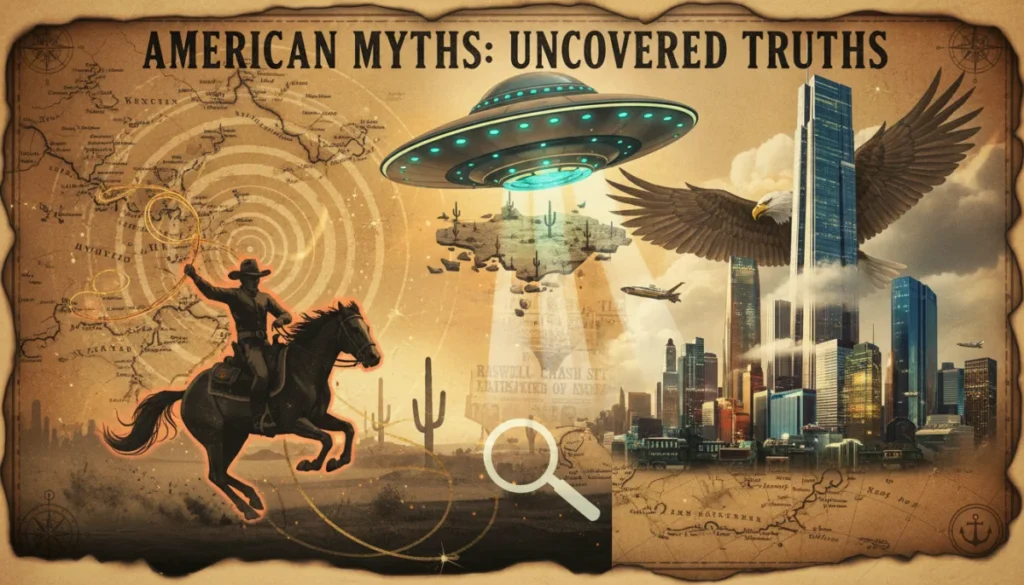
In 2026, the tapestry of American identity continues to be woven with threads of both verifiable history and captivating legend. Unraveling the truth from popular misconceptions is not merely an academic exercise; it’s an essential journey to understand how our past truly shapes our present. This article aims to delve into From Folklore to Fact: Investigating 5 Enduring American Myths in 2026, examining the origins, evolution, and ultimate veracity of tales that have long captivated the nation.
The Cherry Tree and George Washington: A Moral Fable
The story of young George Washington confessing to chopping down a cherry tree, declaring “I cannot tell a lie,” is one of America’s most cherished anecdotes. It has been ingrained in the national consciousness as a testament to the first president’s unwavering honesty and moral fortitude. However, the true origins of this tale are far more intricate than most realize.
This narrative, often presented as historical fact, emerged from the imaginative pen of Mason Locke Weems, an early biographer of Washington. Weems, often referred to as Parson Weems, published his biography, “A History of the Life and Death, Virtues and Exploits of General George Washington,” shortly after Washington’s death in 1799. His intention was not strictly historical accuracy but rather to create a moral exemplar for young Americans.
Parson Weems’s Intentions
Moral Instruction: The primary goal was to teach children about the importance of truthfulness.
Hero Worship: It helped solidify Washington’s image as an impeccable leader.
Literary Device: A simple, memorable narrative to convey complex virtues.
The myth endured because it perfectly encapsulated the ideals Americans wanted to believe about their founding fathers. While Washington was undoubtedly a man of integrity, this specific incident never occurred. Its longevity speaks volumes about the power of storytelling in shaping national identity and values, even when detached from historical reality.
Ultimately, the cherry tree myth serves as a potent reminder that not all historical narratives are created equal. While it offers a valuable moral lesson, it is crucial to distinguish between a historical account and a pedagogical fable crafted for a specific purpose.
Paul Revere’s Midnight Ride: A Solo Act?
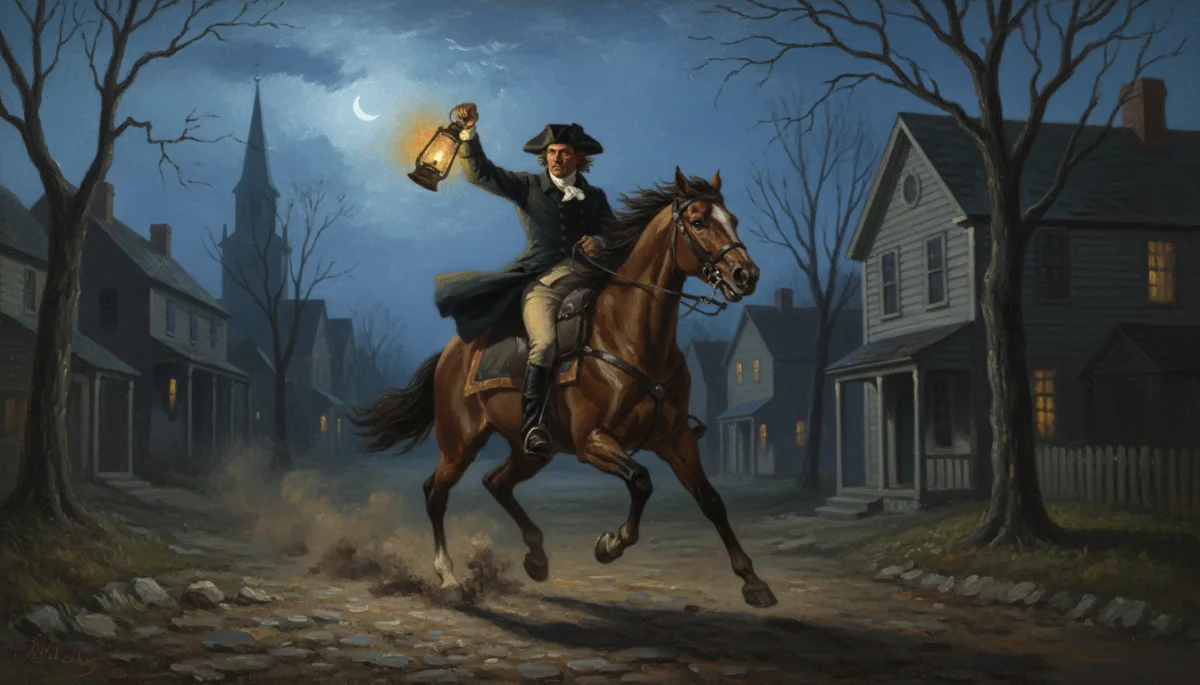
The iconic image of Paul Revere galloping through the night, single-handedly warning colonists of the approaching British, is a cornerstone of American Revolutionary War lore. Henry Wadsworth Longfellow’s 1861 poem, “Paul Revere’s Ride,” cemented this dramatic vision in the public imagination. Yet, historical records paint a more nuanced and collaborative picture of that fateful night.
While Paul Revere played a crucial role, he was not the sole rider, nor did his ride unfold exactly as the poem suggests. Two other riders, William Dawes and Dr. Samuel Prescott, also embarked on similar missions to alert the Massachusetts militia. Revere and Dawes initially set out together, taking different routes.
Prescott, joining them later, proved to be the most successful in reaching Concord, as both Revere and Dawes were eventually apprehended by British patrols. Prescott, however, managed to evade capture and complete his ride, delivering the critical warnings.
The Collaborative Effort
Multiple Riders: Revere, Dawes, and Prescott were part of a larger network.
Strategic Routes: Riders took different paths to maximize coverage and ensure success.
Community Involvement: Colonists were prepared to spread the alarm through various means.
Longfellow’s poem, while stirring, took poetic license to create a more compelling narrative, focusing on Revere as a singular hero. His intent was to inspire patriotism during the Civil War, using a familiar historical event as a rallying cry. The poem’s enduring popularity, however, overshadowed the collective effort and the contributions of others.
The myth of Revere’s solo ride, while inspiring, simplifies a complex historical event. Understanding the broader context reveals a more impressive display of coordinated effort and community resilience during a pivotal moment in American history.
Thanksgiving’s Pilgrim-Centric Narrative: A Broader History
The traditional American Thanksgiving story often centers exclusively on the Pilgrims and Native Americans sharing a harmonious feast in Plymouth in 1621. This narrative, while containing elements of truth, oversimplifies a much more complex and often fraught relationship between European settlers and indigenous peoples, and overlooks other early colonial thanksgiving traditions.
While a harvest feast did occur in Plymouth, involving some Wampanoag people and English colonists, it was not the singular, idyllic event often portrayed. The relationship between the two groups was transactional and often tense, driven by shifting alliances and land disputes. Furthermore, many other early colonial settlements, both English and Spanish, held their own thanksgiving celebrations long before or concurrently with the Plymouth event, often for different reasons than a harvest.
Beyond Plymouth: Other Early Thanksgivings
Spanish Thanksgivings: Early Spanish explorers and settlers held thanksgiving ceremonies in Florida and Texas in the 16th century.
Jamestown’s Thanksgiving: The Jamestown colony in Virginia also observed a thanksgiving in 1619.
Diverse Motivations: These celebrations often marked safe arrivals, military victories, or general gratitude, not solely harvest.
The Pilgrim-centric narrative gained prominence in the 19th century, particularly during the Civil War, when President Abraham Lincoln declared Thanksgiving a national holiday. This was an effort to unite a fractured nation by emphasizing a shared, idealized origin story. This narrative, however, often marginalized the experiences and perspectives of Native American communities, whose history with European settlers was far from consistently peaceful.
The enduring myth of a singular, harmonious Pilgrim Thanksgiving obscures the rich and varied history of gratitude and interaction in early America. A more comprehensive understanding acknowledges the diverse origins of thanksgiving traditions and the complex realities of colonial encounters.
The Myth of the Lone Cowboy: A Diverse Frontier
The image of the lone, rugged cowboy, typically white and stoic, riding across the vast American West, is deeply embedded in popular culture. From literature to film, this archetype symbolizes American individualism and frontier spirit. However, historical evidence reveals a far more diverse and collaborative reality on the cattle trails and ranches of the 19th century American West.
The cowboy population was a melting pot of ethnicities and backgrounds. African Americans, Mexican vaqueros, and Native Americans constituted a significant portion of the workforce. After the Civil War, many freed slaves sought opportunities in the West, becoming skilled cowboys. Mexican vaqueros, with their centuries-old tradition of horsemanship and cattle handling, were instrumental in shaping cowboy culture, contributing vocabulary, techniques, and attire.
Faces of the Real Cowboy
African American Cowboys: Estimates suggest up to 25% of cowboys were Black, playing crucial roles in cattle drives.
Mexican Vaqueros: The original cowboys, their traditions heavily influenced American ranching.
Native American Contributions: Many tribes had long-standing traditions of horsemanship and cattle management.
The romanticized image of the white, lone cowboy emerged largely from dime novels and early Western films, which often simplified and whitewashed the complex social dynamics of the frontier. These portrayals served to create a national mythology that aligned with prevailing racial attitudes of the time, overshadowing the contributions of non-white individuals.
Debunking the myth of the lone, white cowboy allows for a richer appreciation of the true diversity and collaborative spirit that characterized the American West. It highlights the often-overlooked contributions of various ethnic groups to a foundational period of American history.
Area 51 and Alien Cover-ups: Government Secrecy and Speculation
Area 51, a highly classified United States Air Force facility in Nevada, has been at the heart of alien conspiracy theories for decades. Popular belief holds that the U.S. government uses Area 51 to store crashed UFOs, conduct reverse-engineering on alien technology, and even house extraterrestrial beings. This enduring myth has been fueled by government secrecy and a public fascination with the unknown.
For many years, the U.S. government officially denied the existence of Area 51, further fanning the flames of speculation. This deliberate obfuscation led many to believe that something truly extraordinary was being hidden. However, in 2013, the CIA declassified documents confirming the existence of the base and its true purpose: the development and testing of advanced reconnaissance aircraft, such as the U-2 spy plane during the Cold War.
The Truth Behind the Hype
Advanced Aircraft Testing: The primary function was the development of high-altitude spy planes.
Cold War Secrecy: The need for secrecy was paramount due to sensitive military projects.
UFO Sightings Explained: Many alleged UFO sightings around the area were likely experimental aircraft.
The unusual shapes and performance characteristics of these experimental planes, often flying at high altitudes and speeds, were easily misinterpreted as extraterrestrial craft by untrained observers. The government’s initial refusal to acknowledge these projects, for obvious security reasons, inadvertently created a fertile ground for alien conspiracy theories to flourish.
Even after declassification, the myth of alien cover-ups at Area 51 persists in some circles, demonstrating the power of deeply ingrained beliefs and the difficulty of dislodging them, even with official explanations. It highlights the interplay between government secrecy, public imagination, and the enduring human desire to believe in something beyond our current understanding.
The American Dream: From Ideal to Complex Reality
The American Dream, often defined as the belief that anyone, regardless of where they were born or what class they were born into, can attain their own version of success through hard work and determination, is a cornerstone of American ideology. It promises upward mobility, homeownership, and a better life for one’s children. However, in 2026, the interpretation and attainability of this dream have become increasingly complex and subject to intense debate.
Originally popularized in the early 20th century, the concept of the American Dream has evolved significantly. While it once focused on land ownership and self-sufficiency, it later shifted towards material prosperity and suburban living. Today, factors such as economic inequality, rising costs of living, and stagnant wages have made the traditional markers of the American Dream seem increasingly out of reach for many.
Challenges to Attaining the Dream
Economic Disparity: The wealth gap has widened, making upward mobility more challenging.
Housing Affordability: Homeownership, a key component, is increasingly difficult due to high prices.
Student Debt: Educational attainment, often seen as a path to success, comes with substantial financial burdens.
The myth of a universally accessible American Dream, achievable by sheer will alone, often overlooks systemic barriers and historical disadvantages faced by certain populations. While the ideal of opportunity remains powerful, the reality for many is a struggle against economic forces that make traditional markers of success elusive.
The American Dream, while a powerful and aspirational concept, has transformed from a simple ideal into a complex reality in 2026. Understanding these complexities is vital to fostering policies and societal changes that can make the dream more genuinely attainable for all Americans, reflecting a more inclusive and equitable vision for the nation’s future.
Myth
Fact
Cherry Tree Story
A moral fable invented by Parson Weems, not historical fact.
Paul Revere’s Solo Ride
A collaborative effort involving multiple riders and a network of alarms.
Pilgrim-Centric Thanksgiving
Many early thanksgiving events in various colonies, complex settler-Native relations.
Lone White Cowboy
The historical West featured diverse cowboys including African Americans and Mexican vaqueros.
Frequently Asked Questions About American Myths
Why do American myths endure even after being debunked?▼
American myths often endure because they serve important cultural or moral functions, shaping national identity or teaching values. They can be emotionally resonant, passed down through generations, and are sometimes more compelling than the nuanced historical facts, making them resistant to simple debunking efforts.
How do these myths impact our understanding of American history?▼
These myths can simplify complex historical events, sometimes glorifying figures or obscuring the contributions of diverse groups. They can lead to a less accurate, more idealized view of the past, which may hinder a deeper understanding of present-day societal challenges rooted in historical contexts.
What role does media play in perpetuating or debunking myths?▼
Media, from historical literature and films to modern documentaries and online platforms, plays a significant role. It can perpetuate myths through simplified narratives or actively work to debunk them by presenting new research and diverse perspectives. Its influence on public perception is immense, shaping how myths are received and maintained.
Are all historical myths harmful, or can some be beneficial?▼
Not all historical myths are inherently harmful. Some, like the cherry tree story, can convey positive moral lessons or inspire national pride. However, it’s crucial to recognize them as fables rather than factual history. Myths become problematic when they distort understanding, exclude groups, or prevent critical engagement with the past.
How can individuals discern fact from folklore in historical accounts?▼
Discerning fact from folklore requires critical thinking and consulting multiple, credible sources. Look for academic historians, primary documents, and diverse perspectives. Be wary of overly simplistic narratives or those that promote a single, unchallenged viewpoint. Always question the origin and purpose of a historical story.
Conclusion
As we navigate 2026, the investigation into enduring American myths reveals a dynamic interplay between historical events, cultural storytelling, and national identity. From the moral fables surrounding George Washington to the collaborative efforts behind Paul Revere’s ride, and the diverse realities of the American West, these myths are more than just inaccuracies; they are reflections of societal values, aspirations, and sometimes, biases. By critically examining these narratives, we gain a more profound and accurate understanding of America’s past, fostering a more informed and inclusive perspective on its present and future. Separating folklore from fact is an ongoing, vital process for any nation seeking to truly understand itself.