America’s First Constitution: 3 Critical Flaws Revealed by 1787
By 1787, the Articles of Confederation, America's first constitution, demonstrated three critical flaws: a weak central government, economic disarray, and an inability to enforce laws, paving the way for the Constitutional Convention.
Por: Marcelle em 23 de setembro de 2026
The Articles of Confederation, America’s first constitution, proved critically flawed by 1787 due to its weak central government, economic instability, and lack of enforcement power, necessitating a stronger federal system.
Delving into the birth of the United States, we encounter a crucial period where the fledgling nation experimented with its first governing document. The Articles of Confederation Flaws became glaringly evident by 1787, signaling a dire need for change. What were these fundamental shortcomings that pushed the Founding Fathers towards a new constitutional framework?
The Genesis of a Flawed Union: Understanding the Articles
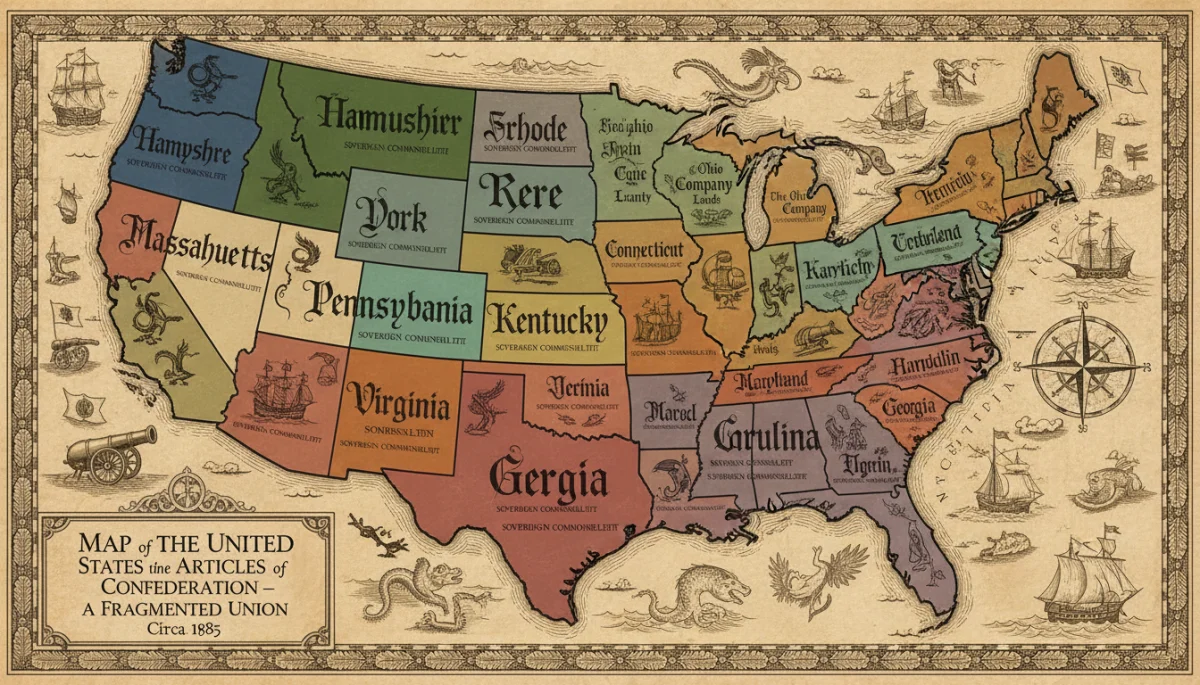
The Articles of Confederation represented America’s first attempt at a national government, drafted during the Revolutionary War. It embodied the revolutionary generation’s deep-seated distrust of centralized authority, a direct reaction to British monarchical rule. This initial framework prioritized state sovereignty, leading to a loose alliance rather than a cohesive nation.
The architects of the Articles sought to prevent the emergence of another tyrannical power. Consequently, they endowed the national government with very limited powers, leaving most governmental functions to the individual states. This design, while understandable given the historical context, inadvertently sowed the seeds of future instability.
A Legacy of Distrust: Limiting Federal Power
The fear of a strong executive or an overreaching legislature shaped the structure of the Articles. The national government under the Articles consisted solely of a unicameral (one-house) Congress, with no independent executive or judicial branches. This structural choice had profound implications for governance.
No Executive Branch: The absence of a president or similar figure meant there was no single national leader to enforce laws or direct foreign policy effectively.
No National Judiciary: Disputes between states often went unresolved, as there was no federal court system to arbitrate conflicts or interpret national laws.
Limited Congressional Authority: Congress could declare war, sign treaties, and coin money, but its powers were largely advisory, dependent on state cooperation.
The framers’ commitment to state autonomy, while noble in its intent, ultimately created a national government ill-equipped to address the complex challenges facing a new republic. The weaknesses inherent in this design would soon become apparent, pushing the nation to the brink of collapse.
Critical Flaw 1: A Weak Central Government and Inability to Enforce Laws
Perhaps the most significant and overarching flaw of the Articles of Confederation was the deliberate creation of an extremely weak central government. This weakness permeated every aspect of national governance, from taxation to military affairs, making it nearly impossible for the young nation to function effectively. The inability to enforce laws was a direct consequence of this structural deficiency.
Under the Articles, the national government lacked the power to directly tax citizens. Instead, it had to request funds from the states, which often ignored these requests or contributed only a fraction of what was needed. This fiscal reliance on the states rendered the federal government perpetually impoverished and unable to pay its debts or fund essential services.
The Perils of Voluntary Contributions
The voluntary nature of state contributions meant that national initiatives, from maintaining a standing army to diplomatic efforts, were constantly underfunded and precarious. The states, prioritizing their own interests, often failed to see the broader national necessity.
Inadequate Military: Without direct taxation, Congress struggled to fund and maintain a national army, leaving the nation vulnerable to external threats and internal insurrections like Shays’ Rebellion.
Unpaid War Debts: The inability to raise revenue meant the national government could not honor its debts from the Revolutionary War, damaging its credit and international standing.
Lack of Interstate Commerce Regulation: Congress had no power to regulate trade between states, leading to economic disputes and protectionist policies among individual states.
This fundamental weakness meant that even if Congress passed a law, it had no effective means to ensure its implementation. States could, and often did, simply disregard federal mandates, undermining the very concept of a unified nation. The government’s inability to act decisively on critical issues highlighted the urgent need for a more robust federal authority.
Critical Flaw 2: Economic Disarray and Interstate Disputes
The economic landscape under the Articles of Confederation was characterized by chaos and disunity. The national government’s lack of power to regulate commerce, coupled with its inability to levy taxes, created a fragmented economic system where states often acted against each other’s interests. This led to widespread economic instability and strained interstate relations.
Each state was essentially its own economic entity, free to impose tariffs on goods from other states, print its own currency, and negotiate its own trade agreements. This created a bewildering and inefficient system that stifled economic growth and made national commerce incredibly difficult. Businesses faced a complex web of regulations and currencies, hindering interstate trade.
The Currency Conundrum and Trade Wars
The proliferation of state-issued currencies, often with varying values and backed by different assets, made financial transactions across state lines incredibly complicated and risky. This monetary confusion further exacerbated economic problems and undermined public confidence in the national economy.
Conflicting State Tariffs: States imposed duties on goods from neighboring states, creating internal trade barriers that mirrored international trade wars.
Depreciating Currencies: Many states printed excessive amounts of paper money, leading to inflation and a loss of value, particularly for Revolutionary War bonds.
Lack of National Economic Policy: Without a central authority to guide economic policy, the nation struggled to present a united front in international trade or address its mounting debt crisis effectively.
These economic challenges were not merely inconveniences; they threatened the very viability of the American experiment. The inability to establish a stable national economy and resolve interstate commercial disputes created deep divisions and fueled calls for a more powerful federal government capable of bringing order and prosperity.
Critical Flaw 3: Ineffective Foreign Policy and National Disunity
The weakness of the central government under the Articles also translated into an ineffective and often embarrassing foreign policy. Without a strong executive to conduct diplomacy or a unified military to project power, the United States struggled to command respect on the international stage. This significantly hampered its ability to protect its interests and secure its borders.
European powers, observing the disunity and economic turmoil within the American states, often refused to negotiate seriously with the Confederation Congress. Britain, for instance, continued to occupy forts in the Northwest Territory, violating the Treaty of Paris, knowing that the weak American government lacked the means to expel them.
Diplomatic Weakness and Border Insecurity
The fragmented nature of the union meant that foreign nations could play individual states against each other, further undermining national cohesion. This diplomatic weakness left the young nation vulnerable and unable to effectively assert its sovereignty.
Inability to Enforce Treaties: Congress could sign treaties, but it lacked the power to compel states to abide by them, leading to international distrust.
Lack of a Unified Military: The absence of a strong national army meant the U.S. could not adequately defend its frontiers against Native American tribes or encroaching European powers.
Disrespect from European Powers: Foreign nations exploited American weakness, making it difficult for the U.S. to secure favorable trade agreements or protect its shipping.
The cumulative effect of these foreign policy failures was a growing sense of national embarrassment and insecurity. The realization that the United States was perceived as weak and disunited on the world stage was a powerful motivator for reform, leading many to believe that a stronger federal government was essential for national survival and respect.
The Call for Change: Shays’ Rebellion and the Road to Philadelphia
While the flaws of the Articles were evident to many, it was Shays’ Rebellion in 1786-1787 that served as a powerful catalyst for change. This armed uprising of indebted farmers in Western Massachusetts, protesting high taxes and foreclosures, exposed the profound instability and potential for anarchy under the existing government. The national government’s inability to effectively respond to this internal crisis highlighted its inherent weaknesses.
The rebellion, led by Revolutionary War veteran Daniel Shays, demonstrated that the national government could not even protect its own citizens from internal unrest, let alone external threats. States were left to deal with such crises largely on their own, further emphasizing the lack of national cohesion and authority.
A Nation in Crisis: From Rebellion to Convention
The fear that Shays’ Rebellion could spread to other states, coupled with the ongoing economic and foreign policy challenges, spurred national leaders to action. It became clear that the Articles of Confederation were not merely inefficient but fundamentally incapable of ensuring domestic tranquility or national survival.
Fear of Anarchy: The rebellion fueled fears among the elite that the republican experiment was failing and that the nation was descending into chaos.
Urgency for Reform: It galvanized support for a stronger national government that could maintain order and protect property rights.
Annapolis Convention Precursor: The Annapolis Convention in 1786, initially called to address trade issues, recommended a broader convention to revise the Articles, a call amplified by Shays’ Rebellion.
Shays’ Rebellion served as a stark wake-up call, convincing many skeptical leaders, including George Washington, that a fundamental restructuring of the government was necessary. It underscored the urgent need for a more powerful federal government capable of enforcing laws, maintaining order, and commanding respect both at home and abroad. This pivotal event directly paved the way for the Constitutional Convention in Philadelphia.
Lessons Learned: From Confederation to Constitution
The experience under the Articles of Confederation provided invaluable lessons for the Founding Fathers, directly influencing the design of the United States Constitution. The three critical flaws—a weak central government, economic disarray, and ineffective foreign policy—served as a blueprint for the problems the new Constitution needed to solve. The framers meticulously crafted a document that addressed each of these deficiencies, creating a stronger, more unified, and more effective federal system.
The shift from a confederation of sovereign states to a federal republic with a supreme national government was a radical but necessary transformation. This new system, while still respecting state powers, ensured that the national government had the authority to act decisively on behalf of the entire nation.
Building a More Perfect Union
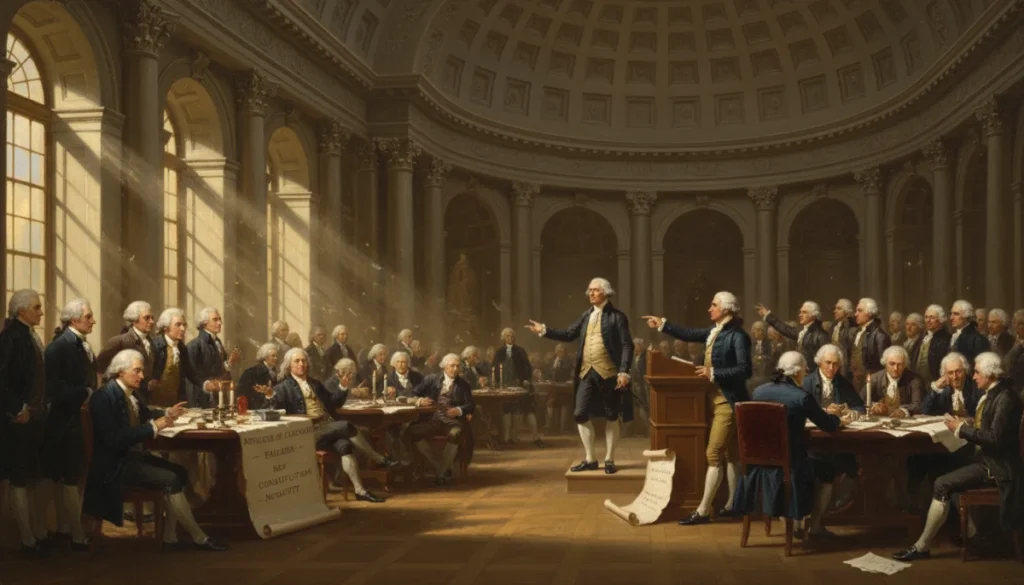
The Constitutional Convention in 1787 was a direct response to the failures of the Articles. The delegates understood that a delicate balance was needed: a government strong enough to govern, yet limited enough to protect individual liberties and prevent tyranny. The resulting Constitution embodied this balance.
Stronger Federal Powers: The Constitution granted Congress the power to tax, regulate interstate commerce, and raise a national army, addressing key financial and military weaknesses.
Separation of Powers: The creation of executive, legislative, and judicial branches with checks and balances ensured a more effective and accountable government.
National Supremacy: The Supremacy Clause established federal law as supreme over state law when within constitutional bounds, resolving disputes and promoting national unity.
The transition from the Articles to the Constitution was not without its challenges and debates, but the pressing need for a more stable and effective government ultimately prevailed. The lessons learned from the Articles of Confederation were instrumental in forging a durable framework that has guided the United States for over two centuries, demonstrating the profound importance of adapting governance to meet national needs.
Key Flaw
Brief Description
Weak Central Government
Congress lacked power to tax, enforce laws, or raise a national army, relying on states’ voluntary compliance.
Economic Disarray
States issued their own currencies, imposed tariffs, and Congress couldn’t regulate interstate commerce, leading to chaos.
Ineffective Foreign Policy
Lack of a unified voice, military, and enforcement power diminished U.S. standing and ability to secure treaties.
Frequently Asked Questions About the Articles of Confederation
What was the primary purpose of the Articles of Confederation?▼
The Articles of Confederation served as the first constitution of the United States, established to create a national government while preserving the sovereignty and independence of the individual states after gaining freedom from British rule. It aimed to form a loose alliance for common defense and cooperation.
Why did the Articles of Confederation fail?▼
The Articles failed primarily due to a weak central government that lacked essential powers. It could not tax, regulate commerce, or enforce laws effectively. This led to economic instability, interstate disputes, and an inability to address national challenges, culminating in its replacement by the U.S. Constitution.
What was Shays’ Rebellion and how did it impact the Articles?▼
Shays’ Rebellion was an armed uprising in Massachusetts by indebted farmers in 1786-1787. It exposed the national government’s inability to maintain order and protect property, highlighting the critical weaknesses of the Articles of Confederation and accelerating calls for a stronger federal government.
How did the U.S. Constitution address the flaws of the Articles?▼
The U.S. Constitution created a strong federal government with powers to tax, regulate commerce, and maintain a national army. It established executive and judicial branches, along with a bicameral legislature, ensuring a system of checks and balances and national supremacy to overcome the Articles’ deficiencies.
What key lesson did the Founding Fathers learn from the Articles of Confederation?▼
The primary lesson learned was the necessity of a strong, yet limited, central government capable of effectively governing a unified nation. They realized that excessive decentralization led to disunity and instability, necessitating a federal system that balanced state sovereignty with national authority for survival and prosperity.
Conclusion
The journey from the Articles of Confederation to the United States Constitution is a testament to the Founding Fathers’ capacity for adaptation and their commitment to forging a viable nation. The three critical flaws of the Articles—a weak central government, pervasive economic disarray, and an ineffectual foreign policy—became undeniably clear by 1787. These shortcomings, dramatically underscored by events like Shays’ Rebellion, illuminated the path toward a more perfect union. The subsequent crafting of the Constitution was not merely an act of creation but a crucial act of correction, building upon the painful yet invaluable lessons learned from America’s first, flawed experiment in self-governance. This pivotal period laid the groundwork for the enduring federal republic we know today, demonstrating how understanding past failures can lead to profound and lasting success.