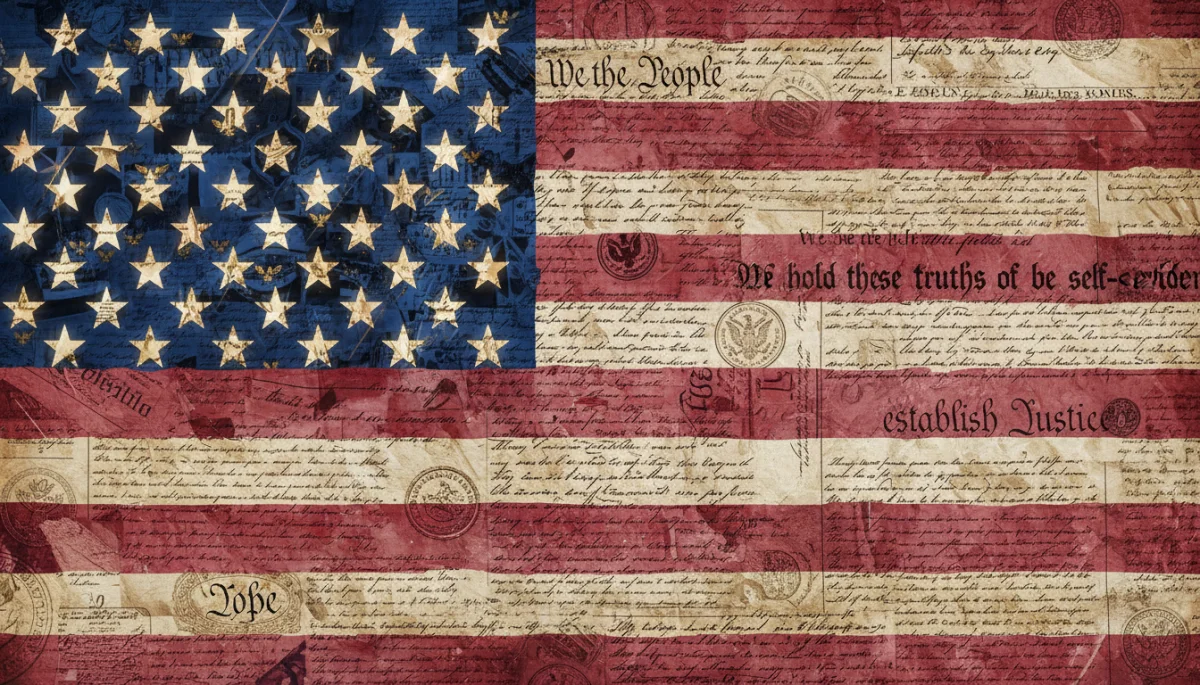
Understanding American Identity: 2026 Analysis of Core Values
American identity in 2026 is profoundly shaped by enduring historical values of liberty, individualism, and civic engagement, which continue to evolve in contemporary society.
Por: Marcelle em 23 de setembro de 2026
American identity in 2026 is profoundly shaped by enduring historical values of liberty, individualism, and civic engagement, which continue to evolve in contemporary society.
Understanding American Identity: A 2026 Analysis of 3 Core Values Through History delves into the enduring principles that have shaped the nation since its inception. This exploration examines how these foundational values continue to resonate and adapt in the modern era, offering a crucial perspective on the American experience.
The enduring pursuit of liberty
Liberty, a cornerstone of the American ethos, has always been more than just freedom from oppression. It encompasses a complex interplay of personal autonomy, economic opportunity, and the right to self-determination. From the cries of ‘no taxation without representation’ to contemporary debates on digital privacy, the pursuit of liberty remains a central theme in the American narrative.
Historically, the concept of liberty has expanded and contracted, reflecting societal changes and moral reckonings. The initial promise of freedom, enshrined in the Declaration of Independence, was not universally applied, leading to centuries of struggle for marginalized groups. Yet, the very ideal of liberty provided the framework for these movements, allowing them to challenge existing injustices and push for a more inclusive definition of freedom.
Colonial roots and revolutionary ideals
The earliest European settlers sought religious and political freedoms unavailable in their homelands, laying the groundwork for a society that valued individual liberties. The American Revolution was a direct manifestation of this desire, with colonists fighting for independence from perceived tyranny and the right to govern themselves.
Freedom from British rule: The primary catalyst for the revolution, emphasizing self-governance.
Religious freedom: A driving force for many early settlers, leading to the separation of church and state.
Economic liberty: The desire for unhindered trade and opportunity, free from British mercantilist policies.
The foundational documents of the United States, particularly the Constitution and its Bill of Rights, meticulously outlined protections for individual liberties. These documents, revolutionary for their time, established a framework designed to prevent governmental overreach and ensure citizens’ rights to speech, assembly, and due process. The ongoing interpretation of these rights by the judiciary underscores their dynamic nature and continued relevance.
Modern interpretations and challenges
In 2026, liberty manifests in new ways, from debates over internet censorship to the right to choose in healthcare. The digital age has introduced novel challenges to privacy and free expression, prompting discussions about the balance between individual freedoms and collective security. These contemporary issues echo historical struggles, demonstrating the persistent need to define and defend liberty in a changing world.
The concept of liberty also extends to economic freedom, influencing policies on entrepreneurship, regulation, and property rights. The pursuit of economic opportunity is often seen as integral to personal liberty, allowing individuals to achieve self-sufficiency and pursue their aspirations. However, disparities in access to opportunity raise questions about the true extent of economic liberty for all Americans.
The enduring pursuit of liberty, while a constant in American history, is not static. It is a living concept, continuously re-evaluated and redefined by each generation, reflecting the nation’s evolving understanding of what it means to be truly free.
Individualism: The pioneering spirit and its evolution
Individualism, often romanticized as the pioneering spirit, is a deeply ingrained value in the American psyche. It champions self-reliance, personal responsibility, and the belief in one’s ability to achieve success through hard work and determination. This value has shaped everything from economic policies to social attitudes, fostering a culture that often celebrates individual achievement above collective action.
From the early settlers carving out lives in a new world to the entrepreneurs of Silicon Valley, the narrative of the self-made individual is powerful. This emphasis on individual agency has driven innovation, fostered a competitive spirit, and encouraged a diverse range of personal expressions. However, it also presents challenges, particularly in addressing systemic inequalities and fostering a sense of community.
Roots in frontier expansion and self-reliance
The vast American frontier provided fertile ground for individualism to flourish. Settlers moving westward faced immense challenges, necessitating a strong sense of self-reliance and personal initiative. This era cemented the image of the rugged individualist, capable of overcoming adversity through sheer will and ingenuity.
Frontier mentality: Encouraged independence and problem-solving without external assistance.
Protestant work ethic: Emphasized hard work and personal responsibility as paths to success and moral virtue.
Manifest Destiny: Fueled the belief in individual and national expansion, often at the expense of indigenous populations.
The idea of the ‘American Dream’ is inextricably linked to individualism, promising that anyone, regardless of their background, can achieve prosperity and success through their own efforts. This aspirational ideal has attracted generations of immigrants and motivated countless citizens, even as its attainability has been debated and challenged over time.
Individualism in the 21st century
In 2026, individualism continues to be a defining characteristic, particularly evident in the entrepreneurial spirit and the emphasis on personal branding in the digital age. Social media platforms, for instance, often encourage individuals to cultivate unique online identities, showcasing personal achievements and perspectives. This modern manifestation of individualism reflects a desire for self-expression and recognition.
Yet, contemporary society also grapples with the downsides of extreme individualism, such as social fragmentation and a weakening of community ties. Debates around collective responsibility, social safety nets, and the role of government in addressing societal problems often highlight the tension between individual freedoms and communal well-being. Finding a balance between these forces is a persistent challenge for American society.
The evolution of individualism reflects a dynamic tension between the celebration of personal achievement and the recognition of collective interdependence. It remains a powerful force, shaping individual aspirations and societal debates in 2026.
Civic engagement: The democratic imperative
Civic engagement, the third core value, speaks to the active participation of citizens in the public life of their communities and the nation. It is the practical application of liberty and individualism, translating individual rights into collective action for the common good. From town hall meetings to national elections, civic engagement is vital for a healthy democracy, ensuring that governance reflects the will of the people.
The tradition of citizen participation dates back to the earliest colonial assemblies and has been a continuous thread through American history. While the forms of engagement have changed, the underlying principle – that citizens have a duty and a right to contribute to their governance – remains fundamental. This engagement helps to hold institutions accountable and drive social progress.
Founding principles and early participation
The American experiment in self-governance was predicated on the active participation of its citizens. The framers of the Constitution envisioned a republic where an informed populace would elect representatives and hold them accountable. Early forms of civic engagement included participation in local militias, town meetings, and public debates, fostering a sense of shared responsibility for the nascent nation.
Democratic ideal: The belief that power resides with the people, exercised through their participation.
Voluntary associations: Alexis de Tocqueville observed Americans’ propensity for forming groups to address common concerns.
Suffrage movements: Historical struggles to expand voting rights, demonstrating the importance of political inclusion.
The expansion of suffrage throughout American history, from property-owning white men to all citizens over 18, signifies a deepening commitment to inclusive civic engagement. Each expansion represented a hard-won battle to ensure that more voices could contribute to the democratic process, reinforcing the idea that a truly representative government requires broad participation.
Contemporary forms of civic action
In 2026, civic engagement extends beyond traditional voting, encompassing a wide array of activities from online activism to community organizing. Social media platforms have become significant arenas for political discourse and mobilization, allowing for rapid dissemination of information and coordination of efforts. This digital engagement offers new avenues for citizens to voice their opinions and influence public policy.
Despite the rise of digital platforms, traditional forms of engagement, such as volunteering, attending public meetings, and supporting local charities, remain crucial. These activities strengthen community bonds and address local needs, illustrating that civic engagement operates at multiple levels, from the hyper-local to the national. The effectiveness of a democracy often hinges on the vitality of these diverse forms of participation.
Civic engagement, as a democratic imperative, is the active force that animates the ideals of liberty and individualism. It is through this participation that Americans collectively shape their future, ensuring that the nation’s values are not merely abstract concepts but lived realities.
Historical evolution and intersectionality of values
The three core values of liberty, individualism, and civic engagement have not existed in isolation. Their evolution throughout American history has been deeply intertwined, with each influencing and shaping the others. Understanding these interconnections is crucial for a nuanced appreciation of American identity. For instance, the pursuit of liberty often fuels individualistic endeavors, while effective civic engagement is necessary to protect and expand both.
Historically, the application and interpretation of these values have been uneven, particularly across different demographic groups. The struggles of African Americans, Native Americans, women, and other minorities to secure their liberties and exercise their individual rights highlight the complex and often contradictory nature of American ideals. These historical tensions continue to inform contemporary debates about fairness and equality.
Expanding the circle of liberty
The fight for civil rights, for example, was a powerful movement that demanded the full realization of liberty for all citizens, challenging the selective application of foundational principles. Leaders like Martin Luther King Jr. invoked the very language of freedom and equality enshrined in America’s founding documents to advocate for justice, demonstrating how historical values can be used to propel social change.
Abolitionist movement: Challenged the paradox of slavery in a nation founded on liberty.
Women’s suffrage: Expanded civic engagement and individual rights to half the population.
Civil Rights Movement: Fought for equal rights and opportunities, redefining the scope of American liberty.
Each movement, while focused on specific injustices, ultimately contributed to a broader understanding of American identity as an ongoing project of inclusion and equity. The expansion of rights and opportunities for one group often paved the way for others, creating a more comprehensive, though still imperfect, realization of the nation’s ideals.
Individualism and collective responsibility
The tension between individualism and collective responsibility has also been a recurring theme. While Americans celebrate personal achievement, there is also a strong tradition of community support and philanthropy. Disasters, economic downturns, or social crises often galvanize collective action, demonstrating that individualism does not preclude a sense of shared fate.
In 2026, this tension is palpable in discussions about climate change, public health, and economic inequality. Striking the right balance between individual choice and collective action for the common good remains a significant challenge, requiring robust civic engagement and a willingness to adapt historical values to contemporary realities. The ongoing dialogue reflects a healthy, if sometimes contentious, engagement with fundamental American principles.
The historical evolution of these values, marked by both progress and setbacks, underscores the dynamic nature of American identity. It is a narrative of continuous negotiation, where past struggles inform present challenges and shape future aspirations.
Challenges and adaptations in 2026
As we navigate 2026, American identity faces a unique set of challenges that test the resilience and adaptability of its core values. Rapid technological advancements, increasing political polarization, and a diversifying population all contribute to a complex landscape where traditional understandings are continuously re-evaluated. The way these challenges are addressed will significantly shape the future of the nation.
The digital age, while offering new avenues for expression and connection, also brings concerns about misinformation, echo chambers, and the erosion of common ground. These factors can strain civic engagement and challenge the very notion of a shared public discourse necessary for a functioning democracy. Adapting to these new realities requires innovation in how we foster and maintain these values.
Navigating political polarization
Political polarization, fueled by various factors including media fragmentation and social sorting, presents a significant hurdle to effective civic engagement. When citizens are deeply divided along ideological lines, finding common solutions becomes more difficult, and the spirit of compromise can be eroded. This environment challenges the ideal of a unified national purpose.
Media landscape: Contributes to echo chambers and makes consensus-building harder.
Generational divides: Different age groups often hold divergent views on core values and national priorities.
Global influences: International events and ideologies impact domestic political discourse.
Reinvigorating civic engagement in a polarized environment requires fostering spaces for respectful dialogue, promoting media literacy, and encouraging a focus on shared problems rather than solely on partisan differences. The ability of Americans to bridge divides and work together will be crucial for addressing pressing national issues.
The impact of technological advancements
Technological advancements, particularly in artificial intelligence and automation, are transforming the economy and society, raising new questions about liberty and individualism. Debates about job displacement, data privacy, and the ethical implications of AI challenge existing frameworks and demand thoughtful consideration of how these technologies align with core American values. The future of work and individual autonomy are central to these discussions.
Furthermore, the increased interconnectedness of the world means that American identity is no longer solely defined by internal factors but is also shaped by global events and international relations. Understanding America’s place in a multipolar world requires a flexible and inclusive interpretation of its foundational values, recognizing their global implications and interconnectedness.
The challenges of 2026 are not insurmountable, but they demand a renewed commitment to the core values of liberty, individualism, and civic engagement. Adapting these principles to a rapidly changing world is essential for maintaining a strong and cohesive American identity.
Reaffirming shared values for a cohesive future
In a world marked by rapid change and increasing complexity, the reaffirmation of shared values is paramount for fostering a cohesive American future. While diverse perspectives and experiences are vital, a common understanding of fundamental principles provides a unifying framework. Liberty, individualism, and civic engagement, though subject to ongoing interpretation, offer a powerful foundation upon which to build a stronger nation.
The process of reaffirmation is not about rigid adherence to historical precedents but rather a dynamic engagement with these values in contemporary contexts. It involves open dialogue, critical reflection, and a willingness to adapt while preserving the essence of what has historically defined the American experience. This continuous process ensures that the national identity remains relevant and resonant for future generations.
Bridging divides through common ground
Reaffirming shared values can serve as a powerful tool for bridging the political and social divides that characterize 2026. Focusing on the underlying principles that unite Americans, rather than solely on points of contention, can help foster a sense of common purpose. Emphasizing the importance of individual rights, the value of self-reliance, and the necessity of citizen participation can create a foundation for constructive engagement.
Education: Promoting understanding of historical context and the evolution of American values.
Community initiatives: Encouraging local projects that foster collaboration and shared goals.
Inclusive dialogue: Creating platforms where diverse voices can discuss and shape the future of these values.
The strength of American identity has always resided in its capacity for self-correction and its ability to incorporate new perspectives. By actively engaging with its core values, the nation can ensure that its ideals of liberty, individualism, and civic engagement are truly reflective of all its people, creating a more equitable and just society.
The role of civic education
Effective civic education plays a crucial role in transmitting these values to new generations and ensuring their continued vitality. By teaching the historical context, the ongoing struggles, and the contemporary relevance of liberty, individualism, and civic engagement, educational institutions can empower citizens to participate meaningfully in their democracy. This goes beyond rote memorization, encouraging critical thinking and active participation.
Ultimately, the future of American identity in 2026 and beyond depends on a collective commitment to these foundational values. It requires a willingness to engage with their complexities, to adapt them to new circumstances, and to continually strive for a more perfect union where these ideals are fully realized for every individual.
The reaffirmation of these shared values is not a passive act but an ongoing, active endeavor, critical for navigating the challenges of the present and building a more cohesive and resilient future for the United States.
Core Value
Brief Description
Liberty
Freedom from oppression, personal autonomy, and the right to self-determination, continuously evolving through history.
Individualism
Emphasis on self-reliance, personal responsibility, and the pursuit of individual achievement and expression.
Civic Engagement
Active participation of citizens in public life, essential for democratic governance and community well-being.
Frequently asked questions about American identity
How has the concept of liberty evolved in American history?▼
Liberty has evolved from initial freedoms for a select few to a broader, more inclusive ideal encompassing civil rights and economic opportunities for all citizens. Its interpretation has continuously expanded through social movements and legal reforms.
What role does individualism play in American society in 2026?▼
In 2026, individualism continues to foster entrepreneurship and personal expression, particularly online. However, it also sparks debates about balancing personal freedom with collective responsibility and community cohesion in a rapidly changing world.
Why is civic engagement considered a core American value?▼
Civic engagement is crucial because it ensures that citizens actively participate in their governance, holding institutions accountable and shaping public policy. It translates individual rights into collective action for the common good, vital for a healthy democracy.
How do technology and polarization challenge American values?▼
Technology introduces challenges like misinformation and data privacy concerns, while polarization strains civic dialogue and consensus-building. These factors require adapting traditional values to new contexts to maintain national cohesion and democratic function.
How can Americans reaffirm shared values for a cohesive future?▼
Reaffirming shared values involves open dialogue, critical reflection, and adapting principles to contemporary contexts. It requires fostering common ground, promoting civic education, and engaging actively with the complexities of liberty, individualism, and civic engagement.
Conclusion
The journey of Understanding American Identity: A 2026 Analysis of 3 Core Values Through History reveals a dynamic and evolving narrative. Liberty, individualism, and civic engagement, though foundational, are not static concepts but living principles continuously shaped by historical struggles, societal changes, and contemporary challenges. As the nation moves forward, the ongoing commitment to these values, coupled with a willingness to adapt and include all voices, will be essential for forging a cohesive and resilient American identity in 2026 and beyond.