Civil Rights Act of 1964: 8 Key Provisions That Transformed America
The Civil Rights Act of 1964 stands as a landmark piece of legislation, fundamentally transforming American society by outlawing discrimination based on race, color, religion, sex, or national origin.
Por: Marcelle em 23 de setembro de 2026
The Civil Rights Act of 1964 fundamentally reshaped American society by outlawing discrimination based on race, color, religion, sex, or national origin, addressing historical injustices and paving the way for greater equality.
Have you ever wondered about the legislative cornerstone that dismantled legal segregation in the United States? The Civil Rights Act of 1964 is that monumental piece of legislation, a true turning point in American history. It didn’t just tweak laws; it fundamentally transformed the social, political, and economic landscape of the nation, impacting generations to come.
The historical backdrop to the Civil Rights Act
Before delving into the specifics of the Civil Rights Act of 1964, it’s crucial to understand the deeply entrenched societal conditions that necessitated such sweeping legislation. For centuries, African Americans, along with other minority groups, faced systemic discrimination, particularly in the Southern states under Jim Crow laws. This era was characterized by overt racial segregation in public facilities, schools, and transportation, alongside widespread disenfranchisement and economic oppression.
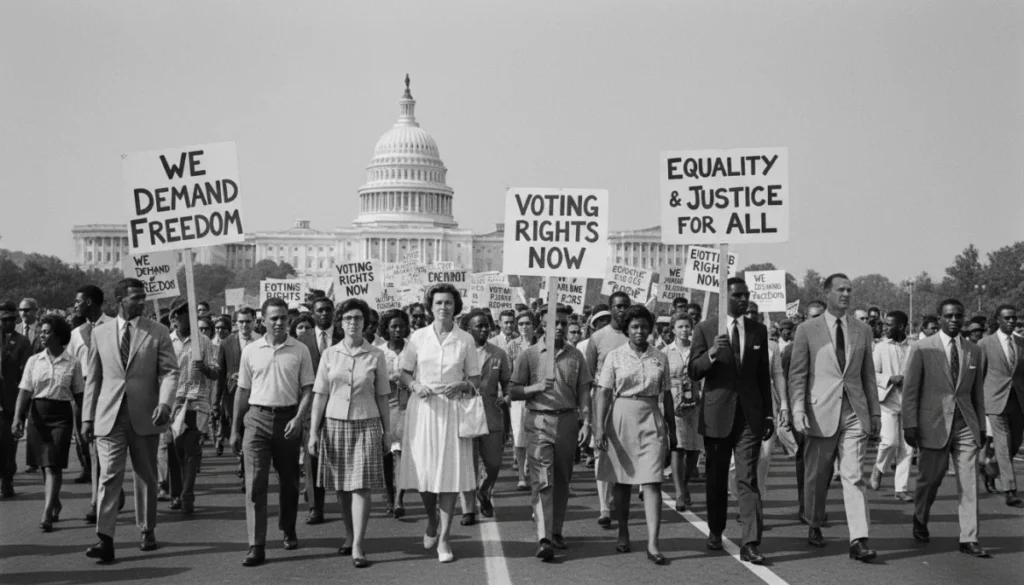
The mid-20th century saw the rise of a powerful Civil Rights Movement, fueled by the courage of individuals like Rosa Parks and Dr. Martin Luther King Jr., and organized efforts through groups such as the NAACP. These activists employed nonviolent protests, sit-ins, and marches to expose the brutal realities of racial injustice and demand equal rights. The movement gained significant momentum, capturing national and international attention, which put immense pressure on the federal government to act. President John F. Kennedy initially proposed civil rights legislation, but his assassination in November 1963 left the task to his successor, Lyndon B. Johnson, who championed the bill with unwavering determination.
The historical context of the Act is one of profound struggle and persistent advocacy against a backdrop of institutionalized racism. Understanding this struggle illuminates the revolutionary nature of the Act and its lasting impact on American society, marking a definitive break from a past marred by legalized discrimination.
Title I: Voting rights protection
One of the most fundamental aspects of a democratic society is the right to vote, yet for millions of African Americans, this right was systematically denied or obstructed for decades. Title I of the Civil Rights Act of 1964 directly addressed this injustice, aiming to ensure that all citizens, regardless of race, color, or national origin, had an equal opportunity to participate in the electoral process. This provision was critical in dismantling discriminatory practices that had long prevented Black Americans from exercising their franchise.
Prior to the Act, various tactics were used to suppress minority votes, particularly in Southern states. These included:
Literacy tests: Often administered unfairly, with different standards for white and Black prospective voters.
Poll taxes: Financial barriers that disproportionately affected low-income African Americans.
Grandfather clauses: Exempting white voters from literacy tests or poll taxes if their ancestors could vote before 1866.
Intimidation and violence: Direct threats and physical harm against those who attempted to register or vote.
Title I outlawed these discriminatory practices, making it illegal to apply different standards to voters based on race. While it didn’t immediately eliminate all barriers—the Voting Rights Act of 1965 would further strengthen these protections—it laid essential groundwork. This provision empowered federal courts to intervene and protect voting rights, marking a significant shift in the federal government’s role in overseeing state electoral processes. The protection of voting rights was not just about political participation; it was about acknowledging the full citizenship and dignity of all Americans.
Title II: Public accommodations desegregation
Imagine a world where your access to a restaurant, a hotel, or even a public park depended solely on the color of your skin. This was the harsh reality for many Americans before the Civil Rights Act. Title II of the Act was specifically designed to dismantle segregation in public accommodations, making it illegal to discriminate based on race, color, religion, or national origin in places like hotels, motels, restaurants, theaters, and other establishments that serve the public. This provision struck directly at the heart of the Jim Crow system, which had enforced separate and unequal facilities for decades.
Ending ‘separate but equal’ in public spaces
The concept of ‘separate but equal,’ enshrined by the Supreme Court in Plessy v. Ferguson (1896), had provided the legal justification for segregation. However, the reality was always ‘separate and inherently unequal.’ Title II recognized this fundamental injustice and sought to rectify it by ensuring that all citizens had equal access to services and facilities that were open to the general public. This meant that a Black family could now eat at the same diner as a white family, stay in the same hotel, and watch a movie in the same theater.
The implementation of Title II was not without its challenges. There was significant resistance in some areas, leading to protests and legal battles. However, the federal government’s commitment to enforcing this provision, backed by the Supreme Court’s upholding of its constitutionality, eventually led to the widespread desegregation of public spaces across the nation. This transformation was highly visible and deeply impactful, changing daily life for millions and symbolizing a profound societal shift towards greater equality and inclusion. It was a direct repudiation of the idea that one’s race could dictate basic human dignity and access to public life.
Title III: Desegregation of public facilities
Beyond public accommodations, the Civil Rights Act also targeted segregation in other vital public facilities. Title III empowered the Attorney General to file lawsuits to desegregate public facilities, including parks, libraries, and other state-owned or operated institutions. While Title II focused on privately owned businesses serving the public, Title III extended the federal government’s reach to ensure that government-run services and spaces were also open to all citizens, regardless of their race or ethnicity. This was a critical step in dismantling the pervasive system of segregation that affected every aspect of daily life for minority communities.
The impact of Title III was significant because it provided a legal mechanism to challenge segregation where local and state governments had failed to act. Historically, many public facilities were maintained as separate and often inferior for Black Americans, perpetuating a cycle of disadvantage. By giving the Attorney General the power to initiate legal proceedings, the Act created a powerful tool for enforcement, ensuring that states and municipalities could no longer ignore their responsibility to provide equal access.
The desegregation of public facilities meant that communities could begin to share spaces that had long been divided, fostering a sense of common citizenship. This provision complemented other titles by systematically chipping away at the legal and practical foundations of racial separation, ultimately promoting a more integrated and equitable society. It underscored the principle that public services, funded by all taxpayers, should benefit all taxpayers equally.
Title IV: Desegregation of public education
Perhaps one of the most contentious and transformative areas addressed by the Civil Rights Act of 1964 was public education. Title IV authorized the Attorney General to file lawsuits to desegregate public schools and provided technical and financial assistance to school districts undergoing desegregation. This provision built upon the landmark Supreme Court decision in Brown v. Board of Education (1954), which had declared state-sponsored segregation in public schools unconstitutional but had faced significant resistance in its implementation.
The journey to integrated education was long and arduous. Despite the Brown ruling, many Southern states employed various tactics to delay or avoid desegregation. Title IV provided the federal government with stronger enforcement powers, enabling it to actively intervene when school districts failed to comply. This included offering financial aid to help districts manage the complex process of integration, from busing students to developing new curricula that reflected a more inclusive environment.
The desegregation of public education was not merely about sharing classrooms; it was about providing equal educational opportunities for all children. Access to quality education is a cornerstone of upward mobility and societal participation. By breaking down barriers in schools, Title IV aimed to:
Improve educational outcomes for minority students.
Foster understanding and reduce prejudice among students of different backgrounds.
Prepare future generations for a more integrated society.
This provision was instrumental in gradually transforming the educational landscape of the United States, though the effects of school segregation continue to be debated and addressed even today. It was a clear statement that separate educational systems were inherently unequal and had no place in a just society.
Title VI: Non-discrimination in federally assisted programs
Title VI of the Civil Rights Act of 1964 introduced a powerful mechanism to ensure non-discrimination across a wide array of public services: it prohibited discrimination on the basis of race, color, or national origin in programs and activities receiving federal financial assistance. This provision was a game-changer because it meant that any institution, whether a hospital, university, or state agency, that received federal funds could lose that funding if found to be engaging in discriminatory practices. This created a strong financial incentive for compliance, extending the reach of anti-discrimination laws far beyond the specific areas covered by other titles.
The impact of Title VI was broad and profound. It effectively leveraged the federal government’s spending power to enforce civil rights. Prior to this, many federally funded programs, particularly in the South, operated on a segregated basis, often using taxpayer money to perpetuate discrimination. Title VI put an end to this practice, ensuring that federal dollars would no longer support inequality.
Key aspects of Title VI’s implementation included:
Wide scope: Applied to virtually all federal agencies and their grantees, including education, healthcare, housing, and social services.
Enforcement power: Gave federal agencies the authority to investigate complaints and, if necessary, terminate funding to non-compliant entities.
Preventative measure: Encouraged proactive compliance to avoid investigations and potential loss of funding.
This provision served as a crucial tool in dismantling institutionalized segregation and discrimination across various sectors of American life. By linking federal funding to non-discriminatory practices, Title VI compelled a nationwide shift towards equal treatment, significantly advancing the goals of the Civil Rights Movement and fundamentally altering how public services were delivered.
Title VII: Equal employment opportunity
One of the most far-reaching and economically impactful provisions of the Civil Rights Act of 1964 is Title VII, which prohibits discrimination by employers on the basis of race, color, religion, sex, or national origin. This title fundamentally transformed the American workplace, opening doors to opportunities that had long been denied to minority groups and women. Before Title VII, it was common for employers to openly discriminate in hiring, promotions, and wages, creating systemic economic disparities that perpetuated cycles of poverty and limited advancement for large segments of the population.
Title VII made it illegal for employers to:
Refuse to hire or to discharge any individual, or otherwise to discriminate against any individual with respect to compensation, terms, conditions, or privileges of employment.
Limit, segregate, or classify employees or applicants for employment in any way that would deprive or tend to deprive any individual of employment opportunities or otherwise adversely affect his status as an employee.
To enforce these provisions, Title VII also established the Equal Employment Opportunity Commission (EEOC). The EEOC was tasked with investigating complaints of discrimination, mediating disputes, and, if necessary, filing lawsuits against employers. This new federal agency played a pivotal role in shaping workplace policies and ensuring compliance, providing a crucial avenue for redress for victims of discrimination.
The impact of Title VII has been monumental. It has led to greater diversity in workplaces across all sectors, from corporate offices to manufacturing plants. While challenges remain and the fight for true equity continues, Title VII laid the legal foundation for a more inclusive economy, allowing individuals to be judged on their merits and qualifications rather than on discriminatory characteristics. It remains a cornerstone of American labor law and a powerful symbol of the nation’s commitment to equal opportunity.
Title VIII: Community Relations Service
While many titles of the Civil Rights Act focused on legal prohibitions and enforcement, Title VIII introduced a different, yet equally vital, approach: mediation and conciliation. This provision established the Community Relations Service (CRS) within the Department of Justice. The primary role of the CRS was to assist communities in resolving disputes and difficulties arising from discriminatory practices based on race, color, or national origin. Rather than punitive measures, the CRS aimed to foster understanding and facilitate peaceful resolutions, particularly in the aftermath of desegregation efforts.
The creation of the CRS recognized that legal mandates alone might not be sufficient to heal deeply entrenched social divisions. Many communities faced significant tensions and conflicts as they transitioned away from segregation. The CRS offered a neutral third party to:
Mediate disputes: Bringing together conflicting parties to find common ground and constructive solutions.
Provide technical assistance: Helping communities develop strategies for peaceful integration and conflict prevention.
Promote dialogue: Encouraging open communication and understanding between different racial and ethnic groups.
This proactive approach was crucial in mitigating violence and fostering positive intergroup relations during a turbulent period of social change. The CRS acted as a bridge, helping local leaders, law enforcement, and community members navigate complex racial issues. Its work was often behind the scenes, but its impact on easing tensions and promoting a more harmonious transition to an integrated society was invaluable. Title VIII underscored the idea that true civil rights progress required not only legal reform but also dedicated efforts towards community healing and reconciliation.
The enduring legacy and ongoing challenges
The Civil Rights Act of 1964 undeniably represents a watershed moment in American history, fundamentally altering the legal and social fabric of the nation. Its eight key provisions dismantled the legal framework of segregation and discrimination, paving the way for greater equality in voting, public accommodations, education, employment, and federally funded programs. The Act ignited a wave of further legislative action, including the Voting Rights Act of 1965 and the Fair Housing Act of 1968, which continued to expand civil rights protections.
However, the legacy of the Civil Rights Act is not without its complexities and ongoing challenges. While legal segregation was abolished, systemic inequalities and racial disparities persist in many areas of American life, including:
Economic inequality: Significant wealth and income gaps continue to affect minority communities.
Educational disparities: Despite desegregation, many schools remain de facto segregated and unequal in resources.
Criminal justice reform: Disproportionate incarceration rates and racial bias in the justice system remain pressing issues.
Implicit bias: Subtle, unconscious biases continue to influence decisions in employment, housing, and other sectors.
The Act provided the essential legal tools to combat overt discrimination, but the fight for true equity and inclusion is a continuous process that requires ongoing vigilance, policy adjustments, and societal commitment. The Civil Rights Act of 1964 serves as a powerful reminder of the progress that can be achieved through determined activism and legislative action, while also highlighting the persistent work needed to realize the promise of equality for all Americans.
Key Provision
Brief Description
Title I
Ensured equal voting rights by prohibiting discriminatory practices.
Title II
Outlawed discrimination in public accommodations like hotels and restaurants.
Title VII
Prohibited employment discrimination based on race, color, religion, sex, or national origin.
Title VI
Banned discrimination in federally funded programs and activities.
Frequently asked questions about the Civil Rights Act
What was the primary goal of the Civil Rights Act of 1964?▼
The primary goal was to end discrimination based on race, color, religion, sex, or national origin. It sought to abolish segregation in public places and prohibit discrimination in employment, ensuring equal rights and opportunities for all Americans.
How did the Act address voting rights?▼
Title I of the Act outlawed discriminatory voting practices such as literacy tests and poll taxes that had been used to disenfranchise minority voters. It allowed federal courts to intervene and protect citizens’ right to vote, laying crucial groundwork for the Voting Rights Act of 1965.
What impact did Title VII have on employment?▼
Title VII made it illegal for employers to discriminate in hiring, firing, or promotion based on race, color, religion, sex, or national origin. It established the Equal Employment Opportunity Commission (EEOC) to investigate and enforce these protections, significantly diversifying the American workforce.
Did the Act immediately end all forms of discrimination?▼
No, while the Act outlawed legal discrimination and segregation, it did not immediately eliminate all forms of prejudice or systemic inequality. It provided a legal framework, but ongoing efforts and subsequent legislation were required to address deeper societal issues and implicit biases.
Why was the Civil Rights Act considered so revolutionary?▼
It was revolutionary because it was the most comprehensive civil rights legislation since Reconstruction, using federal power to dismantle state-sanctioned discrimination across multiple sectors. It fundamentally redefined the relationship between the government and its citizens, ensuring greater equality under the law.
Conclusion
The Civil Rights Act of 1964 stands as an indelible monument in American legal and social history. Its comprehensive provisions, from securing voting rights to desegregating public spaces and ensuring equal employment opportunities, collectively initiated a profound transformation across the nation. While the Act did not instantly erase centuries of discrimination, it provided the essential legal and moral framework upon which further progress could be built. Its legacy continues to shape contemporary discussions on equality, justice, and the ongoing pursuit of a more inclusive American society, reminding us of the power of legislation to drive fundamental social change.