Preserving Oral Histories in 2026: Innovative Approaches
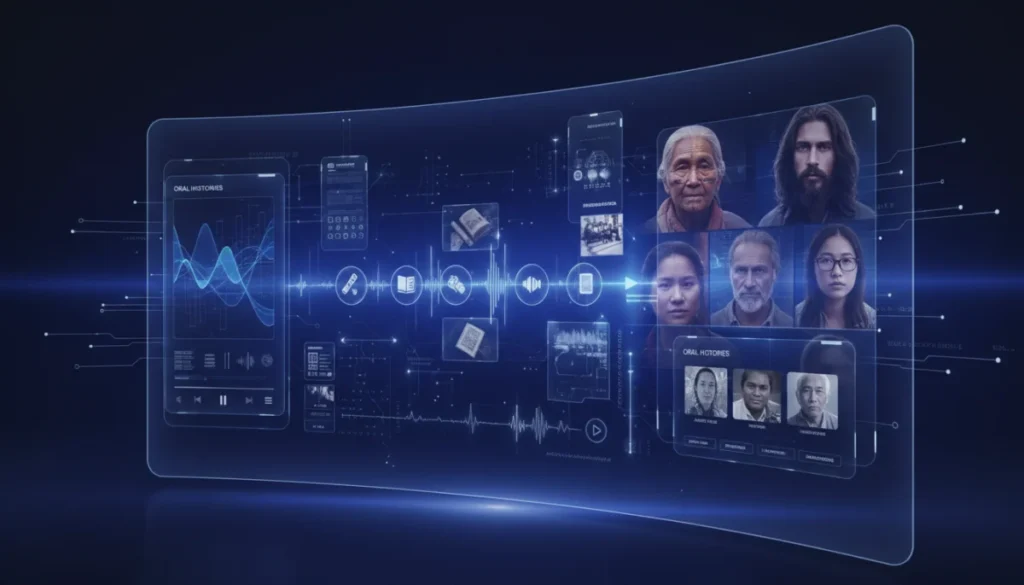
In 2026, the preservation of oral histories is undergoing a significant transformation through advanced digital archiving, AI-driven transcription, and robust community engagement, ensuring America’s past is richly documented and accessible.
The tapestry of American history is woven from countless individual stories, voices that offer unique perspectives on our collective journey. In an era of rapid technological advancement, the imperative to capture and safeguard these invaluable narratives has never been more pressing. Preserving oral histories in 2026 demands innovative strategies that leverage modern tools while honoring the deeply human essence of storytelling. This article explores three groundbreaking approaches revolutionizing how we document America’s past.
The Digital Archiving Revolution: Beyond the Tape Recorder
The traditional image of oral history collection often involves a tape recorder and a quiet room. While these foundational methods remain crucial, 2026 has ushered in a digital archiving revolution that transforms how these precious recordings are stored, accessed, and preserved for eternity. This shift moves beyond mere digitization to encompass comprehensive digital lifecycle management.
Modern digital archives are not just repositories; they are dynamic, searchable ecosystems designed for long-term viability and broad accessibility. They employ advanced metadata standards and robust cybersecurity protocols to ensure both the integrity and availability of historical narratives. The focus is on creating interoperable systems that can communicate with various platforms, fostering a more interconnected historical record.
Enhanced Accessibility through Cloud-Based Platforms
Cloud computing has become the backbone of modern oral history preservation, offering unparalleled scalability and security. These platforms allow institutions to store vast amounts of data without the need for extensive on-site infrastructure, democratizing access for smaller organizations and community groups.
- Global reach for researchers and the public.
- Redundant backups across multiple geographical locations.
- Cost-effective solutions for long-term storage.
- Version control and audit trails for data integrity.
The move to cloud-based solutions also facilitates collaborative projects, enabling historians and community members from different locations to contribute to and curate collections simultaneously. This collaborative spirit is vital for building comprehensive and diverse archives that truly reflect the breadth of American experience.
Forensic Digital Preservation Techniques
Digital preservation in 2026 is an active, ongoing process, not a one-time event. It involves forensic techniques to ensure that digital files remain readable and authentic as technology evolves. This includes migration strategies for file formats and emulation techniques to run older software environments.
The goal is to prevent digital obsolescence, a significant threat to any purely digital archive. Experts are constantly monitoring technological changes, anticipating future challenges, and implementing proactive measures to safeguard data against format degradation and hardware failure. This meticulous approach guarantees that the voices of the past will resonate clearly into the distant future.
In essence, digital archiving in 2026 is about creating resilient, accessible, and sustainable infrastructures for oral histories. It’s a commitment to ensuring that every recorded voice, every shared memory, can withstand the test of time and technological change, remaining a vibrant resource for generations to come.
AI-Powered Transcription and Analysis: Unlocking Hidden Insights
The sheer volume of oral history recordings can be overwhelming, making comprehensive analysis a daunting task. In 2026, artificial intelligence (AI) has emerged as a transformative tool, not only for transcribing interviews with unprecedented accuracy but also for unlocking hidden insights within these narratives. AI is rapidly changing how researchers engage with and understand spoken history.
AI-powered transcription services have advanced significantly, moving beyond simple speech-to-text to include speaker identification, emotion detection, and even contextual understanding. This level of detail allows historians to spend less time on manual transcription and more time on the profound work of interpretation and analysis.
Advanced Natural Language Processing for Thematic Analysis
Beyond transcription, Natural Language Processing (NLP) algorithms are being deployed to perform sophisticated thematic analysis on vast oral history collections. These tools can identify recurring themes, sentiments, and even subtle linguistic patterns that might be missed by the human ear alone.
- Automated identification of key topics and concepts.
- Sentiment analysis to gauge emotional tones within narratives.
- Cross-referencing of interviews to find connections between stories.
- Generation of keyword clouds and visual representations of data.
This capability accelerates research, allowing scholars to draw connections across hundreds or thousands of interviews, revealing broader trends and nuanced understandings of historical events and experiences. It’s a powerful enhancement to traditional research methods, not a replacement.
Ethical Considerations in AI Implementation
While AI offers immense benefits, its application in oral history also raises important ethical considerations. Ensuring data privacy, preventing algorithmic bias, and maintaining the authenticity of the speaker’s voice are paramount. Developers and historians are working collaboratively to establish best practices for ethical AI use.
Transparency in AI’s role is crucial. Researchers must clearly articulate when and how AI tools were used in their analysis to maintain academic rigor and public trust. Furthermore, safeguards are being developed to ensure that AI does not inadvertently alter or misrepresent the original narratives, always prioritizing the human voice at the core of oral history.
The integration of AI into oral history practices in 2026 represents a leap forward in efficiency and analytical depth. It empowers researchers to explore historical narratives in ways previously unimaginable, revealing the complex layers of human experience while upholding the highest ethical standards.
Community-Led Documentation: Empowering Local Voices
True history is often found in the everyday experiences of ordinary people, yet these voices have historically been underrepresented in official archives. In 2026, a significant shift towards community-led documentation is empowering local groups and individuals to collect and preserve their own oral histories, ensuring a more inclusive and representative account of America’s past.
This approach recognizes that communities are best positioned to identify, collect, and interpret their own stories. It fosters a sense of ownership and agency, leading to richer, more authentic narratives that reflect local nuances and perspectives. This is a departure from top-down historical collection, embracing a grassroots movement.
Democratizing Tools and Training
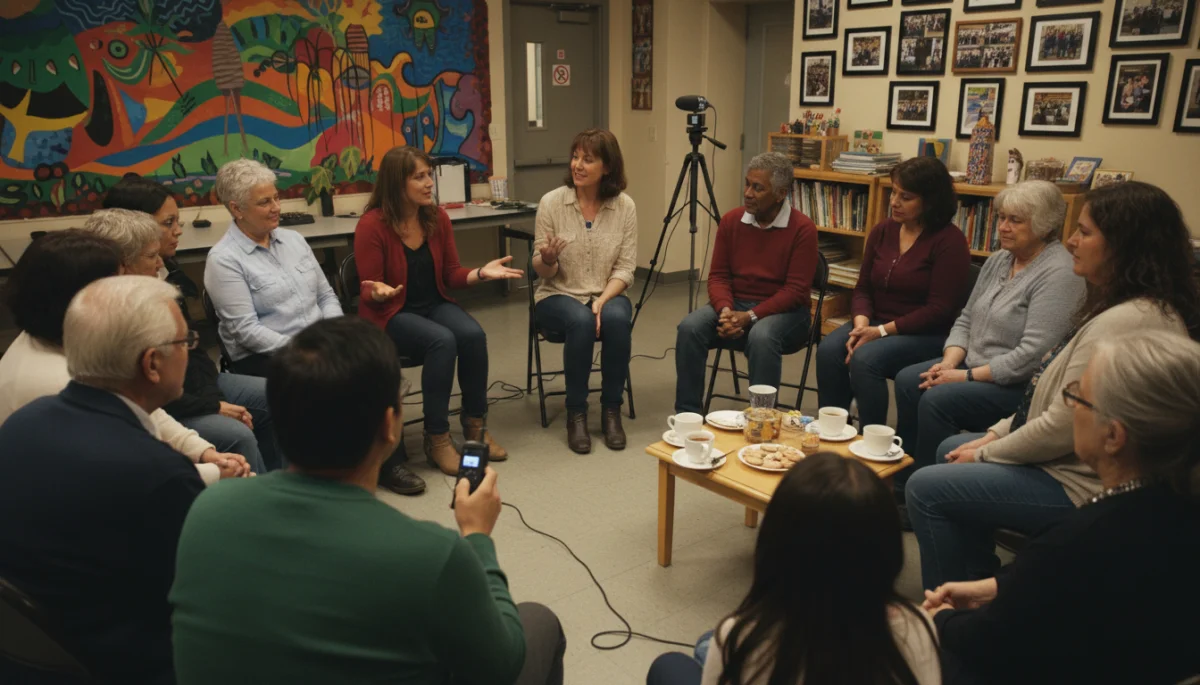
A key aspect of community-led documentation is the democratization of tools and training. Organizations are providing accessible, user-friendly recording equipment and comprehensive training programs to community members, enabling them to conduct interviews with professional quality.
- Workshops on interviewing techniques and ethical considerations.
- Access to affordable or donated digital recording devices.
- Guidance on metadata creation and archival best practices.
- Support for establishing local digital repositories.
These initiatives ensure that individuals, regardless of their prior experience, can effectively contribute to the historical record. It’s about building capacity within communities so they can become their own historians, preserving narratives that might otherwise be lost.
Building Collaborative Platforms
Online collaborative platforms are central to these community efforts. These platforms allow local groups to share resources, seek advice, and even upload their collected oral histories to broader, interconnected networks. This creates a distributed archive where local stories can be discovered by a wider audience while remaining rooted in their original communities.
Such platforms often include features for peer review, community commenting, and interactive mapping, enriching the context around each interview. They transform passive archives into living, breathing historical resources that continue to grow and evolve with community input. The emphasis is on creating a shared space for collective memory.
Community-led documentation in 2026 is fundamentally about decentralizing historical authority and empowering those whose stories have long been marginalized. By providing the tools, training, and platforms, we are building a more democratic and comprehensive historical record, ensuring that America’s past is told through the diverse voices that shaped it.
Overcoming Challenges in Oral History Preservation
While innovation offers exciting new avenues for preserving oral histories, significant challenges persist. These include issues of funding, digital obsolescence, and ensuring equitable access to technology and training. Addressing these hurdles requires a multi-faceted approach involving government, academic institutions, and community organizations.
Funding remains a perennial concern. The long-term preservation of digital assets is not a one-time expense; it requires ongoing investment in infrastructure, software, and skilled personnel. Advocates are working to secure sustainable funding models that recognize oral history as a vital component of cultural heritage.
Ensuring Digital Longevity and Integrity
The rapid pace of technological change means that digital formats can quickly become obsolete. A key challenge is to continuously migrate and update digital files to ensure they remain accessible and usable. This process demands constant vigilance and significant technical expertise.
Furthermore, maintaining the integrity of digital recordings against accidental corruption or malicious alteration is paramount. Robust checksums, digital signatures, and secure server environments are essential tools in this ongoing battle. The goal is to guarantee that the oral histories of today will be verifiable and authentic centuries from now.
Another aspect of integrity involves the contextual information surrounding an interview. Metadata—data about the data—is crucial for understanding the interview’s background, interviewer, date, and any specific cultural protocols. Without rich, standardized metadata, even perfectly preserved audio files can lose their historical value.
Bridging the Digital Divide
Equitable access to technology and training is crucial for inclusive oral history preservation. Not all communities have the same resources or digital literacy. Bridging this digital divide is essential to ensure that all voices, particularly those from underrepresented groups, can contribute to the historical record.
Initiatives focus on providing free or low-cost equipment, internet access, and digital skills training in underserved areas. Partnerships between urban institutions and rural communities are vital for sharing resources and expertise. This ensures that the benefits of innovative preservation techniques are available to everyone, not just those with privileged access.
Overcoming these challenges requires a concerted effort. By proactively addressing issues of funding, digital longevity, and equitable access, we can build a more robust and inclusive framework for preserving oral histories, guaranteeing that the stories of America’s past are safeguarded for future generations.
The Role of Education and Public Engagement
Preserving oral histories is not solely a technical endeavor; it is also deeply rooted in education and public engagement. For these narratives to truly thrive, they must be understood, valued, and actively utilized by both scholars and the general public. Educational initiatives are vital for cultivating an appreciation for oral history.
Universities and K-12 schools are increasingly incorporating oral history projects into their curricula, teaching students not only how to conduct interviews but also how to critically analyze and interpret spoken narratives. This hands-on experience fosters a deeper connection to history and develops crucial research skills.
Interactive Exhibits and Digital Storytelling
Public engagement is being revolutionized through interactive exhibits and digital storytelling platforms. Museums, libraries, and online archives are creating immersive experiences that allow visitors to listen to oral histories, explore related artifacts, and even contribute their own memories.
- Virtual reality and augmented reality experiences based on oral histories.
- Podcasts and audio documentaries featuring curated narratives.
- Interactive maps showing geographical distribution of stories.
- Crowdsourcing platforms for adding context or contributing new interviews.
These innovative approaches make history come alive, moving beyond static displays to dynamic, engaging experiences that resonate with a diverse audience. They transform passive consumption into active participation, encouraging a broader public to connect with and value historical accounts.
Fostering Intergenerational Dialogue
Oral history inherently fosters intergenerational dialogue, connecting younger generations with the wisdom and experiences of elders. Educational programs specifically designed to facilitate these exchanges are proving highly effective in preserving cultural knowledge and strengthening community bonds.
Such programs often involve structured interview sessions where students interview older community members, creating a valuable archive while simultaneously building empathy and understanding across age groups. This direct human connection is a powerful antidote to historical amnesia and a cornerstone of vibrant cultural preservation efforts.
Education and public engagement are indispensable for the long-term success of oral history preservation. By teaching future generations the value of these stories and by making them accessible and engaging to all, we ensure that the voices of the past continue to inform and inspire the present and future.
Future Horizons: Emerging Technologies and Collaborative Ecosystems
As we look beyond 2026, the future of preserving oral histories promises even more integration of emerging technologies and the development of expansive collaborative ecosystems. The landscape of historical documentation is continually evolving, driven by innovation and a shared commitment to safeguarding human experience.
One promising area is the application of advanced semantic web technologies, which will allow for even richer contextualization and interlinking of oral histories with other forms of historical data, such as photographs, documents, and geospatial information. This creates a truly holistic view of the past.
Blockchain for Authenticity and Ownership
Blockchain technology, often associated with cryptocurrencies, is beginning to show promise in the realm of digital preservation. Its decentralized and immutable ledger system could offer unprecedented levels of authenticity and verifiable ownership for oral history recordings.
- Secure, tamper-proof records of interview provenance.
- Decentralized storage solutions enhancing data resilience.
- Clear attribution and intellectual property management.
- Facilitation of micro-licensing for academic and creative use.
By registering oral histories on a blockchain, institutions could provide irrefutable proof of their origin and integrity, addressing concerns about deepfakes or unauthorized alterations. This adds another layer of trust and security to digital archives, which is increasingly important in a digitally complex world.
Global Collaborative Networks
The trend towards collaborative ecosystems will expand globally. International partnerships will enable the sharing of best practices, technological solutions, and even cross-cultural oral history collections. This global perspective enriches our understanding of shared human experiences and diverse historical narratives.
These networks will facilitate standardized metadata practices and interoperable platforms, making it easier for researchers and the public worldwide to access and compare oral histories from different regions. The vision is a truly interconnected web of human stories, transcending geographical and institutional boundaries.
The future of preserving oral histories is bright, characterized by continuous technological innovation and an ever-growing spirit of collaboration. By embracing these emerging horizons, we can ensure that the voices of America’s past, and indeed the world’s past, are not only preserved but thrive as living testaments to human resilience and experience.
| Key Approach | Brief Description |
|---|---|
| Digital Archiving | Utilizing cloud platforms and forensic techniques for secure, accessible, and long-term storage of oral histories. |
| AI-Powered Analysis | Employing AI for accurate transcription, thematic analysis, and insight extraction from extensive oral history collections. |
| Community-Led Documentation | Empowering local communities with tools and training to collect and preserve their own unique historical narratives. |
| Ethical Considerations | Addressing privacy, bias, and authenticity in digital and AI-driven preservation to maintain trust and integrity. |
Frequently asked questions about oral history preservation
Preserving oral histories in 2026 is crucial because they offer unique, personal perspectives that complement traditional historical records. These narratives provide invaluable insights into social, cultural, and political events, ensuring a more comprehensive and empathetic understanding of America’s past for future generations.
AI significantly aids oral history preservation by providing highly accurate transcription services, speaker identification, and advanced thematic analysis. It allows researchers to efficiently process vast amounts of audio data, identify key themes, and uncover hidden connections across multiple narratives, enhancing research capabilities.
Community-led oral history projects empower local voices, ensuring diverse and authentic narratives are collected and preserved. They foster a sense of ownership, build digital literacy within communities, and create a more inclusive historical record that reflects the true breadth of American experience from the grassroots level.
Digital obsolescence is a major challenge, as file formats and storage technologies rapidly evolve, potentially rendering older digital records inaccessible. Continuous migration of data, format updates, and proactive preservation strategies are necessary to ensure the long-term integrity and readability of digital oral history archives.
Individuals can contribute by interviewing family members or community elders, participating in local oral history projects, or donating their own recorded narratives to established archives. Learning basic interviewing techniques and ethical considerations is a great starting point for making a valuable contribution.
Conclusion
The journey of preserving oral histories in 2026 is marked by a dynamic interplay of technological innovation, ethical responsibility, and community empowerment. From sophisticated digital archiving systems and AI-driven analytical tools to the vital movement of community-led documentation, the methods for safeguarding America’s past are more robust and inclusive than ever. By embracing these three innovative approaches, we ensure that the rich, diverse, and often untold stories of individuals continue to resonate, providing invaluable context and profound human connection to our shared history for generations to come. The future of historical memory depends on our collective commitment to listening, recording, and cherishing every voice.
Related Posts: