Decoding the Louisiana Purchase: 7 Strategic Moves That Doubled the Nation in 1803
The Louisiana Purchase was a monumental event in American history, strategically doubling the nation's size in 1803 through skillful diplomacy and fortunate geopolitical circumstances, profoundly influencing its future development.
Por: Marcelle em 23 de setembro de 2026
The Louisiana Purchase was a monumental event in American history, strategically doubling the nation’s size in 1803 through skillful diplomacy and fortunate geopolitical circumstances, profoundly influencing its future development.
Understanding the intricacies of the Louisiana Purchase Strategies reveals a pivotal moment in American history, a move that dramatically reshaped the nation’s destiny. How did a young republic manage to acquire such a vast territory, effectively doubling its size overnight? Join us as we unravel the strategic decisions and fortunate coincidences that led to this extraordinary acquisition.
The Geopolitical Chessboard of 1803
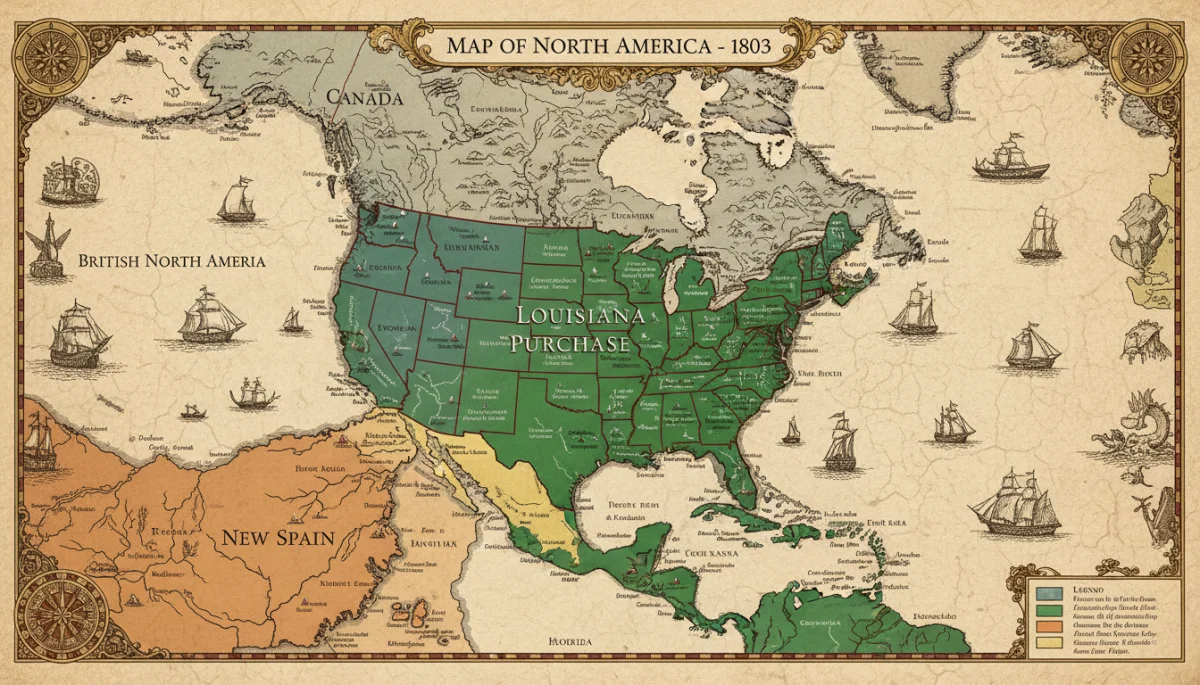
In the early 19th century, North America was a complex tapestry of territorial claims and competing European powers. Spain, France, and Great Britain all held significant sway, creating a delicate balance of power that directly impacted the fledgling United States. The Mississippi River and the port of New Orleans were particularly contentious, vital for American farmers and traders in the western territories.
President Thomas Jefferson recognized the strategic importance of these waterways. The prospect of a hostile foreign power controlling New Orleans posed an existential threat to American economic stability and westward expansion. This geopolitical reality set the stage for one of the most audacious land deals in history.
Spain’s Fading Grip and France’s Resurgence
By 1800, Spain’s control over the Louisiana Territory was weakening. Years of neglect and a shifting global power dynamic made it difficult for them to maintain a strong presence. This vulnerability, however, soon gave way to a far more formidable challenge for the United States: the return of French authority.
Spanish Decline: Spain’s empire was in decline, struggling to manage its vast colonial holdings.
Secret Treaty of San Ildefonso: In 1800, Spain secretly ceded Louisiana back to France, a move that initially went unnoticed by the U.S.
Napoleon’s Ambitions: Napoleon Bonaparte envisioned a renewed French empire in North America, with Louisiana serving as a vital agricultural breadbasket for his Caribbean colonies.
The re-emergence of France as a colonial power in Louisiana sent shockwaves through Washington D.C. The idea of a powerful, expansionist France at America’s doorstep, especially controlling the crucial port of New Orleans, was a nightmare scenario for Jefferson and his administration. This renewed French presence demanded an immediate and decisive response from the United States, pushing them towards a diplomatic solution.
The geopolitical landscape of 1803 was thus characterized by a precarious balance, with the United States caught between the waning influence of Spain and the rising ambitions of Napoleonic France. Jefferson’s administration understood that inaction was not an option, and securing American interests in the Mississippi Valley became a top priority, setting the stage for a dramatic diplomatic overture.
Jefferson’s Vision for an Agrarian Republic
Thomas Jefferson’, a staunch advocate for an agrarian society, believed that the future strength and virtue of the United States lay in its independent farmers. His vision was of a nation expanding westward, providing ample land for generations of self-sufficient citizens. This ideological commitment profoundly influenced his approach to territorial expansion.
The vast, fertile lands of the trans-Mississippi west, particularly those watered by the Mississippi River, were central to this vision. Jefferson saw the acquisition of these lands not merely as an opportunity for growth, but as a necessity for preserving the character of the American republic. The ability to expand westward would prevent the concentration of population in urban centers and the perceived corruption that came with it.
Securing the Mississippi and New Orleans
For Jefferson, control over the Mississippi River and the port of New Orleans was non-negotiable. These waterways were the lifeblood of the American frontier, providing the sole viable outlet for agricultural produce from states like Kentucky and Tennessee. Without free access, western farmers faced economic ruin, and the loyalty of these regions to the Union could be jeopardized.
Economic Lifeline: The Mississippi River was the primary transportation route for western goods.
Port of New Orleans: Essential for exporting American agricultural products to international markets.
Preventing Conflict: Jefferson aimed to avoid potential conflicts with European powers over navigation rights.
The closure of the port of New Orleans by Spanish authorities in 1802, though temporary, served as a stark reminder of the perils of foreign control. This incident solidified Jefferson’s resolve to acquire New Orleans, even if it meant forging an alliance with Great Britain against France, a drastic measure he was prepared to consider. His vision extended beyond mere economic pragmatism; it encompassed the very essence of American independence and self-determination.
Jefferson’s agrarian ideal and his unwavering commitment to securing the western frontier were powerful drivers behind the Louisiana Purchase. He understood that the nation’s future, both economically and ideologically, depended on unimpeded access to and expansion into the western territories, making the acquisition of Louisiana an imperative for his presidency.
The Diplomatic Mission: Livingston and Monroe
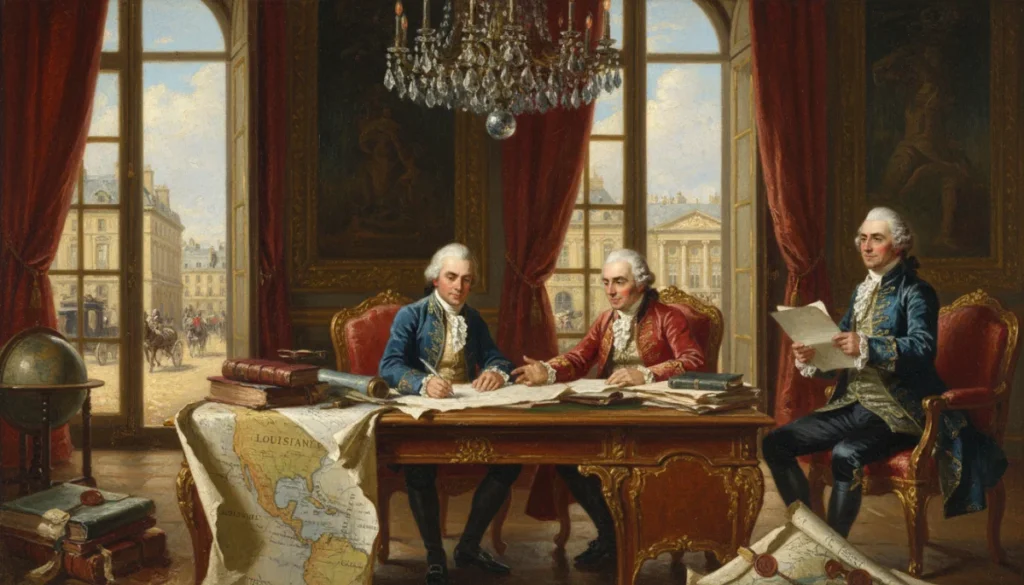
Recognizing the urgency of the situation, President Jefferson dispatched a diplomatic team to Paris with clear instructions: secure American navigation rights on the Mississippi River and, if possible, purchase New Orleans and West Florida. Robert Livingston, the U.S. Minister to France, was already engaged in preliminary discussions, but Jefferson saw the need for additional leverage and expertise.
James Monroe, a trusted confidant and experienced diplomat, was appointed as a special envoy to assist Livingston. Monroe’s appointment was strategic; his reputation and close ties to Jefferson were intended to signal the seriousness of America’s intentions to Napoleon and his ministers. Their combined efforts would prove crucial in the negotiations that followed, navigating the unpredictable currents of French politics.
Initial Mandate and Limited Authority
Livingston and Monroe arrived in Paris with a relatively modest mandate. They were authorized to offer up to $10 million for New Orleans and West Florida. The idea of acquiring the entire Louisiana Territory was beyond their initial instructions and, frankly, beyond their wildest expectations. This limited authority would later present a constitutional dilemma for Jefferson.
Specific Goal: Purchase New Orleans and West Florida to ensure river access.
Financial Limit: Authorized to spend up to $10 million for the specified territories.
No Full Territory Mandate: The idea of acquiring the entire Louisiana Territory was not part of their original brief.
Despite their limited brief, Livingston and Monroe were seasoned diplomats. They understood the art of negotiation and the importance of seizing opportunities when they arose. They were prepared to push the boundaries of their instructions if it served the ultimate interests of the United States, a flexibility that would soon be tested by Napoleon’s astonishing offer. Their presence together in Paris created a formidable negotiating team, ready to act decisively.
The diplomatic mission of Livingston and Monroe was a testament to Jefferson’s foresight and his willingness to empower his representatives. While their initial instructions were conservative, the unfolding events in Europe would soon transform their mission into one of the most significant diplomatic triumphs in American history, requiring both courage and ingenuity.
Napoleon’s Shifting Fortunes and Strategic Calculations
Napoleon Bonaparte, the ambitious First Consul of France, initially harbored grand designs for a vast French empire in North America. His vision included a revitalized sugar-producing colony in Saint-Domingue (Haiti) supported by the agricultural bounty of Louisiana. However, a series of unforeseen events and strategic realignments dramatically altered his plans, paving the way for the Louisiana Purchase.
The costly and ultimately disastrous Haitian Revolution proved to be a turning point. French forces, decimated by disease and fierce resistance, failed to regain control of Saint-Domingue. This defeat shattered Napoleon’s colonial ambitions in the New World, rendering Louisiana far less valuable without its Caribbean centerpiece. His focus rapidly shifted from colonial expansion to European conquest.
The Imminent War with Great Britain
As Napoleon’s American dreams faded, the specter of renewed war with Great Britain loomed large. He understood that if war broke out, Great Britain, with its superior navy, would undoubtedly seize Louisiana, depriving France of any benefit from the territory. Selling Louisiana to the United States became a pragmatic solution, achieving multiple strategic objectives.
Haitian Revolution: Devastating losses for French forces in Saint-Domingue.
Financial Needs: Napoleon needed funds to finance his impending European campaigns.
Denying Britain: Selling to the U.S. prevented Britain from acquiring the territory.
The decision to sell Louisiana was a calculated risk for Napoleon. It provided immediate cash, eliminated a potential vulnerability, and, perhaps most importantly, strengthened the United States, creating a formidable rival to Great Britain in North America. This move was a masterstroke of realpolitik, sacrificing a distant colonial dream for immediate financial and strategic gains in Europe. It showcased Napoleon’s pragmatism and his ability to adapt swiftly to changing circumstances.
Napoleon’s abrupt change of heart was the critical catalyst for the Louisiana Purchase. His shifting fortunes and strategic calculations, driven by the realities of the Haitian Revolution and the looming conflict with Great Britain, created an unprecedented opportunity for the United States, one that Livingston and Monroe were uniquely positioned to seize.
The Astonishing Offer: Doubling the Nation
In April 1803, to the astonishment of Livingston and Monroe, French Foreign Minister Talleyrand approached them with an offer to sell the entire Louisiana Territory, not just New Orleans and West Florida. This unexpected proposal caught the American envoys completely off guard, as it far exceeded their instructions and the financial limits set by President Jefferson.
The sheer scale of the offer was immense: approximately 828,000 square miles of uncharted territory, stretching from the Mississippi River to the Rocky Mountains. This was an opportunity to instantly double the size of the United States, securing its western frontier and fulfilling Jefferson’s vision of an agrarian republic on an unimaginable scale.
Seizing the Moment: A Bold Decision
Livingston and Monroe, despite their lack of explicit authorization, recognized the historic significance of the offer. They understood that such an opportunity might never arise again. After intense deliberation, they made the bold decision to accept Napoleon’s terms, agreeing to a price of $15 million for the entire territory. This was a gamble, as they knew Jefferson would face constitutional questions regarding the acquisition.
Unprecedented Opportunity: The offer to sell the entire territory was unexpected and monumental.
Beyond Authority: The envoys acted outside their explicit instructions from Jefferson.
Strategic Imperative: They recognized the long-term benefits of acquiring such a vast domain.
The decision by Livingston and Monroe to proceed with the purchase, despite their limited mandate, demonstrated remarkable foresight and courage. They understood that waiting for instructions from Washington D.C. would risk Napoleon changing his mind or Great Britain seizing the territory. Their swift action secured an unparalleled territorial expansion for the United States, forever altering its geographical and political landscape.
The astonishing offer and the bold decision by the American diplomats were pivotal moments in the Louisiana Purchase. It was a testament to their diplomatic skill and their willingness to make a high-stakes choice that would profoundly shape the future of the United States, transforming it into a continental power.
Jefferson’s Constitutional Dilemma and Pragmatism
Upon receiving news of the Louisiana Purchase, President Jefferson was ecstatic about the territorial acquisition but deeply troubled by its constitutional implications. As a strict constructionist, he believed the federal government possessed only those powers explicitly enumerated in the Constitution. The Constitution did not explicitly grant the President or Congress the power to acquire new territory in this manner.
Jefferson initially contemplated proposing a constitutional amendment to authorize the purchase, but his advisors cautioned against the delay, fearing Napoleon might withdraw the offer. The strategic importance of the land, coupled with the immediacy of the opportunity, forced Jefferson to prioritize pragmatism over his strict constitutional principles.
Balancing Principles and National Interest
Jefferson ultimately decided to proceed with the purchase, arguing that the welfare of the nation, and the future of its agrarian ideals, outweighed his constitutional scruples. He viewed the acquisition as an expansion of the “empire of liberty,” a necessary step for the long-term prosperity and security of the United States. This decision set a precedent for future presidential actions and interpretations of executive power.
Strict Constructionist: Jefferson’s belief in limited federal powers.
Practical Necessity: The need to secure the Mississippi and western expansion.
“Empire of Liberty”: His vision for a vast, agrarian republic.
The Senate quickly ratified the treaty, and the House appropriated the necessary funds, largely swayed by the immense benefits of the acquisition. Despite his personal reservations, Jefferson’s leadership in navigating this constitutional dilemma demonstrated a profound commitment to the national interest. He recognized that sometimes, the demands of a growing nation required a flexible interpretation of foundational principles.
Jefferson’s constitutional dilemma highlights the tension between strict adherence to principles and the practical necessities of governance. His ultimate decision to proceed with the Louisiana Purchase, despite his reservations, underscores the transformative nature of the event and his willingness to adapt for the greater good of the burgeoning American republic.
The Enduring Legacy: Shaping a Continent
The Louisiana Purchase stands as one of the most significant events in American history, profoundly shaping the nation’s geographical, political, and cultural landscape. It effectively doubled the size of the United States, providing vast new territories for westward expansion and fulfilling Jefferson’s vision of an agrarian republic. The acquisition set the stage for generations of pioneers and explorers, forever altering the course of American development.
Beyond mere land acquisition, the Purchase had far-reaching implications. It solidified American control over the vital Mississippi River and the port of New Orleans, ensuring the economic viability of western states. It also removed a formidable European power from America’s immediate western border, enhancing national security and fostering a sense of continental destiny.
Exploration, Expansion, and Indigenous Impact
The acquisition immediately spurred exploration, most notably the Lewis and Clark Expedition, which charted the vast new territories and gathered invaluable scientific and geographical information. This era of exploration, however, also marked the beginning of increased displacement and conflict for indigenous populations, whose lands were now subject to American claim.
Westward Expansion: Opened up vast new lands for settlement and agriculture.
Lewis and Clark: Expeditions charted new territories, expanding knowledge.
Indigenous Displacement: Led to increased pressure and conflict with Native American tribes.
The Louisiana Purchase also contributed to growing sectional tensions between the North and South over the expansion of slavery into new territories, a conflict that would ultimately lead to the Civil War. Despite these complexities, its immediate impact was to strengthen the United States on the world stage, establishing it as a major continental power. The vision of a nation stretching “from sea to shining sea” began to take tangible form, setting the trajectory for future generations.
The enduring legacy of the Louisiana Purchase is multifaceted, reflecting both the triumphs of American expansion and the profound challenges it presented. It was a pivotal moment that solidified the nation’s continental ambitions, fundamentally altering its identity and setting the stage for its future as a global power.
Key Strategy
Brief Description
Jefferson’s Vision
An agrarian republic needing western expansion and Mississippi River control.
Diplomatic Mission
Livingston and Monroe sent to secure New Orleans and Florida.
Napoleon’s Shift
Haitian defeat and looming British war led to selling Louisiana.
Constitutional Pragmatism
Jefferson prioritized national interest over strict constitutional interpretation.
Frequently Asked Questions About the Louisiana Purchase
What was the primary reason for the Louisiana Purchase?▼
The primary reason was the United States’ desire to secure navigation rights on the Mississippi River and control the vital port of New Orleans. This was crucial for the economic survival of western American farmers, who relied on the river to transport their goods to market.
Who were the key figures involved in the negotiations?▼
President Thomas Jefferson initiated the mission, sending Robert Livingston and James Monroe as American envoys to Paris. On the French side, Foreign Minister Charles Maurice de Talleyrand-Périgord negotiated on behalf of Napoleon Bonaparte, who ultimately made the decision to sell.
How much did the United States pay for the Louisiana Territory?▼
The United States paid $15 million for the entire Louisiana Territory. This amount included the cost of the land itself and the assumption of French debts owed to American citizens, making it an incredibly cost-effective acquisition for such a vast area.
What constitutional challenge did the purchase present to Jefferson?▼
As a strict constructionist, Jefferson believed the Constitution did not explicitly grant the federal government power to acquire new territory. He struggled with this, but ultimately prioritized the national interest, arguing the welfare of the nation necessitated the purchase, setting a precedent for implied powers.
What was the long-term impact of the Louisiana Purchase?▼
The Louisiana Purchase doubled the size of the United States, fueled westward expansion, and solidified its status as a continental power. It also led to increased tensions over slavery’s expansion and significantly impacted Native American populations through displacement and conflict, fundamentally shaping the nation’s future.
Conclusion
The Louisiana Purchase of 1803 remains a monumental achievement in American history, a testament to astute diplomacy, strategic foresight, and fortunate timing. From Jefferson’s grand vision for an agrarian nation to Napoleon’s pressing geopolitical needs, each element converged to create an unparalleled opportunity for territorial expansion. The acquisition not only doubled the size of the fledgling United States but also secured its economic future, removed a significant European threat, and paved the way for its emergence as a continental power. While presenting constitutional challenges and long-term implications for indigenous populations, the strategic moves behind the Louisiana Purchase undeniably shaped the trajectory of the nation, solidifying its identity and setting the stage for its future growth and influence.