Beyond Gold Rush: Lesser-Known 19th-Century US Economic Booms
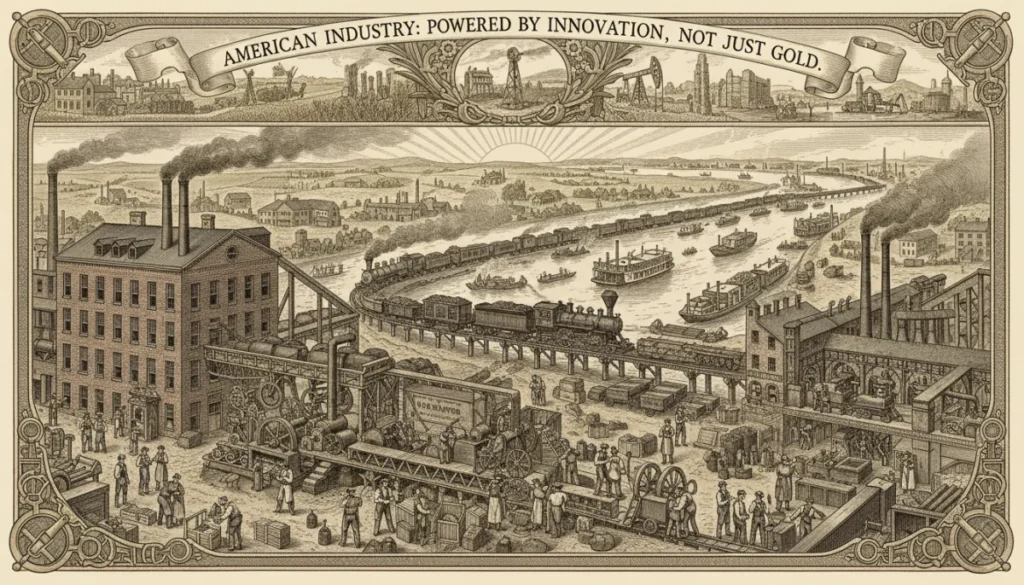
While the Gold Rush often dominates narratives, 19th-century America experienced several other significant economic booms. These lesser-known periods of rapid growth profoundly shaped the nation's industrial, agricultural, and technological landscape, laying foundations for future prosperity and societal change.
Por: Marcelle em 23 de setembro de 2026
The 19th century in America witnessed transformative economic expansions beyond the California Gold Rush, including significant growth in textile manufacturing, railroad construction, agricultural mechanization, and the burgeoning oil industry, each reshaping the national economy.
When we think of 19th-century American prosperity, the image of prospectors panning for gold often comes to mind. However, the economic tapestry of this transformative era was far richer and more complex. Beyond the Gold Rush: 4 Lesser-Known Economic Booms That Defined 19th-Century America delves into the powerful, yet often overlooked, forces that truly shaped the nation’s destiny, driving innovation, migration, and unprecedented wealth creation.
The Textile Revolution: Weaving a Nation’s Wealth
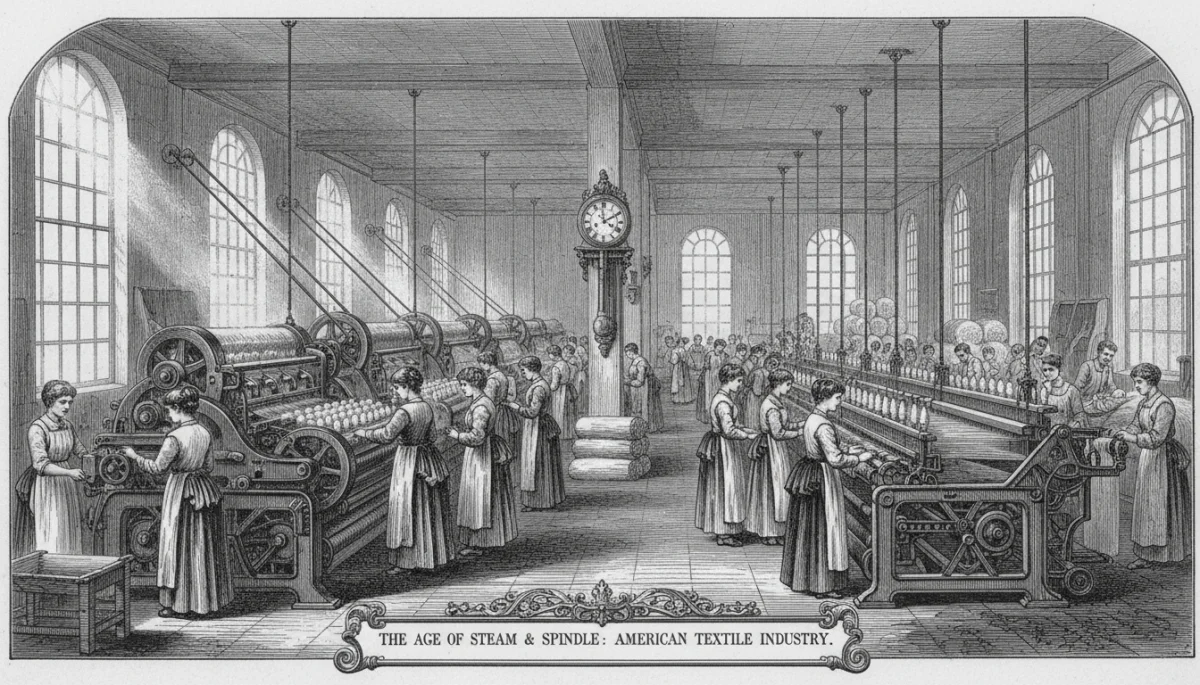
The early 19th century saw the United States embrace industrialization, with textile manufacturing at its forefront. While often overshadowed by later industrial giants, the textile boom laid crucial groundwork, transforming agrarian communities into bustling factory towns, particularly in New England.
This revolution was fueled by a combination of technological innovation and a growing domestic market. The demand for cotton goods, both raw and finished, created a powerful economic engine that connected Southern plantations to Northern mills, albeit through a morally contentious system.
Innovations in Textile Production
Key inventions dramatically increased efficiency and output. These machines streamlined processes that were once labor-intensive and slow, allowing for mass production.
Power Loom: Francis Cabot Lowell’s integrated mill system in Waltham, Massachusetts, brought spinning and weaving under one roof, revolutionizing textile production.
Cotton Gin: Eli Whitney’s invention, while primarily impacting the South’s raw material production, directly fed the Northern textile mills’ insatiable demand.
Factory System: The development of large-scale factories created new employment opportunities and fostered urban growth around these industrial centers.
The textile industry created a complex economic web, influencing everything from labor practices to urban planning. It was a foundational boom, demonstrating America’s capacity for industrial self-sufficiency and setting a precedent for future manufacturing endeavors.
Railroad Mania: Connecting Coasts and Commerce
The mid-19th century witnessed an unparalleled expansion of the American railway system, an economic boom that profoundly reshaped geography, trade, and national identity. Far more than just transportation, railroads were the arteries of a rapidly industrializing nation, linking distant markets and fostering unprecedented mobility.
This period of intense construction created immense demand for iron, coal, timber, and labor, stimulating growth across numerous ancillary industries. The federal government, through land grants and financial incentives, played a significant role in encouraging this monumental undertaking, recognizing its strategic importance.
Impact on Industry and Agriculture
Railroads dramatically reduced shipping costs and transit times, opening up vast new territories for settlement and economic exploitation. This had a transformative effect on both industrial output and agricultural markets.
Industrial Growth: Facilitated the movement of raw materials to factories and finished goods to consumers, accelerating industrial development nationwide.
Agricultural Expansion: Enabled farmers in the Midwest to transport their crops and livestock to Eastern urban centers, making large-scale commercial farming viable.
Urbanization: New towns and cities sprang up along railroad lines, becoming hubs of commerce and population growth.
The railroad boom was a testament to American ambition and engineering prowess. It not only connected the physical landscape but also knitted together disparate regional economies into a more unified national market, laying crucial infrastructure for the future.
Agricultural Mechanization: The Breadbasket’s Bounty
While often seen as a continuous process, the mechanization of agriculture in the 19th century experienced distinct periods of accelerated innovation and adoption, creating an economic boom of its own. This transformation allowed fewer farmers to produce significantly more food, fueling population growth and industrial labor forces.
The demand for improved farm machinery spurred a robust manufacturing sector, particularly in the Midwest. Inventors and entrepreneurs like Cyrus McCormick became household names, their reapers and plows becoming symbols of American ingenuity and productivity.
Key Inventions and Their Effects
New agricultural technologies revolutionized planting, harvesting, and processing. These innovations not only increased yields but also reduced the back-breaking labor traditionally associated with farming.
Mechanical Reaper: Cyrus McCormick’s invention dramatically sped up grain harvesting, allowing farmers to cultivate larger tracts of land.
Steel Plow: John Deere’s self-scouring steel plow made it possible to farm the tough prairie soils of the Midwest more efficiently.
Threshing Machines: These devices separated grain from stalks and husks much faster than manual methods, further boosting productivity.
The agricultural mechanization boom ensured food security for a rapidly growing nation and created a surplus that could be exported, generating significant wealth. It fundamentally altered rural life and solidified America’s position as a global agricultural powerhouse.
The Oil Rush: Black Gold and New Frontiers
While the California Gold Rush captured headlines, a different kind of ‘black gold’ sparked another immense economic boom in the mid-19th century: petroleum. The discovery of commercially viable oil reserves, particularly in Pennsylvania, ignited a frenzy of drilling, refining, and distribution that would forever change the world’s energy landscape.
Edwin Drake’s successful oil well in Titusville, Pennsylvania, in 1859, marked the beginning of this new era. The initial demand was primarily for kerosene, used for lighting, offering a cleaner and more efficient alternative to whale oil.
From Illumination to Industrial Power
The early oil industry rapidly expanded beyond simple illumination, finding applications in lubrication and eventually as a fuel source. This growth led to the development of complex infrastructure and powerful corporations.
Kerosene Production: The primary driver of the early oil boom, providing affordable lighting for homes and businesses.
Lubricants: Petroleum-based lubricants were crucial for the burgeoning machinery of the Industrial Revolution, from factory engines to railroad components.
Refining Innovations: Advancements in refining processes led to a wider array of petroleum products and increased efficiency.
The oil rush created staggering fortunes and fueled the rise of industrial titans. It established a new energy paradigm that would dominate the global economy for the next century, transforming transportation, manufacturing, and daily life.
Expanding Horizons: Beyond the Obvious
The 19th century in America was a period of relentless expansion and innovation, far exceeding the singular narrative of the Gold Rush. Each of these lesser-known economic booms—textile manufacturing, railroad construction, agricultural mechanization, and the nascent oil industry—played a critical and interconnected role in forging the modern United States.
These booms weren’t isolated events but rather threads in a larger tapestry of national development. They stimulated migration, spurred technological advancement, and created new social and economic structures. Understanding them provides a more complete and nuanced picture of America’s journey from a young republic to an industrial giant.
The various economic booms of 19th-century America were not independent phenomena; instead, they were deeply interconnected, each fueling and influencing the others. The expansion of railroads, for instance, created a massive market for iron and steel, while simultaneously enabling the efficient transport of agricultural products from newly mechanized farms to distant markets.
This intricate web of cause and effect demonstrates the dynamic nature of economic development during this period. The textile industry, for example, benefited from both improved transportation for raw materials and finished goods, and from a growing population that was increasingly able to afford manufactured clothing.
The Ripple Effect of Innovation
Each major economic surge had a ripple effect, stimulating growth in related and even seemingly unrelated sectors. This synergistic relationship was a hallmark of 19th-century American progress.
Transportation and Manufacturing: Railroads facilitated the growth of all manufacturing, by connecting sources of raw materials with factories and then with consumers.
Agriculture and Industry: Mechanized agriculture produced surpluses that fed an urban industrial workforce, while also creating demand for industrial farm equipment.
Energy and Everything Else: The oil industry provided new forms of illumination and lubrication crucial for all industrial machinery and urban expansion.
Understanding these interdependencies is key to appreciating the full scope of American economic transformation. It highlights how diverse sectors collaboratively contributed to the nation’s rapid ascent on the global stage, creating a robust and resilient economy.
Economic Boom
Brief Description
Textile Revolution
Early industrialization, mass production of fabrics, transforming New England.
Railroad Mania
Vast expansion of railway networks, connecting markets, driving industrial growth.
Agricultural Mechanization
Innovations in farming technology leading to massive increases in food production.
Oil Rush
Discovery and exploitation of petroleum, fueling new industries and energy.
Frequently Asked Questions About 19th-Century US Economic Booms
What was the primary impact of the textile boom?▼
The textile boom industrialized parts of the US, particularly New England, creating factory towns and shifting labor from agrarian to manufacturing. It established America’s capacity for mass production and domestic self-sufficiency in goods, though it was tied to Southern cotton production.
How did railroads transform the American economy?▼
Railroads dramatically reduced transportation costs and times, connecting distant markets and resources. This facilitated industrial growth, allowed for large-scale commercial farming, spurred urbanization, and helped create a unified national economy by linking regions together.
What were the key innovations in agricultural mechanization?▼
Key innovations included the mechanical reaper, which sped up harvesting; the steel plow, which made cultivating tough prairie soils easier; and threshing machines, which efficiently separated grain. These inventions significantly increased food production and reduced manual labor.
What was the initial use of oil during the 19th-century oil rush?▼
Initially, the primary use for oil discovered during the 19th-century oil rush was to produce kerosene. Kerosene provided a cleaner, more efficient, and more affordable source of illumination compared to traditional whale oil, revolutionizing home and street lighting.
Why are these economic booms considered ‘lesser-known’?▼
These booms are often overshadowed by the more dramatic and popularized narrative of the California Gold Rush. While the Gold Rush was significant, these other booms represented more sustained, foundational shifts in industrial capacity, infrastructure, and agricultural productivity that had deeper, long-term impacts on the nation’s economic structure.
Conclusion
The 19th century in America was a crucible of economic transformation, far more multifaceted than commonly perceived. While the allure of gold was undeniable, the sustained growth driven by textile mills, sprawling railroad networks, revolutionary farm machinery, and the discovery of petroleum truly laid the bedrock for America’s rise as an industrial and agricultural powerhouse. These ‘lesser-known’ booms underscore the ingenuity, ambition, and interconnected forces that shaped the nation’s enduring prosperity, offering a richer understanding of its dynamic past.