The Progressive Era: 7 Reforms That Reshaped America by 1920
The Progressive Era, spanning from the 1890s to the 1920s, was a period of widespread social activism and political reform across the United States, aiming to address problems caused by industrialization, urbanization, and political corruption.
Por: Marcelle em 23 de setembro de 2026
The Progressive Era, from the 1890s to 1922, was a transformative period in American history marked by significant social and political reforms aimed at correcting the ills of industrialization and corruption, fundamentally reshaping government and industry.
The turn of the 20th century brought immense change to the United States, with rapid industrialization and urbanization creating both unprecedented wealth and profound social challenges. It was within this dynamic landscape that The Progressive Era: 7 Reforms That Reshaped American Government and Industry by 1920 took root, a period where concerned citizens, journalists, and politicians championed sweeping changes to address inequality, corruption, and corporate power. This transformative era laid the groundwork for many of the regulatory frameworks and social safety nets we recognize today, leaving an indelible mark on the nation’s trajectory.
Addressing Corporate Power and Monopolies
The rise of massive industrial trusts and monopolies in the late 19th century created immense economic power in the hands of a few, often at the expense of workers and smaller businesses. Progressives viewed these unchecked concentrations of wealth as a threat to democracy and fair competition, leading to significant legislative efforts to curb their influence.
Trust-Busting and Regulation
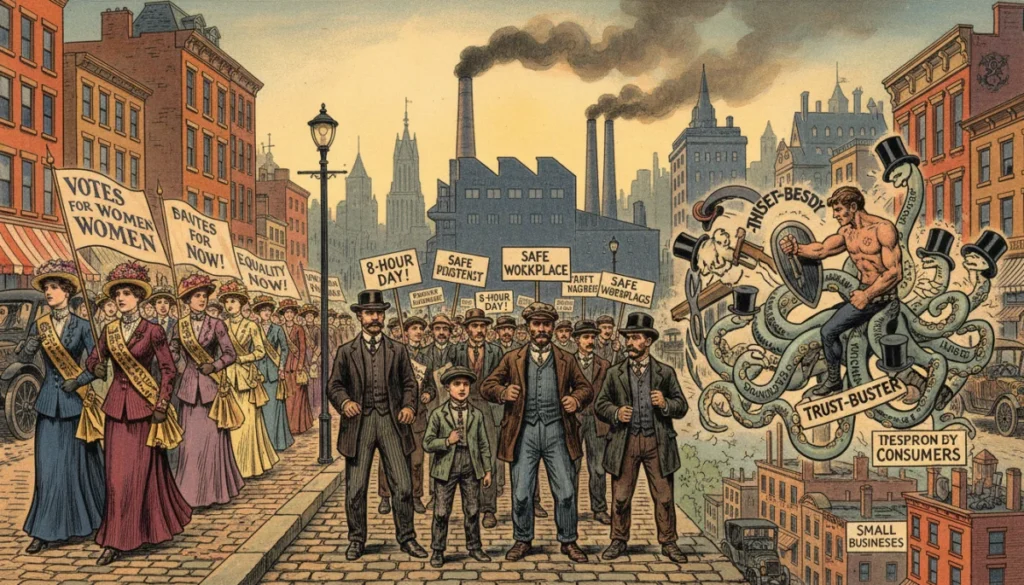
President Theodore Roosevelt, famously dubbed a “trust-buster,” initiated legal actions against powerful monopolies, believing that not all trusts were inherently bad, but those that exploited consumers and stifled competition needed to be controlled. His administration, and later Taft’s, actively enforced the Sherman Antitrust Act of 1890.
Sherman Antitrust Act Enforcement: Used to break up large industrial combinations like Standard Oil and the Northern Securities Company, promoting competition.
Clayton Antitrust Act of 1914: Strengthened the Sherman Act by outlawing specific anti-competitive practices, such as price discrimination and interlocking directorates.
Federal Trade Commission (FTC): Established in 1914 to investigate and prevent unfair methods of competition and deceptive acts or practices affecting commerce.
These reforms aimed to restore a more level playing field in the economy, ensuring that corporate power did not overshadow the public good. The creation of regulatory bodies signaled a shift towards government oversight of business practices, a stark contrast to the laissez-faire approach of previous decades. This intervention marked a fundamental change in the relationship between government and industry, setting precedents for future economic regulation.
Reforming Political Corruption and Suffrage
The Progressive Era also saw a strong push to democratize American politics, challenging the entrenched power of political machines and expanding the electorate. Corruption, voter intimidation, and limited participation were seen as barriers to a truly representative government.
Expanding Democratic Participation
A key focus was on giving citizens more direct control over their government, moving power away from party bosses and towards individual voters. This included several innovative mechanisms designed to increase accountability and transparency.
Direct Primaries: Replaced party conventions for selecting candidates, allowing voters to choose nominees directly.
Initiative, Referendum, and Recall: These tools empowered citizens to propose laws, vote on legislation, and remove elected officials from office.
Secret Ballot: Introduced to protect voters from intimidation and bribery, ensuring their choices are private.
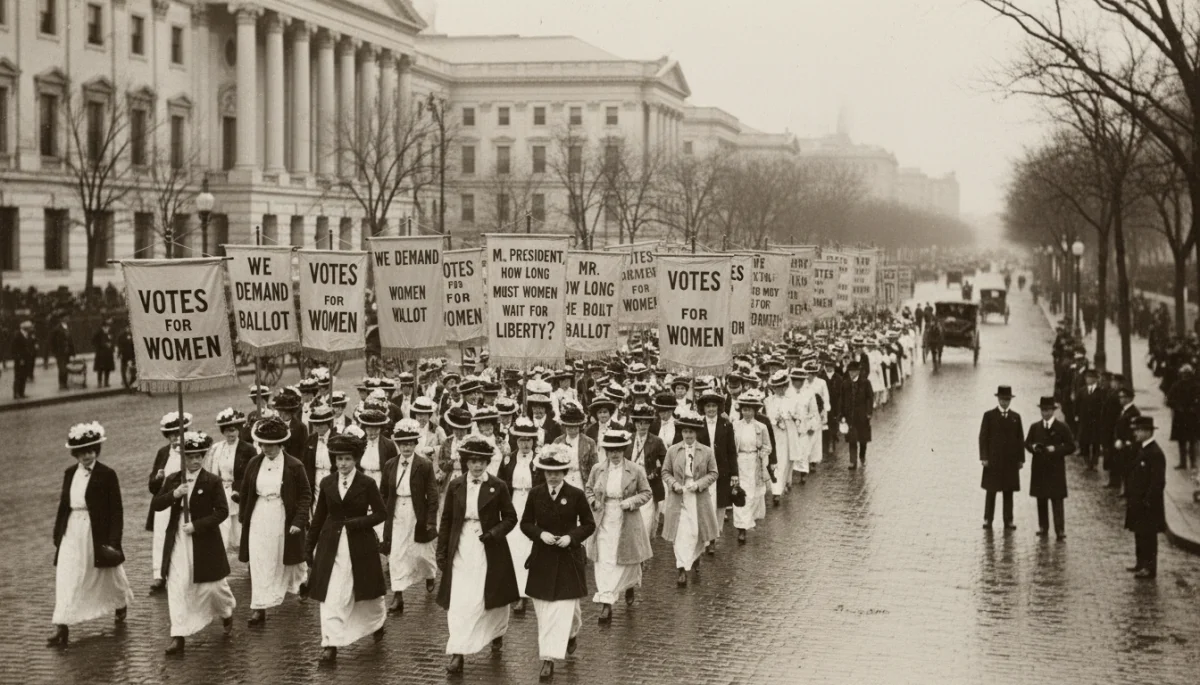
Beyond these procedural changes, the most significant reform in political participation was the fight for women’s suffrage. Decades of activism culminated in the 19th Amendment, fundamentally altering the American electorate.
The passage of the 19th Amendment in 1920 granted women the right to vote nationwide, a monumental achievement that doubled the electorate and represented a profound shift in American democracy. This reform was the culmination of generations of advocacy, demonstrating the power of grassroots movements to effect constitutional change. It not only expanded political rights but also challenged traditional gender roles, paving the way for greater social and political equality.
Protecting Public Health and Safety
The rapid industrial growth and urbanization brought with them significant challenges to public health and safety, from unsanitary food production to dangerous working conditions. Progressive reformers recognized the need for government intervention to protect citizens from these hazards.
Ensuring Food and Drug Safety
Muckraking journalists, such as Upton Sinclair with his novel “The Jungle,” exposed the appalling conditions in the meatpacking industry, galvanizing public opinion and leading to federal legislation.
Pure Food and Drug Act of 1906: Prohibited the sale of misbranded or adulterated food and drugs, requiring accurate labeling of ingredients.
Meat Inspection Act of 1906: Mandated federal inspection of all meat products destined for interstate commerce, ensuring sanitary processing.
These acts were landmark achievements, marking the first significant federal regulations over the food and pharmaceutical industries. They established the principle that the government has a responsibility to protect consumers from harmful products, a concept that continues to evolve today. The impact was immediate and long-lasting, drastically improving the quality and safety of consumer goods.
Improving Workplace Conditions
Industrial workplaces of the era were often dangerous, with long hours, low wages, and little regard for worker safety. Progressive reformers pushed for legislation to improve these conditions, focusing particularly on vulnerable populations.
Child labor was a particularly egregious issue, with children as young as five working in factories and mines. Reformers advocated for laws to restrict child labor, improve factory safety, and limit working hours. While federal child labor laws faced challenges, many states enacted their own regulations. The Triangle Shirtwaist Factory fire in 1911, which killed 146 garment workers, starkly highlighted the need for better safety standards and spurred further reforms in workplace safety and fire codes. These efforts, though often met with resistance, slowly but surely began to establish fundamental labor protections.
Conservation of Natural Resources
As the nation expanded and industrialized, the exploitation of natural resources became a growing concern. Progressive leaders, particularly Theodore Roosevelt, recognized the finite nature of these resources and championed a movement for their conservation and responsible management.
Establishing National Parks and Forests
The conservation movement sought to balance the use of natural resources with their preservation for future generations. This involved setting aside vast tracts of land for public use and protection, as well as promoting scientific management of resources like timber and water.
National Park System Expansion: Roosevelt significantly expanded the national park and forest systems, preserving millions of acres of wilderness.
U.S. Forest Service: Established in 1905, headed by Gifford Pinchot, to manage the nation’s forests for sustained yield, balancing resource extraction with conservation.
Reclamation Act of 1902: Funded irrigation projects in arid Western states, promoting efficient water use and agricultural development.
These actions fundamentally changed the federal government’s role in land management, shifting from simple disposition to active conservation and planning. The establishment of national parks and forests created a lasting legacy, ensuring that America’s natural beauty and resources would be protected for generations. This foresight prevented widespread environmental degradation and fostered a new appreciation for ecological stewardship, influencing environmental policy for decades to come.
Reforming Banking and Finance
The nation’s financial system in the early 20th century was prone to panics and instability, lacking a centralized authority to regulate currency and provide stability. This led to a series of financial crises that severely impacted the economy and individual citizens.
Creating the Federal Reserve System
Progressive reformers understood that a modern industrial economy required a more robust and stable financial infrastructure. The Panic of 1907, in particular, underscored the urgency of banking reform.
After much debate and negotiation, the Federal Reserve Act was passed in 1913, creating the Federal Reserve System. This landmark legislation established a decentralized central bank with 12 regional Federal Reserve Banks overseen by a Board of Governors. Its primary objectives were to provide the nation with a safer, more flexible, and more stable monetary and financial system. This included controlling the money supply, setting interest rates, and acting as a lender of last resort to commercial banks.
The creation of the Federal Reserve fundamentally transformed American finance. It brought stability to the banking system, reduced the frequency and severity of financial panics, and provided the government with powerful tools to manage the economy. This reform was crucial for supporting the nation’s growing industrial and commercial enterprises, ensuring a more predictable economic environment. It marked a significant departure from previous, less regulated financial systems, solidifying the government’s role in economic stabilization.
Promoting Social Justice and Welfare
Beyond economic and political reforms, the Progressive Era also saw a burgeoning movement for social justice, addressing issues of poverty, inequality, and the welfare of marginalized communities. While not always successful or universal in their application, these efforts laid important groundwork.
Addressing Urban Poverty and Inequality
Rapid urbanization led to overcrowded slums, poor sanitation, and widespread poverty. Progressive reformers, often driven by religious or humanitarian motivations, sought to ameliorate these conditions.
Settlement Houses: Institutions like Jane Addams’ Hull House provided social services, education, and healthcare to immigrant communities and the urban poor.
Child Welfare: Advocacy for juvenile courts, mandatory schooling, and restrictions on child labor aimed to protect children from exploitation and provide them with better opportunities.
Tenement House Reform: Efforts to improve living conditions in urban tenements, leading to building codes and sanitation regulations.
These initiatives, while often local or state-level, represented a growing awareness of social responsibility and the need for collective action to address systemic problems. They moved beyond simple charity, seeking to understand and remedy the root causes of poverty and social distress. The focus on child welfare, in particular, highlighted a societal commitment to protecting the most vulnerable, influencing public policy and social work for decades to come.
Worker’s Rights and Labor Legislation
The intense industrialization of the late 19th and early 20th centuries often came at a high cost to workers, who faced long hours, dangerous conditions, and little recourse against powerful employers. The Progressive Era saw significant efforts to improve the rights and protections afforded to the American workforce.
Establishing Labor Protections
Labor unions gained strength during this period, advocating for better wages, shorter workdays, and safer environments. Progressive politicians and reformers often supported these efforts, recognizing the need to balance corporate power with worker well-being.
Key reforms included the establishment of workers’ compensation laws in many states, which provided financial aid to workers injured on the job, a crucial protection in an era of frequent industrial accidents. Additionally, efforts were made to limit working hours, particularly for women and children, with some states enacting ten-hour workday laws. While federal minimum wage was still decades away, these state-level initiatives and the growing public awareness of labor issues laid the foundation for future federal labor legislation. The Department of Labor was also established in 1913, providing a cabinet-level agency dedicated to the welfare of wage earners.
These reforms marked a critical shift from the previous era where labor was often seen as a commodity, to one where the rights and safety of workers began to be recognized as a legitimate concern for government. They reflected a growing understanding that a healthy and productive society required fair treatment and protection for its labor force. The Progressive Era’s labor legislation, though incremental, significantly improved working conditions for millions and established precedents for the expansion of workers’ rights throughout the 20th century.
Key Reform Area
Brief Description
Corporate Regulation
Antitrust laws and commissions to curb monopolies and ensure fair competition.
Political Democratization
Direct primaries, initiative, referendum, recall, and women’s suffrage.
Public Health & Safety
Pure Food & Drug Act, Meat Inspection Act, and workplace safety laws.
Financial Stability
Establishment of the Federal Reserve System to stabilize the banking sector.
Frequently Asked Questions About the Progressive Era Reforms
What was the primary goal of the Progressive Era reforms?▼
The primary goal was to address the severe social, economic, and political problems stemming from rapid industrialization and urbanization. Reformers sought to curb corporate power, eliminate corruption, improve living and working conditions, and expand democratic participation to create a more just and equitable society.
Who were some key figures in the Progressive Era?▼
Prominent figures included Presidents Theodore Roosevelt and Woodrow Wilson, who championed many reforms. Muckraking journalists like Upton Sinclair and Ida Tarbell exposed societal ills, while activists such as Jane Addams and Susan B. Anthony led movements for social welfare and women’s suffrage.
How did the Progressive Era impact women’s rights?▼
The Progressive Era was pivotal for women’s rights, culminating in the passage of the 19th Amendment in 1920, granting women the right to vote. Women were also deeply involved in other reform movements, advocating for temperance, child labor laws, and improved public health, expanding their role in public life.
What was “trust-busting” during this period?▼
“Trust-busting” refers to the government’s efforts, primarily under President Theodore Roosevelt, to break up large industrial monopolies (trusts) that stifled competition and exploited consumers. This was achieved through the enforcement of antitrust laws like the Sherman Antitrust Act and later the Clayton Antitrust Act.
What was the legacy of the Progressive Era?▼
The Progressive Era left a lasting legacy by establishing government’s role in regulating the economy, protecting public welfare, and expanding democratic participation. It led to significant legislation in areas like food safety, environmental conservation, and labor rights, shaping modern American society and governance.
Conclusion
The Progressive Era, a period of intense social and political ferment from the 1890s to 1920, fundamentally altered the course of American history. Through a series of ambitious reforms, it successfully challenged unchecked corporate power, democratized political processes, and laid the groundwork for a more just and equitable society. The seven key reforms discussed—addressing corporate power, political corruption, public health, natural resource conservation, financial stability, social justice, and workers’ rights—collectively transformed both government and industry. These changes established precedents for federal regulation and social responsibility that continue to influence American policy and societal expectations today, proving the profound and enduring impact of an era driven by the belief in progress and collective improvement.